
Casual Chic Linenwear Custom Manufacturing

Is Linen Suitable for Fall and Winter Collections?
Direct Answer
Is Linen Suitable for Fall and Winter Collections?
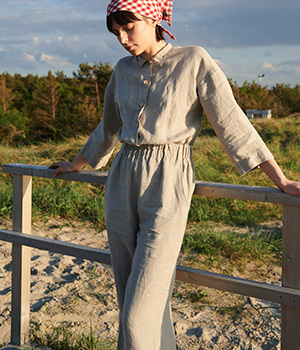
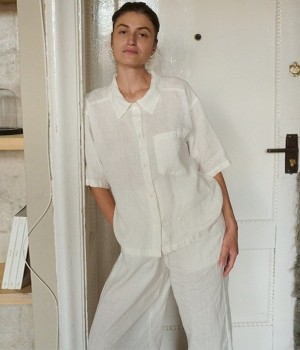
Yes. Linen is suitable for fall and winter collections when the fabric weight, blend and construction are specified for cool weather instead of for summer. A heavier linen in the 180 to 260 GSM range holds warmth and structure, and a linen-wool, linen-hemp or lined linen piece layers like a mid-weight woven rather than a light summer shirt. The fibre itself is a hollow natural cellulose that buffers temperature and moves moisture, so the "summer only" reputation comes from product design, not from the material: light 110 to 140 GSM plain weave, pale colour, loose silhouettes and no lining are what make linen read as summer. Change the weight, add a blend, introduce a lining and choose a muted palette, and linen becomes a credible autumn and winter fabric for overshirts, trousers, blazers, long dresses, loungewear and uniforms. The full design and sourcing method is set out in our guide to linen in fall and winter.
Why Linen Works in Cold Weather
Three physical properties of flax fibre explain why linen performs in cooler conditions, and they are the same properties that make it comfortable in heat.
Hollow fibre structure
A flax fibre is a natural tube with a lumen at its centre, so woven linen traps still air between fibre walls. Still air is the real insulator, which is why a heavier linen can feel warm without feeling bulky.
Fast moisture movement
Linen absorbs and releases moisture quickly, so it does not trap dampness next to the skin. That is what prevents the cold, clammy feeling that some synthetic layers create when the temperature drops.
Thermal buffering
Linen conducts heat away when the body is warm and holds it when the body cools. This buffering behaviour is exactly what a transitional-season garment needs, from early autumn to mild winter.
The practical conclusion is that warmth in linen comes from weight, blend and layering rather than from the fibre label. A 220 GSM brushed linen overshirt worn over a fine knit behaves very differently to a 120 GSM summer shirt, even though both are 100 percent linen. This distinction is the whole basis of a credible cooler-season linen range, and it is explained in more detail in the article on building year-round linen collections.
Fabric Weight and Construction for Winter
Weight is the most important specification decision for a cold-weather linen style. The table below shows the bands we produce and where each one fits in a seasonal range.
| GSM band | Typical construction | Season fit | Best used for |
|---|---|---|---|
| 100-140 | Light plain weave | High summer | Shirts, dresses, camisoles |
| 140-180 | Mid-weight plain weave or twill | Late spring to early autumn | Shirts, tunics, relaxed trousers |
| 180-220 | Heavier plain weave, twill, herringbone | Autumn and mild winter | Overshirts, jackets, structured trousers, blazers |
| 220-260 | Heavy twill, canvas, double cloth, brushed finish | Winter and layering | Outerwear-inspired shirting, coats, heavy trousers |
Within the same weight band, twill and heavier plain weaves hold a silhouette better than an open weave, and a brushed or peached finish softens the hand so heavy linen does not feel boardy against knitwear. How weight drives drape and structure is explained in our guide to choosing the right linen GSM.
Blends That Extend Linen Into Winter
A small share of a second fibre widens the seasonal range considerably, and the right blend follows the product rather than the other way round. The table below summarises the blends we produce most often for cooler-season lines.
| Blend | Typical mix | What it adds in cool weather | Watch out for |
|---|---|---|---|
| Linen-wool | 50/50 to 70/30 | Warmth, resilience, dry woollen hand, good at coating weights | Higher fabric cost; often dry-clean care |
| Linen-hemp | 55/45 to 70/30 | Durability, body, dry touch, good for trousers and jackets | Firmer hand; needs softening |
| Linen-cotton | 55/45 | Softer hand, less wrinkling, comfortable over knitwear | Slightly less breathable |
| Linen-Tencel | 30/70 to 50/50 | Fluid drape, smooth surface, easy layering | Drape reduces structure |
| Linen-silk | 70/30 to 85/15 | Quiet sheen, luxury hand feel, occasion pieces | Highest material cost |
For structure and durability in an overshirt or trouser, linen-hemp is the usual choice. For a fluid autumn dress, linen-Tencel gives the softest fall. Each blend must be fixed before sampling, because a ten percent shift in the secondary fibre changes drape, shrinkage and hand feel.
Cool-Weather Linen Product Categories
A year-round linen range is built from categories rather than from one hero style. These are the pieces that carry linen credibly through the cooler months.
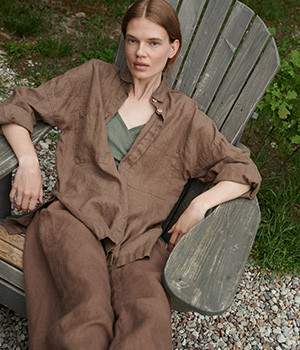
- Overshirts and shirt-jackets in 200 to 240 GSM, worn open over a knit or tee. This is the single most important winter linen category.
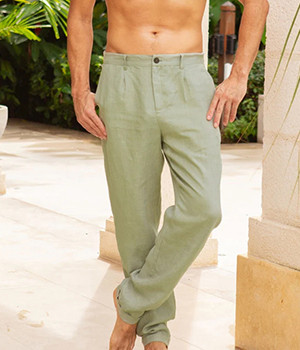
- Heavy trousers and chinos in twill or heavier plain weave, cut wide or pleated to read as cold-season styling.
- Lined and half-lined blazers, where structure comes from canvassing and lining rather than from the cloth alone.
- Long dresses and pinafores in heavier linen, layered over knitwear to move the dress category out of high summer.
- Loungewear and sleepwear in brushed or washed linen, where the indoor season rewards warmth and breathability.
- Uniform and workwear pieces for hospitality and spa teams, where heavier constructions survive repeated laundering.
A commercially safe autumn/winter range pairs one or two heavy hero pieces with several carry-over silhouettes re-specified in a heavier weight and a seasonal colour, so the range reads as new without betting the season on a single style.
Construction and Layering Adjustments
Heavier fabric alone does not make a winter garment. Five construction adjustments do most of the work, and each should be specified before sampling.
1
Add a lining where skin contact matters. A half or full lining on a blazer or bodice reduces friction against knitwear and improves drape, while keeping the garment breathable.
2
Reinforce stress points. Heavier linen carries more mass at seams, so bar tacks, reinforced pocket mouths and stronger collar interlining prevent distortion over a season of wear.
3
Scale the closures. Larger buttons, heavier top-stitching and a deeper placket suit the visual weight of a 220 GSM cloth, where light buttons look undersized.
4
Carry the correct shrinkage allowance. Linen can move 3 to 7 percent on the first wash, and the effect is proportionally larger on long heavy pieces, so the pattern must include the allowance the factory applies.
5
Match the finishing route to the use. Brushing, peaching or a soft enzyme wash gives heavy linen the surface hand expected in cool-weather clothing, while a crisp finish suits structured tailoring.
Shrinkage is the variable that most often spoils a first winter sample, because the sample looks correct while the cloth is new. How factories control it through pre-treatment, controlled washing and consistent finishing is explained in our guide to linen shrinkage control.
Planning and Purchasing Timeline
The planning error brands make most often is working forwards from the order date instead of backwards from the in-store date. Linen development has a fixed minimum lead time, and the calendar below is the one we quote to buyers.
| Stage | Typical duration | What determines it |
|---|---|---|
| Sampling (counter sample) | 7-12 working days, window 7-14 days | New fabric or trims extend it |
| Bulk production | 25-35 days | Starts once fabric is in house and sample is approved |
| First order aggregate | 35-60 days | Includes fabric booking, sampling and shipping preparation |
| Shipping | Depends on mode and route | Sea freight is slower and cheaper than air |
Choosing from more than 50 stock linen specifications shortens the front of the schedule compared with a custom weave or dye lot. The stage-by-stage numbers are broken down in our guide to linen clothing lead times, and the seasonal version of the same logic is set out in the seasonal buying calendar for fashion brands.
How to Brief a Winter Linen Style
A clearer brief produces a better first sample and removes most of the reasons a winter style fails. The five points below are the minimum a brand should give the factory before a cooler-season development starts.
- State the season and the in-store date. The delivery date drives the whole schedule, so it should be the first line of the brief rather than a detail added later.
- Specify GSM, weave and finish. Ask for a target weight band, a construction such as twill or heavier plain weave, and the finishing route such as brushed or soft washed, because the same base cloth reads as summer or winter depending on these three choices.
- Fix the blend ratio. If the style uses a blend, give the exact ratio and note that it must be reproduced from the same approved reference on every reorder, since a ten percent shift in the secondary fibre changes drape and shrinkage.
- Describe the construction. Note where lining, interlining and reinforced seams are required, and specify closures and top-stitching that suit the visual weight of the cloth.
- Provide the shrinkage tolerance and care expectation. State the acceptable first-wash shrinkage against the standard 3 to 7 percent range and the care route the piece is designed for, so the finishing is planned rather than discovered.
Completing these five fields before sampling is the difference between a winter style that is engineered and one that is guessed. The same discipline applied to a first order is described in our guide to tech packs for linen clothing, which lists every field a factory needs before production can start.
Care, Quality and Certification
Cooler-season linen raises two questions a summer range can often ignore: how the garment behaves after repeated washing, and whether the heavier construction stays dimensionally stable. Both are managed at the factory.
Heavier linen and blends need clear care labelling that reflects the actual cloth rather than a generic instruction, which matters more in winter when a heavier piece may be worn often but washed less. What to print and why is covered in our guide to care labels and branding for linen garments.
Final inspection to AQL 2.5, which defines the acceptable defect count for the sample size.
Weight, shrinkage and colour fastness checked against the spec before bulk.
ISO 9001 for quality management, verifiable at the factory level.
OEKO-TEX Standard 100 for restricted substances on all skin-contact pieces.
SEDEX membership supporting responsible sourcing claims.
Fabric swatches retained per approved lot as the colour and hand reference.
The same quality system should run across both seasons so the winter range inherits the summer range's reliability instead of restarting it. More on year-round suitability is available in the existing answer to whether linen styles suit year-round collections.
Common Mistakes to Avoid
Most disappointing first winter ranges share the same handful of causes, and each one is preventable before bulk production begins.
- Using a summer weave for a winter style. Light plain weave, pale colour and no lining are what make linen read as summer, so a cold-weather piece must be re-specified rather than recoloured.
- Skipping the lining on a heavy piece. Treating linen like a light woven leaves the garment uncomfortable over knitwear and short of the warmth the cloth could deliver.
- Ignoring shrinkage on a long heavy garment. The proportional effect is larger on trousers and coats, so the pattern must carry the allowance the factory applies.
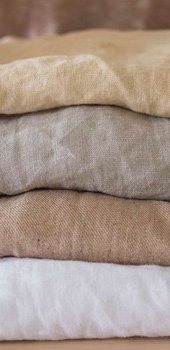
- Reusing the spring palette. Muted stone, camel, olive and charcoal tones read as autumn; bright summer shades undermine an otherwise correct specification.
- Ordering against the selling window. Working forwards from the order date instead of backwards from the in-store date is the most costly single error in seasonal planning.
- Changing construction between sample and bulk. Late design decisions turn a production run back into a development project and put the delivery date at risk.
Avoiding these mistakes is largely a matter of treating heavier linen as a distinct specification with its own weight, construction, palette and timeline, which is the approach set out in our guide to linen in fall and winter.
Buying Terms at a Glance
MOQ
60 pieces per style per colour
60 pieces per style per colour
Sampling
7-12 days, window 7-14 days
7-12 days, window 7-14 days
Bulk
25-35 days once fabric is in house
25-35 days once fabric is in house
Sample fee
40-150 USD per style, refunded against bulk
40-150 USD per style, refunded against bulk
Sample fees are refunded against bulk production and fabric swatches are supplied free, which keeps the cost of testing a first heavier style low. Standard bulk timing is summarised in the answer to what the bulk production lead time is.
Do not specify a cooler-season style using a summer construction. Light plain weave, pale colour and no lining are what make linen read as summer; a winter piece needs heavier cloth, a considered palette and a construction that supports layering. Ordering against the selling window instead of the delivery date is the second most common and most expensive error.
Planning a fall or winter linen range, or testing one heavy style before committing to a full season?
Request a quote and swatches Browse the FAQ libraryFigures reflect the standard terms of a Dongguan B2B linen factory with more than twenty years of OEM, ODM and private label experience: MOQ 60 pieces per style per colour, sampling 7-12 days, bulk 25-35 days, first order 35-60 days, sample fees 40-150 USD refunded against bulk, shrinkage 3-7 percent on first wash, fabric GSM 100-260, AQL 2.5 inspection, ISO 9001, OEKO-TEX Standard 100 and SEDEX.