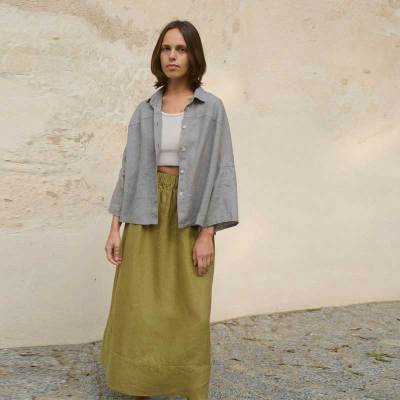
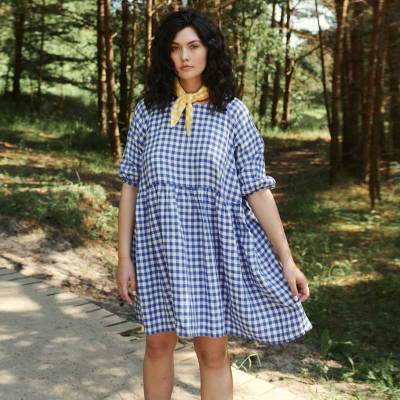
Linen Tencel Blend Fabric: Benefits, Cost and Best Uses for Custom Clothing
A linen Tencel blend combines flax fiber with Tencel lyocell, a wood-pulp cellulose fiber, to produce a fabric that drapes like silk, wrinkles far less than pure linen, and keeps most of linen's breathability. For fashion brands sourcing custom clothing from a Chinese manufacturer, the practical questions are not whether the blend is "better," but which ratio to specify, what it adds to unit cost, and how it behaves in production and first wash. This guide answers those questions with the production numbers we use at LINENWIND, a Dongguan-based linen clothing factory with 20+ years of OEM and ODM experience: MOQ 60 pieces per style per color, counter samples in 7-12 days, bulk production in 25-35 days, first-order lead time of 35-60 days, and first-wash shrinkage of 3-7%.
Tencel linen blend fabric has moved from a niche summer novelty to a standard option in custom clothing programs because it solves linen's two most common retail complaints: excessive wrinkling and a stiff initial hand feel. It does this while preserving the natural, textured look buyers expect from linen. The trade-offs are real, however: a measurable cost increase versus 100% linen, a slightly different shrinkage profile, and care instructions that must be communicated honestly to end consumers.
If you are a brand founder, product developer, or sourcing manager evaluating this fabric for a spring-summer collection, read the blend-ratio table in Section 3, the cost breakdown in Section 4, and the tech-pack checklist in Section 7. They contain the numbers you need to brief a factory correctly on the first call.
30-70%
TYPICAL TENCEL RATIO
7-12 DAYS
COUNTER SAMPLING
MOQ 60
PIECES PER STYLE/COLOR
What Is a Linen Tencel Blend and Why Are Brands Specifying It Now?
A linen Tencel blend is a woven fabric made from two fibers spun together into yarn: flax (linen) and Tencel, the brand name for lyocell produced by the Austrian fiber company Lenzing. Tencel lyocell is manufactured from sustainably sourced eucalyptus wood pulp through a closed-loop solvent spinning process, which means the solvent is recovered and reused rather than discharged. In a blend, the two fibers are mixed at the spinning stage, typically in ratios such as 55% linen / 45% Tencel or 70% linen / 30% Tencel, before the yarn is woven on standard looms.
The fabric category matters more than the marketing. "Tencel linen blend" is a specific engineered construction, not a vague feel-good term. It is distinct from viscose/rayon blends, which use a different cellulose process and have different shrinkage and drape behavior. When a buyer writes "linen tencel" on a tech pack, the factory needs to know three things: the exact ratio, the yarn count, and the target GSM. At LINENWIND we stock more than 50 linen fabric specifications, including several linen Tencel blends between 130 and 260 GSM, so the ratio conversation starts from real available stock rather than a custom yarn order.
Brands are specifying linen Tencel blends now for a measurable commercial reason. Pure linen sells on breathability and texture but generates returns driven by wrinkle complaints and stiffness perception. A 2025-2026 wave of direct-to-consumer linen brands has shifted part of their assortment to blends specifically to reduce those complaints while keeping the "natural fiber" story. The blend is also easier to cut and sew than 100% linen because the Tencel component reduces seam slippage and fraying at the edges, which shortens sewing time and lowers defect rates in production.
Production note: In our experience across OEM and ODM programs, a 55/45 linen-Tencel construction cuts visible wrinkling by roughly half compared with 100% linen of the same weave, while a 70/30 keeps the linen character more dominant. These are directional results from our own sample evaluations, not laboratory claims, and the exact behavior depends on weave density and finishing.
What Tencel Changes in Linen Garments: Drape, Wrinkle Recovery and Hand Feel
The value of a linen Tencel blend is best understood as three measurable changes to the fabric's behavior, not as a general "improvement." Each change has a production and a retail consequence that a B2B buyer should be able to explain to their own team.
Drape and Flow
Tencel is a finer, more flexible fiber than flax. When blended, the yarn becomes more pliable, so the fabric falls with a heavier, silkier drape. Garments such as wide-leg trousers, blouses, and dresses hang closer to the body and move with less stiff bounce than pure linen. Designers use this to achieve silhouettes that pure linen cannot deliver without heavyweight construction.
Wrinkle Recovery
Wrinkling in linen comes from the stiffness and inelasticity of the flax fiber. Tencel's elastic recovery smooths the surface between wears, so a linen Tencel shirt worn for a full workday shows visibly fewer creases at the collar and elbows. This is the single most cited retail benefit and the main reason brands accept a modest cost premium.
Hand Feel and Softness
Pure linen can feel stiff and scratchy until several washes break the fiber down. Tencel contributes a smooth, cool surface from the first wear. A 50% or higher Tencel ratio produces a fabric that feels soft against the skin immediately, which matters for tops, sleepwear, and garments sold to sensitive-skin consumers.
Breathability, the property linen is famous for, is only slightly reduced in a blend. Flax fibers still dominate moisture transport when linen is the majority fiber, so a 55/45 or 70/30 construction remains suitable for warm-weather clothing. At ratios where Tencel exceeds 50%, the fabric becomes more of a drape-first, breathability-second material, which is a deliberate design choice for dresses and trousers rather than a flaw.
Blend Ratios That Work in Production: 70/30, 55/45 and 50/50
There is no single correct linen Tencel ratio. The right number depends on the garment category, the target retail price, and the brand's tolerance for wrinkle complaints. The table below reflects ratios we produce regularly and the garment types they suit best.
| Ratio (Linen/Tencel) | Garment Fit | Key Behavior | Typical GSM |
|---|
| 70 / 30 | Shirts, tunics, casual dresses | Linen character dominant; moderate wrinkle reduction; most breathable | 130-170 |
| 55 / 45 | Blouses, trousers, skirts | Balanced drape and linen texture; clear wrinkle reduction | 150-190 |
| 50 / 50 | Dresses, wide-leg pants, loungewear | Silky drape, softest hand feel; linen becomes a texture accent | 160-220 |
| 60 / 40 | Jackets, structured tops | Midpoint stability; easier cutting; retains body for tailoring | 180-260 |
Three practical rules apply when choosing a ratio for a custom program:
- Keep linen as the majority fiber if "linen" appears on your care label and marketing claims. Industry labeling conventions and consumer expectations both treat a fabric with more than 50% linen as a linen product, whereas a Tencel-majority fabric reads as a different material entirely.
- Test the ratio on the actual garment pattern. A 55/45 that drapes beautifully in a bias-cut dress can be too floppy for a structured shirt collar. We recommend ordering counter samples in two candidate ratios before committing bulk, which is why our sampling window runs 7-12 days and sample fees of $40-150 are fully credited to production.
- Confirm the yarn source before bulk. Tencel from Lenzing carries its own supply chain documentation, which matters if you plan to make OEKO-TEX Standard 100 or sustainability claims. The fiber certificate should be requested with the first quote, not after production starts.
How a Linen Tencel Blend Affects Cost, Sampling and Lead Time
Cost is where the blend story becomes honest. A linen Tencel fabric costs more per meter than standard 100% linen of comparable quality because Tencel lyocell fiber commands a premium over flax yarn, and the blend requires a separate yarn-spinning setup. In our cost structure for custom linen garments, fabric typically represents 30-45% of the total garment cost and labor 25-35%. Swapping the fabric from 100% linen to a 55/45 linen-Tencel typically moves the fabric share toward the upper end of that range, adding a low single-digit percentage to the finished garment cost at retail.
The other costs to budget are sampling and testing. A counter sample in a linen Tencel blend costs the same as our standard sample range of $40-150, fully returned against your production order, with free swatches. If you need two ratios evaluated side by side, that is two sample fees, both credited. Shrinkage and colorfastness pre-tests are included in the sampling phase so that bulk production starts from verified numbers rather than assumptions.
| Cost & Time Item | Standard Value at LINENWIND | Notes for Linen Tencel |
|---|
| Fabric share of garment cost | 30-45% | Blend sits at the upper end |
| Labor share of garment cost | 25-35% | Easier sewing can offset slightly |
| Sample fee | $40-150, fully refundable | Two ratios = two credited fees |
| Swatches | Free | Stock blends available in 50+ specs |
| Counter sample | 7-12 days | Sampling window 7-14 days |
| Bulk production | 25-35 days | After sample approval |
| First order, sample to delivery | 35-60 days | Includes fabric lead and QC |
| Initial price quote | 48 hours / 3-7 working days | Detailed quote after tech pack review |
Lead time is not increased by the blend itself. The fabric is available as stock in our 50+ specification library, so a linen Tencel program follows the same timeline as any custom linen order: counter sample in 7-12 days, bulk production in 25-35 days, and 35-60 days for a complete first order. The only scenario that extends the schedule is a custom yarn color or an unusual ratio that requires a mill order, which we flag in the quote before any commitment.
Shrinkage, Care and Finishing: What to Put in Your Tech Pack
Shrinkage is the technical detail that separates professional linen sourcing from amateur sourcing. At LINENWIND we quote a first-wash shrinkage range of 3-7% for linen and linen-blend fabrics, and we pre-shrink through finishing so the range is consistent. A linen Tencel blend behaves slightly differently from pure linen: the Tencel component absorbs moisture and relaxes during wet processing, so shrinkage in the length direction is often marginally higher unless the fabric is pre-shrunk and the pattern is cut with the shrinkage allowance factored in.
For your tech pack, specify the following so the factory and your quality team are aligned:
- Blend ratio: state it exactly (for example, 55% linen / 45% Tencel lyocell) and name the fiber standard you accept.
- GSM target and tolerance: for example 160 GSM +/-5%, because drape and cost both depend on weight.
- Shrinkage allowance: ask for pre-shrunk fabric and a tested first-wash shrinkage of 3-7%, confirmed on the counter sample.
- Care label language: machine wash cold, gentle cycle, line dry or low tumble, warm iron. This must be printed on the care label so the end consumer washes the garment the way it was engineered.
- Finishing: state whether you want garment-washed, enzyme-washed, or stone-washed, since finishing changes hand feel and shrinkage numbers.
Honest care guidance: A linen Tencel blend still wrinkles, just less than pure linen, and it can pill slightly more than 100% linen over many washes because cellulose fibers abrade each other. Tell your customers: cold wash, gentle cycle, line dry, warm iron. This single instruction prevents most shrinkage and pilling complaints at retail.
Finishing deserves its own decision. Garment-washed linen Tencel comes out softer and more casual; enzyme washing adds a subtle aged look; a brushed finish increases warmth for cooler-season weights. Each finishing option shifts cost and lead time by a few days, so it belongs in the tech pack rather than being decided at the factory. For a deeper look at how finishing options change linen behavior, see our buyer's guide to washed, enzyme and stone-washed linen.
A B2B Decision Framework: When Linen Tencel Fits Your Collection
Use this five-step framework when a product developer asks whether a given style should be 100% linen or a linen Tencel blend. It is the same framework we walk buyers through during sourcing calls.
- Define the silhouette. If the design depends on drape and movement (wide-leg trousers, bias dresses, fluid blouses), a blend with 40-50% Tencel is the right starting point. If the design depends on structure and crispness (tailored shirts, workwear, chef jackets), stay with pure linen or a 70/30.
- Price the fabric share first. Confirm the fabric cost as a percentage of target garment cost. If the blend pushes the fabric share past your margin plan, adjust the ratio or the GSM before sampling, not after.
- Order two counter samples. A 70/30 and a 55/45 in the same weave, evaluated on the actual pattern, cost two sample fees that are both credited. This is the cheapest decision you will make in the program.
- Check the care story. Decide in advance what your care label will say, and make sure your marketing does not promise "zero wrinkles." A blend reduces wrinkles; it does not remove them.
- Confirm certification needs. If you need OEKO-TEX Standard 100 or a sustainability narrative, request the fiber and fabric certificates with the quote. At LINENWIND, ISO 9001, OEKO-TEX Standard 100 and SEDEX certification documents are available for review before you order.
Two buyer profiles illustrate the framework in practice. A direct-to-consumer brand selling relaxed summer dresses typically chooses 55/45, accepts the small cost premium, and wins on drape and lower return rates. A tailoring-focused brand selling office shirts typically stays with 100% linen or 70/30 to keep the crisp hand feel its customers expect, and manages wrinkles through finishing and care labeling instead. Both choices are correct; they answer different questions.
How We Produce Linen Tencel at LINENWIND: MOQ, Sampling and QC
LINENWIND is a Dongguan-based linen garment factory specializing in OEM, ODM and private-label programs, with more than 20 years of continuous operation. When you bring a linen Tencel program to us, the process runs in a fixed sequence designed to remove guesswork from your sourcing.
1. Brief and Quote
Send your tech pack or a simple product brief with the target ratio, GSM, and garment type. You receive an initial response within 48 hours and a detailed quote within 3-7 working days, including fabric options from our 50+ stock specifications.
2. Counter Samples
Counter samples are produced in 7-12 days (sampling window 7-14 days). Sample fees of $40-150 are fully credited to your production order, and swatches are free. Shrinkage and colorfastness pre-tests are included.
3. Bulk Production
Bulk runs 25-35 days after sample approval, with a minimum order quantity of 60 pieces per style per color. First orders complete in 35-60 days from sample approval to shipment.
4. Quality Control
Production is controlled to AQL 2.5 sampling standards, with inline and final inspections covering color, stitching, shrinkage, and trims. ISO 9001, OEKO-TEX Standard 100 and SEDEX documentation is available on request.
Quality control on a blend fabric is stricter than on pure linen in two specific areas. First, color consistency: linen and Tencel take dye at different rates, so a poorly controlled dye lot shows a two-tone effect. Our dyers run blend fabrics on dedicated programs and inspect every batch against the approved sample. Second, shrinkage control: we pre-shrink through finishing and verify the 3-7% range on the pre-production sample so the bulk garments match the sample your team approved.
If you are at the research stage rather than the order stage, two of our existing guides will save you time. Our guide to linen fabric types explains where blends sit in the wider fabric family, and our linen rayon blend shrinkage guide covers how different cellulose blends behave in the wash so you can compare Tencel against the alternatives before committing.
Frequently Asked Questions
What is the best linen Tencel blend ratio for clothing?
The best ratio depends on the garment. For shirts and casual dresses, 70/30 keeps the linen character with moderate wrinkle reduction. For blouses, trousers and dresses, 55/45 balances drape and linen texture. For soft, fluid garments, 50/50 maximizes drape and hand feel. Test two ratios as counter samples before bulk.
Is linen Tencel fabric more expensive than pure linen?
Yes, modestly. Tencel lyocell fiber costs more than flax yarn, and the blend requires a dedicated spinning setup. In our cost structure, fabric is 30-45% of garment cost; a blend sits at the upper end of that range. The increase is usually a low single-digit percentage of the finished garment cost, which most brands absorb in exchange for fewer wrinkle-related returns.
Does linen Tencel shrink?
Yes, and it should be specified and tested. We quote a first-wash shrinkage range of 3-7% and pre-shrink through finishing. The Tencel component can add slight length shrinkage if the fabric is not pre-shrunk, so confirm the tested number on the counter sample and cut patterns with the allowance included.
Is linen Tencel better than linen rayon?
For most custom clothing programs, yes. Tencel lyocell is made in a closed-loop process, is stronger and more dimensionally stable than rayon/viscose, and wrinkles less. Rayon blends are softer and cheaper but shrink more and weaken when wet. Choose Tencel when durability and care performance matter; choose rayon only when the priority is maximum softness at minimum cost.
Can linen Tencel be used for workwear or uniforms?
Yes, with the right ratio and weight. A 70/30 blend at 180-260 GSM keeps enough body for structured styles while reducing visible creasing during a workday. For hospitality and wellness uniforms, the blend is easier to care for than pure linen, and it resists the stiff, sweaty feel of synthetics.
What is the MOQ for custom linen Tencel clothing?
At LINENWIND the MOQ is 60 pieces per style per color, the same as for pure linen programs. Counter samples take 7-12 days with fees of $40-150 fully credited, and bulk production runs 25-35 days. First orders complete in 35-60 days including sampling, production and quality control.
The linen Tencel blend is a specification decision, not a trend decision. Define the silhouette, confirm the ratio with two counter samples, fix the care story, and the blend will perform predictably across production and retail. If you would like a quote against your tech pack, our team responds within 48 hours, and we are happy to review fabric options from our 50+ stock specifications, including how blends compare with natural linen, what drives custom linen costs, and how long linen garments last. Start the conversation through our contact page or send an inquiry.