Linen Fabric Types Explained for Fashion Brands
Linen Fabric Types Explained for Fashion Brands
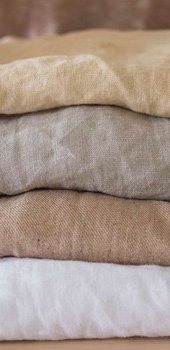
There are seven main types of linen fabric used in apparel: plain-weave linen, loose-weave linen (gauze and voile), dupion linen, linen canvas, linen twill, linen jersey, and linen blends. Each type differs in weave construction, weight, hand feel, drape, and durability, and those differences decide whether the fabric works in a shirt, a dress, a blazer, or a pair of trousers. If you are a fashion brand, boutique label, or retailer sourcing linen clothing, this guide explains each fabric family in practical terms — the weave structure, the typical grams per square meter (gsm), the garment applications, the care behavior, and what to write in your tech pack — so you can brief a collection with confidence instead of guessing from a single fabric swatch.
The word "linen" describes the fiber (flax) as much as it describes a fabric. Every linen fabric starts from the same hollow flax fiber, which is why all linen types share breathability, moisture absorption, and a naturally slubby character. The differences between fabric types come from three variables: how the yarn is woven (weave structure), how heavy the fabric is (gsm), and how it is finished (washed, crinkled, brushed, or left raw). Change any of these and you get a different fabric with a different job. Understanding this one idea is the fastest way to stop being confused by the range of linen names in the market.
We are Linenwind, a linen apparel manufacturer based in Dongguan, Guangdong, China, with more than 20 years of experience producing linen clothing for brands in the US and Europe. Our standard MOQ is 60 pieces per style, sampling takes 7–14 days, and bulk production runs 25–35 days. The guidance below reflects both standard textile reference data and what we see daily on our factory floor in a 3000+ sqm facility operating quality systems under ISO 9001, OEKO-TEX Standard 100, and SEDEX.
What Are the Main Types of Linen Fabric?
Apparel linen is commonly divided into families by weave construction. The weave determines density, surface texture, drape, and durability; gsm determines weight; finishing determines hand feel. The table below is the working classification we use at Linenwind when a buyer sends a tech pack and asks what kind of linen a garment should be made from. It is the same framework used across the textile industry, translated into the decisions a brand actually has to make.
| Linen Fabric Type | Construction | Typical Weight | Hand Feel | Best Suited For |
|---|---|---|---|---|
| Plain-weave linen | 1/1 plain weave | 120–180 gsm | Crisp, smooth, classic | Shirts, blouses, dresses |
| Loose-weave linen | Gauze, voile, handkerchief | 60–110 gsm | Sheer, airy, fluid | Summer tops, cover-ups, scarves |
| Dupion linen | Plain weave with slub yarns | 120–200 gsm | Textured, crisp, subtle sheen | Blouses, dresses, occasion wear, linings |
| Linen canvas | Dense plain weave | 220–400 gsm | Firm, sturdy, structured | Jackets, blazers, trousers, bags |
| Linen twill | 2/1 or 2/2 twill | 180–300 gsm | Soft diagonal, drapes well | Trousers, skirts, workwear |
| Linen jersey | Knit: single, rib, interlock | 140–220 gsm | Soft, stretchy, casual | Tees, loungewear, dresses, sleepwear |
| Linen blends | Flax mixed with cotton, rayon, silk, wool, or polyester | 120–260 gsm | Varies with partner fiber | Cost control, drape, wrinkle resistance |
Two of these families — plain weave and loose weave — account for the majority of summer apparel production. The others exist because different garments demand different structure. A blazer cannot be cut from voile, and a beach cover-up would be unwearable in 400 gsm canvas. When you understand what each construction does, the naming conventions stop mattering: you choose the fabric by the job the garment has to do.
Direct answer: if you only remember one thing, remember this — plain-weave linen between 120 and 180 gsm covers most shirts, blouses, and dresses; every other linen type is a specialized answer to a specific garment problem, from airy summer weaves to structured jacket fabrics.
Plain-Weave and Loose-Weave Linen: The Everyday Workhorses
If a brand starts with a single linen type, it is plain weave. If the brand needs a summer statement piece, it reaches for loose weave. Together these two families cover the majority of what fashion consumers picture when they imagine a linen garment.
Standard plain-weave linen
Plain weave is the classic linen construction: each weft yarn passes over and under each warp yarn in a simple 1/1 pattern. It is the most common linen fabric in the world and the default choice for shirts, blouses, and dresses. In apparel it usually sits between 120 and 180 gsm. At 120–140 gsm it is light enough for summer shirts and warm-weather blouses; at 160–180 gsm it has enough body for dresses, tunics, and relaxed trousers without feeling heavy.
Plain-weave linen takes solid colors, yarn-dyed stripes, and prints equally well, which is why brands use it across nearly every category. It is also the easiest construction to sew: the stable grid does not shift as much as looser weaves, so panels stay true during cutting and seams lie clean. From a factory perspective, plain weave gives the most predictable results across a size run — fewer stretched panels, fewer puckered seams, and more consistent finished measurements. For a first linen program, this predictability is worth more than any exotic surface texture.
Loose-weave linen: gauze, voile, and handkerchief
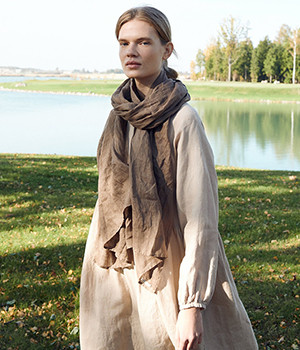
Loose-weave linen is built with fewer threads per centimeter and often with thicker, softer yarns. Gauze has an open, slightly transparent structure; voile is a fine, lightweight plain weave with a soft, almost silky hand; handkerchief linen is a very light, loosely woven fabric that falls in soft folds. These fabrics typically run 60–110 gsm and are the most breathable of all linen types, which is exactly why they appear in high-summer programs.
Loose-weave linen is the right choice when airflow is the product story: summer tops, beach cover-ups, scarves, shawls, and airy dresses. The trade-offs are real. Open weaves have less structure and can snag on jewelry or bag hardware, and the fabric can distort at the needle during sewing. At Linenwind we handle very open constructions with a stabilized cutting layout and recommend French seams or a narrow fusible on stress points, so the airy look survives wear and washing.
Washed and crinkled plain linen
Most plain-weave linen that reaches consumers has been garment-washed or enzyme-washed. The wash softens the fiber, removes residual sizing from weaving, and gives the fabric the relaxed, lived-in look that defines modern linen dressing. A crinkle finish adds deliberate texture by gathering the fabric before heat-setting the creases; the crinkled surface keeps the cloth slightly off the skin, which improves the perceived airflow in summer and hides creasing during wear.
For brands, the finishing choice matters as much as the weave. The same 160 gsm plain weave can be delivered as a crisp, dressy shirt fabric or a soft, casual washed linen depending on the wash cycle. If the finish is not written in the tech pack, a factory defaults to its own standard, and the hand feel your designer approved in sampling may not be what arrives in bulk. Specify the finish by name and approve a wash standard sample before production.
Dupion Linen: The Slubby, Silk-Like Option
Dupion linen is a plain-weave fabric made from irregular, slubby yarns that create a textured, slightly bumpy surface with a subtle sheen. It is often compared with silk dupion, which it resembles visually, but it is made from flax, so it is more affordable and easier to care for. Typical weights are 120–200 gsm.
The slub texture gives dupion visual interest without print or embroidery, which is why it appears in blouses, dresses, and occasion wear, and in jacket linings when a designer wants a refined interior surface. It is also used for accessories, trims, and soft furnishing accents. In a collection, dupion reads as "special" at a glance — the uneven yarn catches the light differently than a smooth plain weave.
There are sourcing details a buyer should know. The slubs are part of the yarn, not a defect, so slight slub-density variation between lots should not be rejected out of hand; the character is the point. Dupion is stiffer than standard plain-weave linen and creases along the slub lines, but a garment wash softens it considerably. Because slubby yarns are less uniform, cutting yield can be slightly lower, which means a small difference in fabric consumption per piece — an experienced factory accounts for this in the marker layout rather than charging a surprise overage later.
Linen Canvas and Linen Twill: Structured Weaves for Trousers and Jackets
Linen canvas: heavyweight structure
Linen canvas is a dense, firm plain weave that runs from about 220 gsm up to 400 gsm. The tight construction gives it structure, strength, and a crisp hand. In apparel it is the fabric of tailored blazers, utility jackets, and structured trousers — garments that need to hold a shape rather than follow the body.
Because the weave is dense, canvas is the least breathable of the main linen types, and that is an acceptable trade when the garment's job is durability and silhouette. Canvas is also the fabric of choice when a brand wants a rugged, natural look with the flax texture clearly visible on the surface. It takes a beating, which is why it is common in workwear-inspired designs and heavier outerwear.
Canvas places specific demands on production. It needs heavier sewing thread and reinforced seams; our sewing team uses slightly larger needles and higher thread tension on canvas programs to avoid skipped stitches at seam crossings. If a blazer is lined and structured, the canvas weight also dictates which interlining to use. These details should be agreed at sampling, not discovered at bulk, because they change the garment's hand and cost.
Linen twill: the durable diagonal weave
Linen twill is woven in a 2/1 or 2/2 pattern that produces the diagonal lines visible on the fabric surface. The diagonal structure makes the fabric softer and more flexible than a plain weave of the same weight, and it drapes better, while the longer yarn floats hide some of linen's natural creasing. Typical weights are 180–300 gsm.
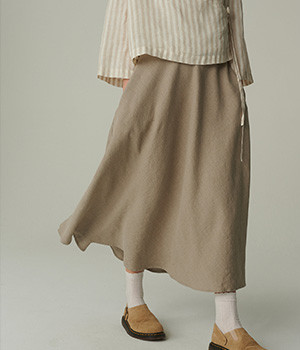
Twill linen is the right choice for trousers, skirts, workwear, and jackets that need durability with movement. Because twill wrinkles less visibly than plain weave, it is often specified for travel-friendly pieces and uniform programs where appearance has to survive a full day of wear. The diagonal surface also takes color well, with a slightly deeper, richer appearance than a flat plain weave.
The practical difference from canvas is the weave, not the weight: a 260 gsm twill moves with the body, while a 260 gsm canvas stands stiff. When a brand says "I want sturdy linen, but it must sit well when I sit down," twill is usually the answer. When a brand says "I want a jacket that holds its line," that is canvas territory. Weight alone does not tell you which one you need.
Linen Jersey: The Knit That Brings Stretch and Softness
Linen jersey is not a woven fabric at all — it is a knit, built from loops of linen yarn. Because it is a knit, it has natural stretch and recovery that woven linen does not have, and it feels softer against the skin from the first wear. Typical weights are 140–220 gsm.
Jersey linen suits T-shirts, tank tops, loungewear, sleepwear, and knit dresses. It keeps linen's moisture management and breathability while adding the comfort of a knit, and it is one of the fastest-growing linen categories in our order book because consumers increasingly expect casual, washable linen that moves with them instead of standing away from the body.
Knitting linen requires different machinery and handling than weaving. The yarn needs careful tension control, and the finished fabric must relax before cutting or the panels will distort. If you source a linen knit from a factory that mostly produces woven linen, ask how they handle relaxation and what they do about pilling control — linen knits can pill under heavy abrasion, and a balanced yarn twist plus a compact structure reduces it. These are the questions that separate a good linen tee from one that looks worn after three washes.
Linen Blends: When 100% Linen Is Not Enough
Blending flax with another fiber changes cost, hand feel, drape, durability, and care. A blend is not a downgrade; it is a design decision. Many of the best-selling linen garments in the market are blends, because a well-chosen partner fiber fixes a specific weakness of pure linen, such as stiffness, cost, or creasing.
Linen-cotton (typically 55% linen / 45% cotton)
The most popular blend in apparel. Cotton adds softness and dimensional stability, reduces cost, and makes the fabric easier to sew, while linen keeps most of its breathability and surface texture. Linen-cotton is a natural first step for brands moving from cotton programs into linen, and it is widely used in everyday shirts, dresses, and children's wear.
Linen-rayon and linen-viscose (typically 55/45 or 50/50)
Rayon and viscose add fluidity and drape, giving the fabric a silkier movement while keeping the flax texture visible. This is a common choice for dresses, blouses, and skirts where movement is part of the design. Viscose also reduces visible creasing slightly and deepens color in dyeing, which is why printed linen-rayon pieces hold their color story well.
Linen-polyester (typically 65/35 to 50/50)
Polyester adds wrinkle resistance, dimensional stability, and lower cost, but it reduces breathability and moisture absorption. This blend suits structured garments and uniform programs where appearance stability matters more than airflow. It is the wrong choice for summer pieces marketed on coolness, because the polyester component does not absorb or transmit moisture the way flax does.
Premium blends: linen-silk, linen-wool, linen-hemp
Linen-silk (often 70/30) is a premium fabric for dresses and blouses with a soft, natural sheen. Linen-wool (often 55/45) is a spring-autumn suiting fabric that drapes and resists creasing better than either fiber alone. Linen-hemp (often 50/50) combines two bast fibers with similar sustainability stories into a rugged, textured fabric for jackets and utility wear.
| Blend | Typical Ratio | What It Adds | What It Costs | Best For |
|---|---|---|---|---|
| Linen-cotton | 55/45 | Softness, stability, lower cost | Some breathability | Everyday shirts, dresses, kids' wear |
| Linen-rayon / viscose | 55/45 to 50/50 | Drape, fluidity, richer color | Some crispness | Dresses, blouses, skirts |
| Linen-polyester | 65/35 to 50/50 | Wrinkle resistance, stability | Breathability, moisture management | Uniforms, structured wear |
| Linen-silk | 70/30 | Sheen, soft luxury hand | Higher price | Premium dresses, blouses |
| Linen-wool | 55/45 | Drape, crease resistance | Higher price, seasonal | Suiting, blazers |
| Linen-hemp | 50/50 | Durability, rustic texture | Softer hand feel | Jackets, utility wear |
Fiber ratio matters for labeling accuracy as much as for performance. In the US and EU, fiber-content labeling requires the actual percentages, and a fabric labeled 55/45 must test within regulatory tolerances. At Linenwind we verify composition on incoming fabric and keep blend records per lot, and we share the composition details as part of pre-production documentation so your labels are correct before the first carton ships.
How to Choose the Right Linen Type for Your Garment
Choosing a linen type starts with the garment, not with the fabric. Define the silhouette, the season, the positioning, and the care promise first; then match the fabric family. The table below is the selection framework we use in daily sourcing conversations with brands.
| Garment Category | Recommended Linen Type | Weight Range | Key Specification Notes |
|---|---|---|---|
| Shirts and blouses | Plain weave or washed plain | 120–160 gsm | Open weave for summer; garment wash for casual feel |
| Summer dresses | Plain weave, dupion, or linen-rayon | 130–180 gsm | Dupion for texture; rayon blend for fluid drape |
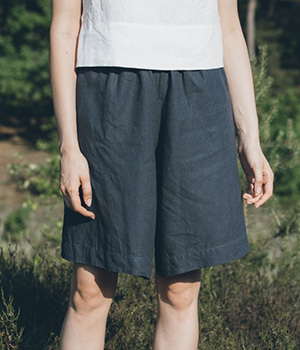
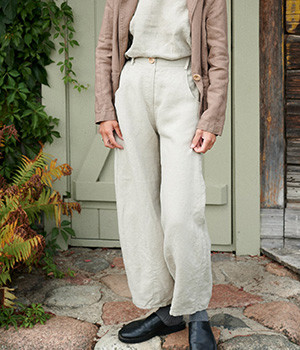
| Trousers | Twill or canvas | 200–280 gsm | Twill for movement; canvas for a sharp crease |
| Jackets and blazers | Canvas or twill | 240–320 gsm | Canvas for structure; twill for a softer shoulder |
| T-shirts and loungewear | Linen jersey | 150–200 gsm | Single jersey for tees; interlock for loungewear |
| Beach and cover-ups | Loose weave (gauze, voile) | 60–110 gsm | Open structure maximizes airflow |
| Occasion wear | Dupion or linen-silk | 130–180 gsm | Texture or sheen for evening positioning |
Match the weight to the season
Seasonality narrows the choice quickly. Summer programs should stay in the 60–180 gsm range with open weaves so the breathability story is honest. Spring-autumn programs can move to twill and canvas at 200–300 gsm, where the fabric carries weight and structure. Winter-weight linen exists above 300 gsm, but it is rarely used in apparel — a linen-wool blend usually serves a cold-weather program better, with warmth and crease resistance in one fabric.
Match the type to the positioning
Positioning decides between fabrics of the same weight. A 160 gsm relaxed shirt for a resort label and a 160 gsm sharp blouse for a city brand are both plain weave, but the finishes, the yarn character, and the trims differ completely. Write the positioning into the brief: if the collection is sold on natural, lived-in comfort, choose garment-washed plain linen; if it is sold on texture and occasion, dupion carries the story; if it is sold on movement and ease, jersey or a rayon blend does the work.
Sample before you commit
Fabric hand feel cannot be judged from a photo, and it changes after washing. At Linenwind we recommend ordering physical swatches of two or three candidate types first, then a fit sample in the selected fabric within 7–14 days. The sample fee is credited against the first bulk order for the same style, so the risk of exploring an unfamiliar fabric type is limited to the sampling cost — a small price compared with committing a whole style to the wrong construction.
What to Specify When Sourcing Linen Garments
When you brief a factory, six specifications control the finished garment: fiber composition, gsm, weave construction, finishing, shrinkage and colorfastness requirements, and sewing quality. Each one should appear in the tech pack, and each one should be confirmed on a production sample.
- Fiber composition — the exact ratio of flax to partner fiber, with the tolerance you will accept. For blends, require composition verification per lot, because labeling regulations in the US and EU depend on it.
- Weight (gsm) — state the target weight and the accepted tolerance. Linen is a natural fiber, and weight varies between lots; a professional factory measures every incoming lot and flags deviations before cutting.
- Weave construction — name the construction (plain, twill, canvas, gauze) and the thread count if the surface is critical. Do not let the factory substitute a similar-looking weave without approval, because drape and durability change with it.
- Finishing — specify washed, enzyme-washed, crinkled, brushed, or raw, and approve a wash standard sample. The finish determines the hand feel your customer will judge the garment by.
- Shrinkage and colorfastness — linen typically shrinks 3–5% on the first wash depending on weave and finishing. A responsible factory pre-washes and tests every lot, then adds a calculated allowance to the pattern before cutting.
- Sewing quality — for linen, 8–12 stitches per inch is the recommended range, with seam types matched to the fabric. Lightweight and loose weaves need adjusted tension to avoid puckering; canvas needs reinforced seams.
| Fabric Type | Wrinkle Tendency | First-Wash Shrinkage | Drape | Durability |
|---|---|---|---|---|
| Plain weave | Medium to high | 3–5% | Structured to soft | Good |
| Loose weave | High | 3–5% | Fluid | Fair, snag risk |
| Dupion | Medium | 3–5% | Crisp | Good |
| Canvas | Low to medium | 2–4% | Stiff | Excellent |
| Twill | Low to medium | 2–4% | Soft, flexible | Excellent |
| Jersey | Medium | 4–6% | Stretch, soft | Good, pilling possible |
| Blends | Depends on partner fiber | 2–5% | Varies | Varies |
Sourcing summary: At Linenwind, the standard MOQ is 60 pieces per style, sampling takes 7–14 days, and bulk production runs 25–35 days from our factory in Dongguan, Guangdong, China. With 20+ years of linen manufacturing, a 3000+ sqm facility, and quality systems under ISO 9001, OEKO-TEX Standard 100, and SEDEX, we produce plain, loose-weave, dupion, canvas, twill, jersey, and blend linen garments for brands in the US and Europe.
Quality control is where linen programs succeed or fail. At Linenwind, every fabric lot is shrinkage-tested before cutting and the test report is shared as part of pre-production documentation. Measurement tolerance on critical points is ±0.5 cm, and seam quality is checked against the agreed stitch range. These details do not change which linen type you choose, but they determine whether the garment you designed is the garment your customer receives after the third wash.
Frequently Asked Questions
Quick reference: for a condensed answer on which linen types to use, see our FAQ What Types of Linen Fabric Are Available?, which includes a comparison table and a buyer's selection checklist.
Final Thoughts
Choosing a linen type is a matter of matching structure to garment: plain weave for everyday shirts and dresses, loose weave for high-summer airiness, dupion for texture and occasion, canvas for structure, twill for movement, jersey for stretch, and blends for cost or drape. The seven families cover almost every apparel application, and once you can see the weave, the gsm, and the finish in any fabric name, you can brief any linen program without guesswork.
If you are planning a linen collection, we can help with fabric selection, sampling, and low-MOQ production. Browse our linen clothing products to see current categories, read our product FAQs for fabric and ordering details, or contact our team with your tech pack. For brands evaluating us as a partner, our company profile explains our factory background in Dongguan, Guangdong, and our 20+ years of linen manufacturing experience. You can also send a direct inquiry and our production team will respond with sampling timelines and a quotation within 24 hours, or read our linen camisole OEM guide for a worked example of a complete linen sourcing process.