



Linen Camisole OEM Factory in China: Complete Guide for Fashion Brands (2026)
Linen Camisole OEM Factory in China: Complete Guide for Fashion Brands (2026)
Linen camisoles have evolved from a basic layering piece into a core SKU across resort collections, minimalist capsule wardrobes, premium loungewear lines, and DTC fashion brands targeting eco-conscious consumers. As more brands redirect their sourcing strategy toward natural fibers, the demand for a reliable linen camisole OEM factory in China has grown sharply — yet many buyers underestimate the specific production challenges that linen presents.
Linen behaves differently from cotton or synthetic blends at every stage of garment manufacturing. Its shrinkage rate, seam behavior, fabric relaxation, and color absorption all require specialized handling that a general garment factory may not have. This makes the choice of OEM partner a critical strategic decision — one that directly impacts product quality, return rates, and brand reputation.
This guide provides a comprehensive overview for fashion brands, boutique labels, and designers evaluating Chinese OEM factories for linen camisole production. It covers fabric selection, MOQ strategy, quality control protocols, cost factors, workflow steps, and the specific capabilities that distinguish a true linen apparel OEM from a general apparel manufacturer.
What Does OEM Mean for Linen Camisoles?
OEM, or Original Equipment Manufacturing, is a production model in which the brand provides the design specifications — including tech packs, measurement charts, construction details, and material specifications — while the factory handles the actual manufacturing. For linen camisoles, this model is the preferred choice for brands that have a clear design vision and want full control over silhouette, fit, fabric, and finishing.
Unlike ODM (Original Design Manufacturing), where the factory proposes its own designs for the brand to choose from, OEM starts with the brand's creative direction. This distinction matters because linen camisole designs often involve nuanced details — strap width and adjustability, neckline shape (square, scoop, V-neck, or cowl), bust dart placement, body length, and hem finishing — that a generic ODM offering may not accommodate.
Five specific areas where OEM gives brands full control:
Silhouette and Fit
From slim layering tanks to relaxed bias-cut resort camisoles. Strap width, neckline depth, and length are defined by your tech pack and graded across your size range.
Fabric and GSM
Choose the exact blend (100% linen, linen-viscose, or linen-cotton) and GSM that matches your silhouette, climate target, and retail price point.
Branding and Packaging
Woven labels, hang tags, QR codes, branded tissue paper, and poly bags — every detail reinforces your brand identity and retail-readiness.
Key distinction: In OEM, the brand owns the design IP. The factory executes. This means you can take your tech pack to another OEM partner in the future without starting from zero — an important consideration for brand equity and supply chain flexibility.
For context, Linenwind operates primarily as an OEM factory with ODM support as an added service. We have found that most fashion brands entering the linen camisole category prefer to retain design ownership while relying on our production expertise for fabric selection, pattern grading, and quality execution.
Why China for Linen Camisole OEM?
China remains the world's largest textile and apparel manufacturing hub for good reason. While countries like Portugal and Lithuania have strong linen heritage, Chinese OEM factories offer a unique combination of cost efficiency, production flexibility, and supply chain integration that is difficult to match elsewhere.
Four structural advantages of Chinese OEM factories for linen camisoles:
- Integrated supply chain. Fabric mills, trim suppliers, button and elastic manufacturers, and finishing workshops are often located within the same industrial clusters. This reduces lead times and simplifies logistics compared to sourcing from multiple countries.
- Competitive cost structure. Labor and operational costs in China remain lower than in Europe and North America, even after recent wage increases. For comparable quality levels, Chinese OEM pricing is typically 30–50% lower than European alternatives.
- MOQ flexibility. Many Chinese OEM factories now accept MOQs as low as 50–100 pieces per style, making them accessible to startups, boutique brands, and capsule collection launches.
- Quality maturity. The export-oriented garment industry in China has matured. Factories serving the US, EU, and Australian markets now operate under strict quality control frameworks and are increasingly adopting OEKO-TEX, GOTS, and BSCI certifications.
That said, not all Chinese factories are equal when it comes to linen. A factory that produces cotton t-shirts or polyester activewear may lack the specific knowledge required for linen garment manufacturing. This is why dedicated linen apparel OEM factories — those with linen-specific production lines, pre-shrinkage protocols, and trained sewing operators — offer a distinct advantage for camisole production.
How to Evaluate a Linen Camisole OEM Factory
Before signing with an OEM partner, evaluate them against these six criteria. These are not aspirational — they are practical requirements that directly affect product quality and your brand's customer experience.
| Criterion | Why It Matters | What to Ask |
|---|---|---|
| Linen handling experience | Linen requires different cutting, sewing, and finishing techniques than cotton or synthetics. | How many linen-only orders have you completed? Do you have linen-specific sewing operators? |
| Pre-shrinkage protocol | Linen shrinks 3–7%. Without pre-treatment, finished garments may not meet labeled sizes. | Do you pre-wash and test shrinkage before cutting? What allowance do you add to patterns? |
| MOQ and scalability | Low MOQ for testing; higher capacity for repeat orders. Both matter at different stages. | What is your minimum per style? Can you scale to 1,000+ per style within the same season? |
| Quality control framework | Consistency across sizes, colors, and production runs defines your brand's quality reputation. | What AQL standard do you use? Do you have inline inspection or only final inspection? |
| Sampling turnaround | Faster sampling means faster time-to-market — critical for seasonal collections. | What is your standard sampling timeline? How many fit revision rounds are included? |
| Communication and transparency | Clear communication reduces errors, delays, and misunderstandings during production. | Do you assign a dedicated account manager? How do you provide production updates? |
Practical tip: Request photos or videos of the factory's linen-specific production line, not just general workshop images. A factory that cannot show dedicated linen handling equipment may not have the specialized experience your camisole project requires.
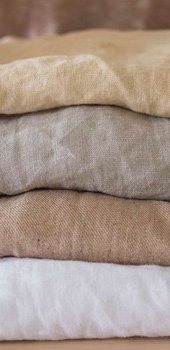
Fabric Options for OEM Linen Camisoles
The fabric you select has the single largest impact on your camisole's final appearance, hand feel, retail positioning, and production cost. Each option below represents a different balance of aesthetics, performance, and price point.
| Fabric | GSM Range | Hand Feel | Best For | Retail Tier |
|---|---|---|---|---|
| 100% Linen | 130-180 gsm | Crisp, breathable, natural texture | Classic minimalist, structured silhouettes | Mid to premium |
| Linen-Viscose | 140-170 gsm | Soft, fluid drape, reduced wrinkles | Resortwear, romantic silhouettes | Premium |
| Linen-Tencel | 130-160 gsm | Silky, eco-luxury, refined touch | Designer brands, high-end boutique | Luxury |
| Linen-Cotton | 150-190 gsm | Stable, easy care, approachable | Mass market, lifestyle brands | Mid-range |
| Linen-Hemp | 140-180 gsm | Rustic, highly durable, eco-friendly | Sustainable niche brands | Premium niche |
GSM guidance for camisole silhouettes:
- 115-160 gsm — relaxed, airy drape with soft movement; ideal for layering pieces
- 180 gsm — greater structure and opacity; suited for fitted camisoles worn as standalone tops
Linen-viscose and linen-Tencel blends have become increasingly popular among OEM clients because they offer the natural aesthetic of linen with improved drape and reduced wrinkling. However, they also require different sewing tension and finishing processes than 100% linen.
[IMAGE_PLACEHOLDER alt="Linen fabric textures for camisole manufacturing: 100% linen, linen-viscose, and linen-Tencel fabric samples shown side by side in natural lighting, on a wooden worktable, soft focus background"]
Linenwind: Dedicated Linen Camisole OEM Factory
Linenwind is a specialized OEM factory based in China, focused exclusively on linen and linen-blend garment manufacturing. With over two decades of production experience, we have developed specific expertise in linen camisole development that general apparel factories cannot easily replicate.
What distinguishes Linenwind as an OEM partner for linen camisoles:
- Dedicated linen production lines. Our sewing operators are trained in linen-specific techniques, including correct needle selection, thread tension adjustment for natural fibers, and seam finishing methods that prevent puckering on lightweight linen fabrics.
- In-house pattern grading and sampling. We maintain our own pattern department with graders experienced in linen shrinkage allowance. Sample turnaround is 7–14 days, with up to two fit revision rounds included in the standard sampling fee.
- Pre-shrinkage and fabric testing. Every linen fabric lot is tested for shrinkage behavior before cutting. We add 5–8% shrinkage allowance to pattern dimensions based on the specific fabric's tested performance.
- Low MOQ with scale path. Starting at 60 pieces per style, OEM clients can test the market with minimal risk and scale to 500+ per style on repeat orders.
- Quality control at every stage. Inline inspection follows each production step — cutting accuracy, sewing quality, finishing consistency — followed by an AQL 2.5 final inspection before packing.
- Full OEM support. From tech pack review and grade rule development to label integration, packaging, and logistics.
OEM clients we typically work with: Boutique brands launching their first linen capsule collection. Designer labels moving from sampling to bulk production. DTC brands scaling their camisole category after successful market testing. Resortwear companies needing seasonal production with reliable quality. Most of our OEM clients are based in the US, EU, Australia, and the UK.
[IMAGE_PLACEHOLDER alt="Linen garment OEM factory workshop image showing linen cutting tables and sewing stations with natural fabric being processed, clean organized production floor, professional lighting"]
The Complete OEM Workflow: Step by Step
Understanding the OEM workflow helps you plan your collection timeline and anticipate each stage's deliverables. Here is how a typical linen camisole OEM project progresses at Linenwind, with realistic timelines at each stage.
- Inquiry and Project Brief (Day 1-3) — Share your brand background, target market, and camisole concept. Include sketches, reference images, or tech packs.
- Fabric and Trim Selection (Day 3-7) — Based on your silhouette and target retail price, we recommend 2-3 fabric options with different GSM levels and blends.
- Quotation and Timeline Proposal (Day 7-10) — You receive a detailed costing breakdown — fabric cost per unit, cutting and sewing labor, trims and labeling, finishing, packaging, and shipping options.
- Sampling and Fit Approval (Day 10-24) — Our pattern team drafts the grade rule and produces a first-fit sample within 7-14 days. Up to two revision rounds included.
- Bulk Production with Inline QC (Day 24-54) — Each production step is inspected inline: cutting accuracy, seam quality, strap reinforcement, and finishing consistency.
- Final Inspection and Shipping (Day 54-60) — AQL 2.5 final inspection before packing. We ship via FOB from Chinese ports, CIF, or door-to-door express.
Total project timeline for a first order: approximately 50-65 days from initial inquiry to shipment. Repeat orders typically take 35-45 days.
MOQ, Pricing, and Cost Factors
Pricing a linen camisole OEM order involves multiple variables. Below is a comparison of industry benchmarks versus Linenwind's standard parameters.
| Parameter | Industry Average (China) | Linenwind OEM |
|---|---|---|
| MOQ per style | 100-300 pcs | 60 pcs |
| Sample development | 14-21 days | 7-14 days |
| Fit revision rounds | 1 included | 2 included |
| Bulk production | 30-45 days | 25-35 days |
| FOB price range | $10-24 / unit | Depends on fabric and spec |
| Pre-shrinkage testing | Often optional or extra | Standard, no extra charge |
Factors that affect your unit price:
- Fabric type and GSM — European linen costs more than Chinese linen; specialty blends are at the higher end
- Strap and hardware complexity — adjustable sliders, metal O-rings, or custom hardware add to costs
- Neckline and construction detail — bias-cut finishing and lined camisoles require more skilled labor
- Custom labeling and packaging — woven labels, hang tags, and branded packaging each add to per-unit cost
- Order volume — first orders at 60 pcs have higher per-unit cost; repeat orders at 300+ pcs benefit from efficiency
Recommended approach: Start with 1-3 camisole styles at 60 pcs each for market testing. Track sell-through and customer feedback, then place repeat orders on your top performers at higher volumes.
Quality Control: What Linen Camisoles Require
Quality control for linen camisoles differs from other garment types in several specific areas. These are the checks an experienced OEM factory should be running as standard procedure.
Pre-Wash and Shrinkage
Linen shrinks 3-7% on first wash. Without pre-treatment, post-laundry fit complaints and returns are inevitable. Pre-wash testing on each fabric lot is mandatory before cutting.
Seam and Strap Reinforcement
Thin camisole straps bear the garment's weight. Stitch reinforcement, bar tacks at stress points, and appropriate seam tape prevent breakage during wear.
Color and Shade Consistency
Linen absorbs dye unevenly across batches. Inline visual inspection under consistent lighting throughout the production run ensures shade consistency.
[IMAGE_PLACEHOLDER alt="Quality control inspection process for linen camisoles: QC inspector checking seam quality, strap attachment points, and fabric consistency at a linen garment factory worktable"]
Additional QC checks specific to linen camisoles:
- Seam puckering verification — lightweight linen fabrics are prone to seam puckering if thread tension is not calibrated correctly
- Fabric relaxation measurement — linen fabric can relax after cutting before sewing; the factory must manage this window
- Strap length consistency — across all sizes in a batch, strap attachment points must match spec within 2 mm tolerance
- Bust dart accuracy — for fitted camisoles, dart positioning must be consistent across all units in the size run
Who Should Choose an OEM Model?
| Brand Profile | Recommended Model | Why |
|---|---|---|
| Established brand with in-house design team | OEM | You own the designs and need precise execution |
| Boutique brand launching linen capsule | OEM or small ODM | Low MOQ OEM lets you test unique designs |
| Designer with technical files and patterns | OEM | Your tech pack is ready — OEM gives IP protection |
| Startup without design or tech pack | ODM or private label | Let the factory propose designs until your brand matures |
| Mass-market retailer with large orders | OEM with volume pricing | OEM at scale gives cost leverage and consistent quality |
| Lifestyle brand testing camisole category | OEM, low MOQ | Start with 60 pcs, validate demand, then scale winners |
Frequently Asked Questions
Final Thoughts
The decision to partner with a linen camisole OEM factory in China should be based on three factors: the factory's specific linen expertise, its MOQ flexibility relative to your stage of growth, and its quality control framework. A factory that scores highly on all three will deliver consistent product quality, minimize returns and fit complaints, and grow with your brand as order volumes increase.
At Linenwind, we have structured our entire production process around the specific demands of linen apparel. Our camisole OEM program covers everything from basic layering tanks to bias-cut resort pieces with custom hardware and branded packaging. Every order — whether 60 pieces or 600 — follows the same quality framework.
60 pieces per style. 7-14 day sampling. 20+ years of linen expertise.
Ready to discuss your camisole project? Contact Linenwind to start the conversation, or browse our custom camisole collection for design inspiration.