Casual Chic Linenwear Custom Manufacturing




Is Linen a Good Fabric for Maternity Wear?
Is Linen a Good Fabric for Maternity Wear?
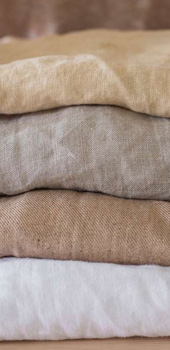
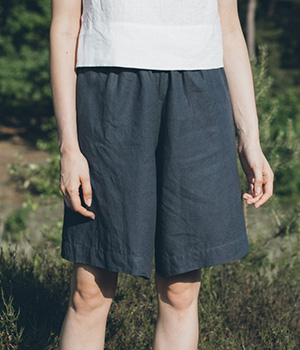
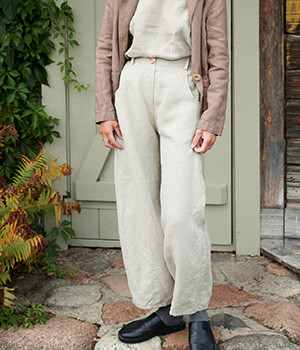
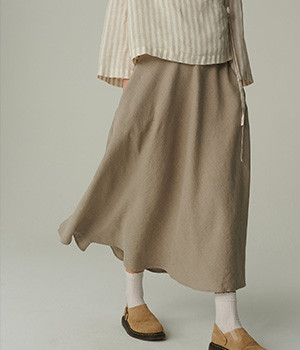
Yes. Linen is one of the better natural fabrics for maternity wear because it breathes, absorbs moisture quickly and softens with every wash, which suits skin that is warmer and more sensitive during pregnancy. The condition is construction: linen has low stretch and low elastic recovery, so a maternity linen garment only works when the pattern carries a proper bump allowance and the waistband is adjustable. With those two elements in place, linen maternity wear serves all three trimesters and often continues into nursing.
Where Linen Helps and Where It Needs Engineering
Most maternity buying decisions fail on a single assumption: that a fabric either suits pregnancy or does not. Linen is a good fabric for maternity wear, but for reasons that are specific, and it has limits that are equally specific. Separating the two is what allows a brand to build a maternity linen range that performs rather than one that merely photographs well.
Thermoregulation
Linen conducts heat away from the body and wicks moisture faster than cotton. During pregnancy, core temperature runs slightly higher and sweating increases, so a breathable fabric reduces the clammy feeling that makes women abandon synthetic maternity wear by the second trimester.
Moisture handling
Linen absorbs up to 20% of its own weight in moisture before it feels damp, then releases it quickly. That is the property that makes linen maternity wear comfortable in humid summers and in heated indoor environments alike.
Softening over time
Each wash relaxes the fibre. A linen dress that feels slightly crisp at purchase becomes noticeably softer by the third trimester, which matches the period when skin sensitivity peaks. This is the opposite of most fabrics, which degrade with washing.
Low stretch
Linen extends very little and recovers poorly. A maternity garment cannot rely on fabric stretch to accommodate a growing bump, so all the accommodation has to come from pattern geometry and an adjustable closure.
Progressive relaxation
Long bias panels grow under their own weight, and waistbands that are only tested for a few extension cycles will relax permanently. Maternity linen needs elastics rated to at least 160% extension and a three-cycle wash test.
Wrinkle visibility
Linen creases. On a fitted maternity dress, creases across the bump read as strain. Looser silhouettes, a mid-weight 170-200 GSM fabric and a garment-wash finish all reduce how much the wrinkling is noticed.
The Four Specifications That Decide Whether It Works
When a brand asks us whether linen is suitable for maternity, the honest answer depends on four specifications rather than on the fibre. Each one is a decision the buyer controls before sampling starts.
1
Bump allowance in the block
Add 2.5-4 cm at the front waist in the first trimester, 5-7 cm in the second and 8-10 cm in the third, placed in the front panel and the front half of the side seam only. Add 1-6 cm of front length across the same stages. A block built this way fits at 34 weeks without changing size; a block made by grading up two sizes will not. The mechanics are the same ones used in plus-size linen pattern adjustments, where the block is corrected before the grade.
2
Adjustable waistband
Specify an internal 2.5-3 cm drawcord elastic rated to at least 160% extension and enclosed in a fabric channel, or a side tie on loose silhouettes. Test recovery after 30 extension cycles, not five. This is the single highest-return detail in maternity linen, and it costs only a few minutes of labour per garment.
3
Fabric weight and finish
Work in the 140-220 GSM band. Below 140 GSM the linen becomes transparent under tension across the bump; above 220 GSM it stops draping. Pre-shrunk fabric keeps first-wash movement at 1-3% instead of 3-7%, which protects the bump allowance you engineered into the pattern.
4
Skin-contact safety
For styles intended for nursing, specify OEKO-TEX Standard 100 Class I for the fabric and trims, keep hardware nickel-free and out of the centre front above the bust, enclose all cord and elastic, and move labels from the centre back neck to the side seam. Our linen clothing FAQ covers the certification questions buyers raise most often at this stage.
Advantages and Disadvantages, Honestly Stated
The table below is the version we use in buyer conversations. It is deliberately unflattering where linen deserves it, because a maternity range built on overstated fabric claims generates returns that no margin absorbs.
| Factor | Advantage for maternity | Limitation to manage |
|---|---|---|
| Breathability | Cooler than cotton in heat, reduces overheating | None significant |
| Moisture absorption | Handles perspiration without feeling damp | Silicone softeners can reduce absorbency |
| Softness | Improves with every wash | First wear can feel crisp; needs garment wash |
| Stretch | None, so no compression over the bump | All accommodation must come from the pattern |
| Recovery | Not applicable | Elastics and bias panels relax; specify and test |
| Shrinkage | Predictable and testable | 3-7% untreated, 1-3% pre-shrunk; must be quoted |
| Wrinkling | Reads as natural in loose silhouettes | Reads as strain on fitted styles |
| Durability | Stronger wet than dry, survives frequent washing | Repeated abrasion at waistband and under-bust |
| Cost | Mid-to-premium positioning is credible | Fabric is 30-45% of unit cost; consumption up 10-18% |
| Certification | Class I certification is achievable | Must match the actual fabric lot, not a generic claim |
Figures reflect standard production at Linenwind's Dongguan workshop: MOQ 60 pcs per style/colour, 140-220 GSM linen, 3-7% first-wash shrinkage on untreated fabric.
How Linen Maternity Wear Performs Across Three Trimesters
A fabric that is comfortable at week 20 is not automatically comfortable at week 36. The table below shows what changes in the body and what the garment has to do in response, so a single style can be specified to serve the whole pregnancy rather than one stage of it.
| Stage | What changes | What the linen garment must do |
|---|---|---|
| Weeks 4-13 | Little visible change; skin sensitivity and body temperature rise | Soft hand feel matters more than allowance; a standard relaxed fit with a drawcord works |
| Weeks 14-27 | Bump becomes visible; waistline moves upward | +5 to 7 cm front waist allowance, waist seam moved to under-bust, 3-4 cm extra front length |
| Weeks 28-40 | Maximum bump; hem climb and waistband pressure appear | +8 to 10 cm allowance, 5-6 cm extra front length, hem re-levelled on the body, elastic rated 160%+ |
| Birth and postpartum | Bump reduces quickly; nursing access needed | Adjustable system closes down 4-6 cm; front or side opening of 20-25 cm for feeding |
| Beyond 12 months | Garment often kept as loungewear | Construction that survives 30-40 washes without seam failure or elastic relaxation |
Allowances are applied to the front panel and the front half of the side seam only. Applying them evenly around the circumference produces a garment that is loose at the back and still tight at the front.
The practical consequence is that maternity linen wear should be bought as a two-round sample, not one. The first round confirms the second-trimester fit and the geometry of the adjustable system. The second confirms the third-trimester fit and the behaviour of the fabric after an industrial wash. We quote 7-12 days per sampling round within a 7-14 day sampling window, so the extra round adds roughly a week to development and prevents the far more expensive outcome of a bulk order that fails at 34 weeks.
Which Linen Weight Suits Which Maternity Style
Weight drives drape, opacity and how the garment reads over the bump. The specifications below are the ones we hold in stock across 50+ linen qualities, so a maternity program can usually be built without custom weaving.
| Style | GSM | Why | Watch point |
|---|---|---|---|
| Maternity camisole, nursing top | 140-170 | Soft drape, cool against skin, layers under knits | Opacity under tension at the bust |
| Midi or maxi maternity dress | 170-200 | Enough body to fall straight over the bump without clinging | Bias panels growing in length |
| Structured nursing dress | 190-220 | Holds a defined shape and a fold-over panel | Stiffness at first wear; needs garment wash |
| Wide-leg maternity trousers | 180-220 | Holds a crease, resists knee bagging | Waistband construction carries the whole fit |
| Postpartum loungewear set | 140-180 | Maximum softness for skin-to-skin contact | Pilling at high-friction areas |
Two finishing notes matter more in maternity than in core womenswear. First, prefer enzyme washing over heavy silicone softening: silicone improves the initial hand feel but reduces absorbency, which removes one of the main reasons a mother chooses linen. Second, specify pre-shrunk fabric. The price premium is small, and it converts a 3-7% first-wash shrinkage into 1-3%, which protects the bump allowance that took two sampling rounds to confirm.
Pre-Production Checklist for Maternity Linen
Use this list before approving a maternity or nursing linen style for bulk. Each item corresponds to a failure we have seen in production or in wear, not to a theoretical risk.
Front waist allowance matches the target trimester (2.5-4 / 5-7 / 8-10 cm)
Front length added and hem re-levelled on a body, not on the flat pattern
Adjustable elastic rated 160%+ extension with 30-cycle recovery test
Elastic fully enclosed in a fabric channel, no direct skin contact
Cord ends anchored and finished, none hanging over 15 cm
Nursing opening 20-25 cm, operable one-handed, modesty panel present
No hardware at centre front above the bust; all metal nickel-free
Seams at side and under-bust flat or bound, no exposed overlock on the bump
Labels moved to the side seam, soft-touch or printed
OEKO-TEX Standard 100 Class I certificate matched to the actual fabric lot
Three-cycle wash test passed: length change under 2.5%, recovery above 92%
Care note written for the product page, including expected shrinkage
How to Wash and Care for Linen Maternity Wear
Because a maternity garment is washed far more often than average, the care routine is part of the product rather than an afterthought. Give the buyer this routine on the product page and the three most common complaints — shrinkage, stiffness and colour fade — largely disappear.
- First wash before wear. Wash the garment once on its own in cold water before the first wearing. This absorbs most of the 3-7% shrinkage while the garment still fits loosely, rather than later when the bump is larger.
- Cold water, gentle cycle. 30 degrees or lower on a short cycle. Hot water accelerates both shrinkage and colour loss, and linen does not need heat to come clean.
- Mild detergent, no bleach, no optical brighteners. Bleach weakens the fibre and brighteners leave a chalky cast on natural linen. Avoid fabric softener as well: it coats the fibre and reduces the absorbency that makes linen worth choosing.
- Line dry in shade, reshape while damp. Tumble drying on high heat is the main cause of unexpected shrinkage beyond the quoted figure. If a dryer is unavoidable, use the lowest setting and remove the garment while still slightly damp.
- Iron on medium heat while damp, or accept the crease. Linen creases by nature. On loose maternity silhouettes the crease reads as texture; on structured styles, a light press at the seams and placket is usually enough.
Two care facts are worth stating explicitly on the page, because customers punish brands for surprises more than for limitations:
- Expect 3-7% shrinkage on the first wash with untreated linen, and 1-3% if the fabric is pre-shrunk. Both are normal and neither is a defect.
- Softness increases with every wash. A garment that feels slightly crisp at purchase will be noticeably softer by the third trimester, which is when skin sensitivity is highest.
For brands comparing fabric routes before finalising a care claim, the grading and length considerations in our guide to petite and tall linen ranges show how length change after washing interacts with size grading — the same calculation applies here once the front panel gains 5-6 cm for the bump.
What a Factory Needs From You
Maternity programs move quickly when the brief is complete and stall when it is not. These are the inputs that change a quote and a sampling date, and the ones we ask for before committing to either.
Tech pack or reference sample
A spec sheet with measurements, or a physical sample we can measure. A reference sample shortens the first sampling round because the silhouette is already agreed.
Trimester and size range
Which stage the style must serve, and whether it continues into nursing. This determines the block, the allowance and whether an opening is required.
Fabric weight preference
A GSM target or a hand-feel description. We hold 50+ linen specifications in stock from 100 to 260 GSM and can send swatches free of charge.
Adjustable system
Drawcord, side tie, button placket or fold-over panel. Each has a different labour cost and a different fit behaviour at the third trimester.
Quantity per colour
MOQ is 60 pieces per style per colour. Sharing one fabric across two styles is the most effective way to protect margin on a small maternity capsule.
Delivery window
Sampling 7-12 days, bulk 25-35 days, first order including dyeing 35-60 days. A delivery date is only firm once fabric and trims are confirmed.
Two claims to avoid. Do not describe a maternity garment as baby-safe unless the fabric is certified OEKO-TEX Standard 100 Class I and you hold the certificate for that lot. And do not state that linen maternity wear "will not shrink" — untreated linen moves 3-7% on the first wash, and a care note that says so prevents more returns than any construction change.
Next Step
Building a maternity or nursing linen line?
Send a tech pack, a reference sample or even a sketch with target measurements. We will confirm the block approach, recommend a fabric weight and return a costed quote within 3-7 working days. Sampling is 7-12 days per round, the sample fee of 40-150 USD is fully refundable against bulk, and swatches are free.
Request a Maternity Linen Quote Read the Linen FAQSource: Linenwind, linen garment manufacturer in Dongguan, China. Figures describe standard production practice: MOQ 60 pcs per style/colour, sampling 7-12 days within a 7-14 day window, bulk 25-35 days, first order 35-60 days, 3-7% first-wash shrinkage on untreated linen, AQL 2.5 inspection, ISO 9001 and OEKO-TEX Standard 100 certified, SEDEX audited. Allowance figures are production targets for maternity blocks and should be confirmed against your own fit model.