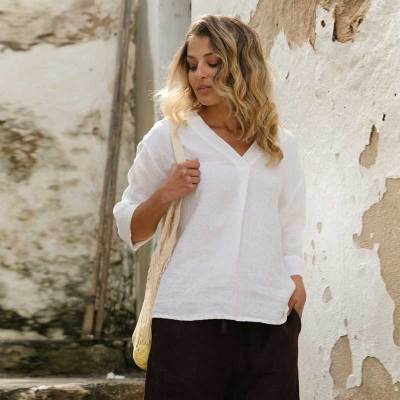
Casual Chic Linenwear Custom Manufacturing
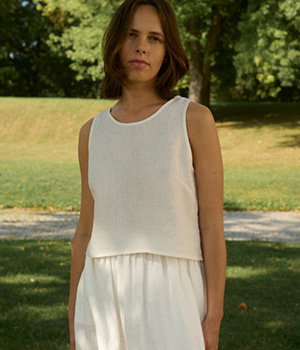
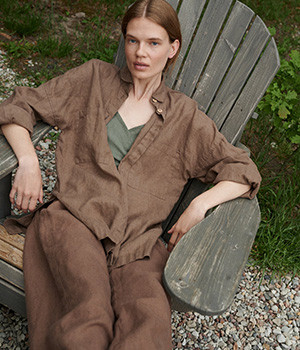
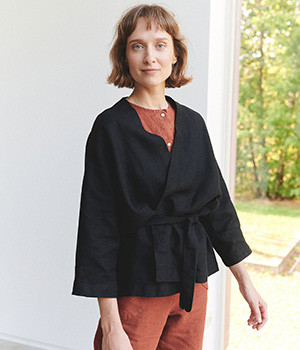
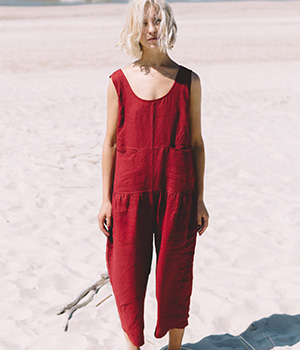
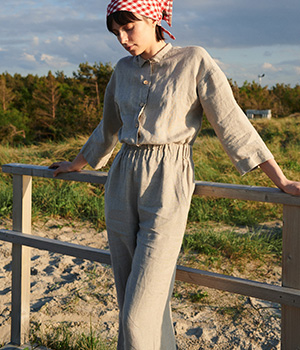
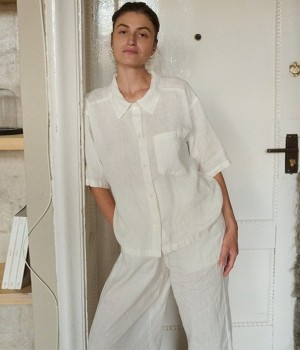

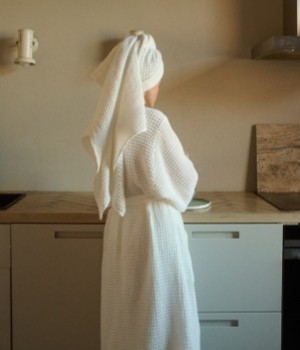
What GSM Linen Should I Use for Dresses, Shirts and Pants?
Fabric Selection
What GSM Linen Should I Use for Dresses, Shirts and Pants?
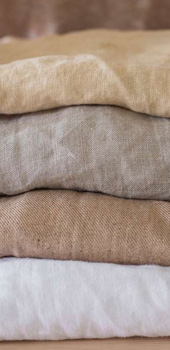
Use 120-170 GSM for shirts, 140-190 GSM for dresses, and 180-260 GSM for pants and trousers. Those bands are starting points, not rules: a lined, structured dress can sit at 190 GSM while a fluid summer dress works at 130 GSM, and a wide-leg trouser can drop to 170 GSM if the weave is a tight twill. Choose the band by what the garment has to do (drape, hold shape, resist abrasion, stay opaque), then confirm the exact cloth on a washed swatch. Weight alone does not predict hand-feel, so the band narrows the choice but never finishes it.
If you only remember one thing: light weights drape and crease, heavy weights hold shape and resist wear, and the weave decides which of those you actually get.
Recommended Linen GSM by Garment Type
The table below reflects the ranges we quote most often for commercial linen apparel in the 100-260 GSM band we hold in stock. Each range assumes a plain weave unless noted, and each one can be stretched by roughly 15 GSM in either direction when the weave, lining, or finishing route changes.
| Garment | Typical GSM | Best weave | What the band is protecting |
|---|---|---|---|
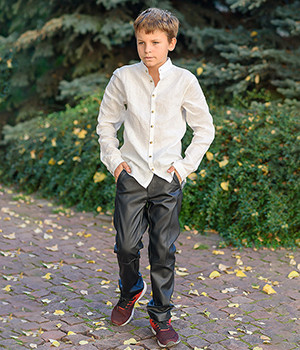
| Summer shirt, camp collar | 120-150 | Plain, open sett | Breathability and a dry, crisp hand |
| Formal or overshirt | 150-175 | Plain, tighter sett | Opacity, collar structure, fewer creases |
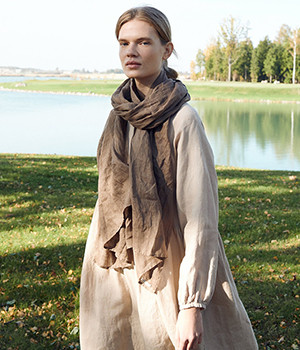
| Slip dress, unlined | 120-150 | Plain, high sett | Drape without transparency |
| Day dress, lined bodice | 150-190 | Plain or basket | Shape retention with soft movement |
| Structured midi dress | 180-220 | Twill or herringbone | Architectural line, less cling |
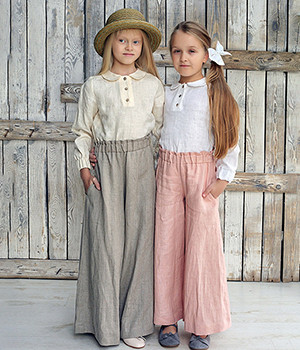
| Drawstring and pull-on pants | 170-200 | Plain or basket | Soft waist, enough body to fall straight |
| Tailored trousers | 200-240 | 2/1 or 2/2 twill | Abrasion at seat and knee, crease recovery |
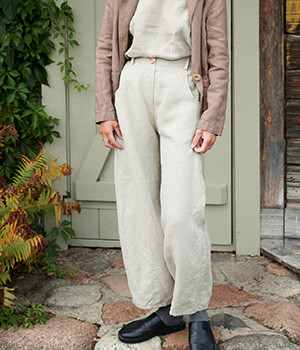
| Wide-leg statement trouser | 180-230 | Twill or heavy plain | Vertical fall without collapse |
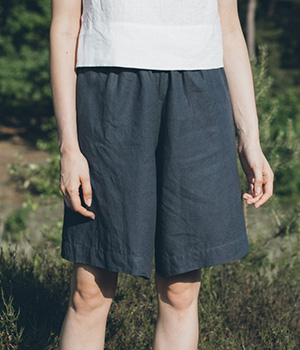
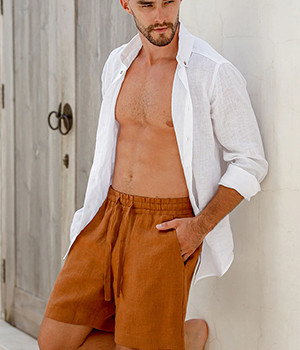
| Shorts | 150-200 | Plain or basket | Durability without stiffness |
| Light jacket or overshirt | 210-260 | Twill, herringbone | Structure, wind resistance, seam strength |
Ranges assume 100% linen. Blends with cotton, viscose or silk shift the hand and usually allow a lighter weight for the same visual density. Always confirm on a finished, washed swatch rather than on the greige specification.
If you want the underlying explanation of why two fabrics at the same weight feel different, our article on choosing the right linen GSM walks through the weight bands garment by garment.
Dresses: Why the Band Is So Wide
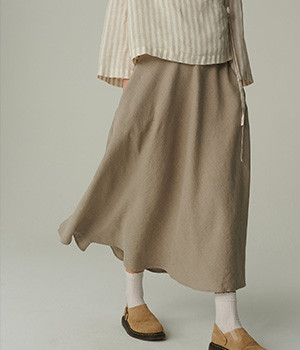
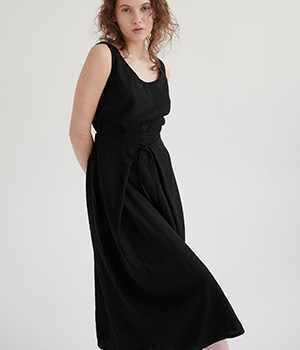
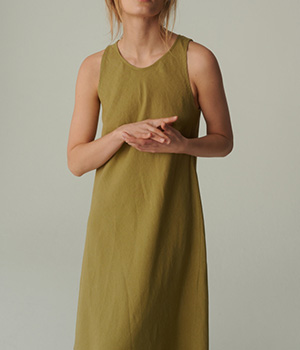
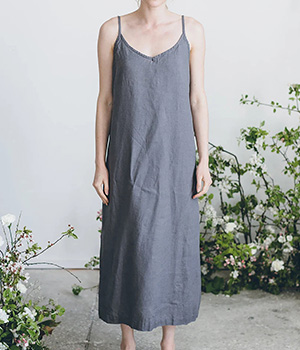
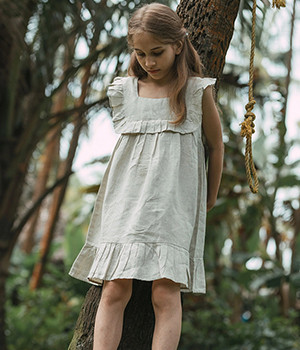
Dresses span the widest GSM range of any linen category because the garment type covers two opposite intentions. A slip dress or a beach cover-up wants movement: the cloth should fall and swing, follow the body loosely, and feel cool against the skin. A structured midi or a shirt dress wants line: the cloth should hold a defined shoulder, a clean placket, and a hem that does not collapse into the body.
For the fluid end, work in the 120-150 GSM range with a tight plain weave. The tight sett is what makes a light cloth wearable without a lining: it raises cover factor, which is the real driver of opacity. A 130 GSM plain weave at a high sett can be less revealing than a 160 GSM open basket weave, which is the single most counter-intuitive fact in lightweight linen buying.
For the structured end, move to 180-220 GSM and consider a twill or a herringbone. The diagonal float structure gives the cloth more body for the same mass and helps it hold a pressed line through a day of wear. A 200 GSM twill dress will press cleanly and hang straight; a 200 GSM loose plain weave will be heavy and soft and will not hold a sharp seam. How that weight reads on a finished silhouette is covered in our guide to linen garment design.
Between those ends sits the commercial centre of the dress market, 150-190 GSM in plain or basket weave. It is the range that survives a lined bodice, a waist seam, and a hem finish without either going sheer or turning into a coat. If a style has a fitted bodice and a gathered skirt, the same fabric has to do two jobs, and 160-180 GSM is usually where both jobs are acceptable.
Test opacity on the finished cloth, not on the roll. Hold the actual swatch against a window after the finishing wash. If you can read text through it, the dress needs a lining or a tighter sett, regardless of what the GSM says.
Shirts: Light, but Not Too Light
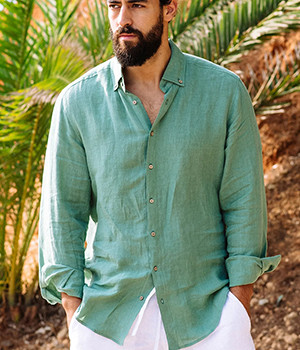
Linen shirting lives between 120 and 170 GSM, with 140-160 as the commercial centre. Below 120 GSM the cloth becomes fragile in the seam: yarns slip, the placket edge frays, and the collar interfacing starts to show through. Above 175 GSM the shirt stops behaving like a shirt and starts behaving like a light jacket, which is fine for an overshirt and wrong for a dress shirt.
The failure mode at the light end is not only transparency. Thin linen also creases harder in relative terms, because there is less mass to resist folding, and it can pill at the collar and cuff where friction is highest. A 125 GSM shirt in a soft, loosely twisted yarn will look tired after ten washes. The same weight in a tighter twist and a tighter sett will hold up noticeably better, which is why twist and sett belong on the specification alongside weight.
At the heavy end, 165-175 GSM plain weave gives a shirt with a drier, more architectural hand: good for oversized fits, camp collars, and styles where the shirt is worn open over a tee. It also photographs with more structure, which matters for lookbooks. The trade-off is warmth and weight on the body, and a longer break-in period before the cloth softens.
Pants: Where Weight Earns Its Keep
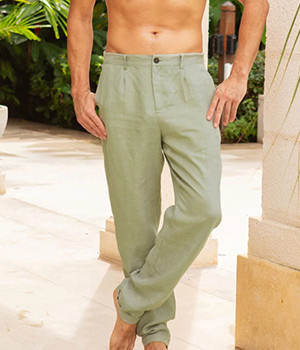
Trousers are the category where GSM genuinely matters most, because the garment is under continuous mechanical load. The seat abrades against chairs, the knees flex thousands of times, and the waistband carries the whole garment's weight through the seams. A 140 GSM linen trouser is possible, but it will show wear at the seat faster than a 200 GSM twill, and it will show the pocket bag through the front panel in strong light.
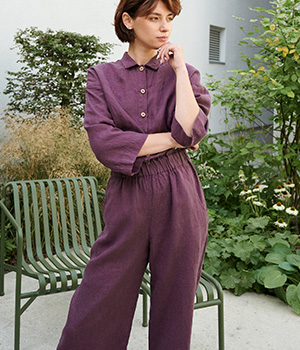
The practical band is 180-260 GSM, with 200-230 the centre for tailored styles. A 2/1 or 2/2 twill is the usual choice: the floats put more fibre at the surface, which improves abrasion resistance and gives the cloth a smoother, more fluid fall than a plain weave at the same weight. For a soft, pull-on, resort-style trouser, 170-200 GSM in plain or basket weave works because the fit is loose and the strain points are different.
Above 240 GSM the cloth starts to behave like a lightweight bottom-weight. It holds a pleat, presses sharply, and lasts, but it also takes longer to break in and can feel stiff against the skin in heat. For a summer tailored trouser in a hot climate, 210-230 GSM twill is usually the better compromise. For a autumn or travel trouser, 240-260 GSM is defensible and often preferred by buyers who want the garment to keep its shape in a suitcase. Whatever weight you choose, the first wash will move the garment by the usual 3-7%, so build the allowance before cutting; our guide to linen shrinkage control explains how that allowance is calculated.
What Happens When the Linen Is Too Thin
Thin linen fails in ways that are visible to the customer within the first month. The most common problems we see on reorders that were underpriced and underweighted:
- Seam slippage. At a loose sett with fine yarn, the threads pull apart along the seam line, and the seam opens under tension. This is a construction failure, not a wear failure, and it often appears in the first fitting.
- Pocket show-through. On trousers and shirt dresses, the pocket bag becomes visible through the front panel under strong light. It is a cover factor problem, and it cannot be fixed by pressing.
- Collar and cuff collapse. A shirt collar needs a minimum mass to hold its roll. Below roughly 130 GSM in plain weave, the collar falls flat within an hour of wear.
- Faster surface wear. Thin cloth has less fibre at the abrasion points, so the seat, elbows and cuffs thin and fuzz sooner, even when the fibre quality is good.
- Harder creasing. Less mass means less resistance to folding, so the garment looks more crumpled after a day of wear, which reads as lower quality even when it is simply lighter.
What Happens When the Linen Is Too Thick
Overweighting is the less discussed failure, because heavy cloth feels premium in the showroom. In wear, the problems are different but just as real:
- Heat load. A 250 GSM trouser in a humid summer city traps more heat and moves less air than a 200 GSM twill. The customer experiences this as clamminess, not as quality.
- Stiff drape. Heavy plain weave hangs in flat planes rather than soft folds. On dresses and wide-leg trousers this changes the silhouette the designer intended.
- Seam bulk. Thick cloth produces bulky seam allowances, especially at the waistband, fly and hem. It requires more pressing and can look lumpy on lightweight styles.
- Higher cost per garment. Heavier fabric yields fewer metres per kilogram and consumes more per marker, which raises unit cost before any other change is made.
- Longer break-in. Heavy linen softens with washing, but the first several wears can feel rough, which affects reviews for direct-to-consumer brands.
How to Choose the Right Weight in Five Steps
1
Define the garment's main job. Drape, structure, opacity, or abrasion resistance. Write it down in one sentence. A dress that must not need a lining and a dress that must hold a pleated skirt are different briefs even if both are called "midi dress".
2
Set the climate and season. Hot, humid markets push the band down by 10-20 GSM. Cooler markets and travel programs push it up. If the same style sells in both, consider two qualities rather than one compromise weight.
3
Choose the weave before the weight. Decide plain, basket, twill or herringbone based on the surface and drape you want, then pick the GSM inside that weave's comfortable band. Choosing weight first and weave second is how buyers end up with a heavy plain weave that behaves nothing like the sample they approved.
4
Check opacity, seam strength and drape on a swatch. Backlight test for opacity, fold-and-rub test for seam slippage, corner-hold test for drape. Fifteen minutes on a real swatch prevents most of the surprises that otherwise appear at the photo shoot.
5
Wash one swatch and re-judge. First-wash shrinkage on linen typically lands in the 3-7% band. Wash at the care-label temperature, dry the way the label instructs, and confirm that the hand, opacity and dimensions still meet the brief. That washed swatch becomes the approval standard for bulk.
Cross-Check Table: Weight Against Use Case
| Use case | Suggested GSM | Why this weight |
|---|---|---|
| Resort and holiday capsule | 120-160 | Packable, quick-drying, cool in heat; accepts a relaxed fit |
| Everyday summer shirting | 140-165 | Balances opacity, breathability and seam strength |
| Unlined slip dress | 120-145 | Drape and swing; requires a tight sett for opacity |
| Lined occasion dress | 160-190 | Holds a bodice seam and a clean hem |
| Tailored trouser, warm market | 200-230 | Abrasion resistance without excess heat |
| Tailored trouser, cool market | 230-260 | Press retention and shape through travel |
| Workwear-inspired overshirt | 200-250 | Seam strength, wind resistance, structured collar |
| Loungewear and sleepwear | 130-170 | Soft hand after wash, low seam bulk |
Where a style crosses two use cases, choose the weight that satisfies the more demanding one and adjust the fit or the lining to compensate.
Specification Checklist Before You Order
Once the band is chosen, the weight has to be locked down in a way a factory can repeat. Each of these items belongs on the purchase order, not in an email thread, and the structure of a technical pack that carries them is set out in our guide to tech packs for linen clothing:
GSM figure with tolerance, and the stage it was measured at: greige, finished, or after-wash
Yarn count for warp and weft, plus twist direction if the hand depends on it
Sett in ends and picks per inch, or the mill's construction code
Weave structure and float pattern where relevant
Finishing route in sequence: washed, enzyme, stone, calendered, compacted
Finished width in centimetres and usable width after washing
Shrinkage band per direction with the test method named
Sealed approved swatch retained by both parties, labelled with lot and quality code
Do not convert a weight recommendation into a purchase order on its own. The same GSM in two weaves can fail differently: a 160 GSM plain weave may be too sheer for an unlined dress, while a 160 GSM twill may be too stiff for a slip style. The band narrows the search; the swatch makes the decision.
How Linenwind Supports Weight Selection
50+ qualities in stockPlain, basket, twill and textured weaves across 100-260 GSM, so weight selection starts from real cloth rather than a catalogue description.
Swatches before sampling feesStock swatches are sent free so you can run the backlight and drape tests before committing to a development round.
7-12 day samplingSampling window from approved tech pack to sample in hand, with a 7-14 day overall development window.
60 pcs MOQPer style and colour, which keeps a weight trial affordable for a first order.
AQL 2.5 inspectionFinished-goods inspection to AQL 2.5, with fabric-stage checks on shade, width and hand.
ISO 9001 and OEKO-TEXFactory certified to ISO 9001 with OEKO-TEX Standard 100 materials and SEDEX membership.
Getting a Recommendation for Your Style
The fastest route to a correct weight is a short brief: garment type, target market and season, whether the style is lined, and the hand you want in three words. Send that with a reference garment or photo if you have one, and the development team can propose two or three qualities with swatches, rather than a single guess. Initial feedback comes within 48 hours and a full quotation within 3-7 working days.
For broader context on how weight fits into the rest of the technical brief, see our linen garment design guide. If you are comparing multiple styles across a season, the linen FAQ library covers sampling, MOQ and production timelines, and our contact page reaches the team directly.
Need a weight recommendation for a specific style?
Send the garment type, market and target hand-feel. We will reply with two or three suitable qualities, GSM and weave included, plus swatches if you need them.
MOQ 60 pcs per style and colour. Sampling 7-12 days. Bulk 25-35 days after approval.
Ranges in this answer reflect commercial linen apparel programs in the 100-260 GSM band and standard first-wash shrinkage of 3-7% for 100% linen. Individual results depend on yarn count, sett, weave and finishing route; confirm on a finished, washed swatch before bulk commitment.