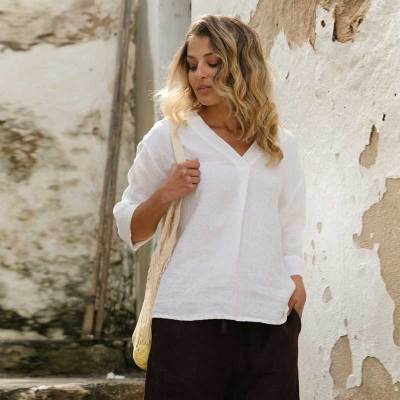
Casual Chic Linenwear Custom Manufacturing







How Should Linen Silhouette Be Chosen by Sales Channel?
Direct answer
Choose the silhouette by how much fit information the channel gives the customer. DTC and boutique channels can carry oversized and boxy shapes because you control photography, model measurements and styling; multi-brand wholesale needs relaxed or lightly boxy blocks that sell without explanation; marketplace and corporate channels need a relaxed block that matches a conventional size chart. Then adjust body length and sleeve length for the market, and verify the block on two body types before grading.
Silhouette is usually debated as a design question, but in production it behaves as a channel question. The same oversized linen shirt can be a bestseller in one channel and a return-rate problem in another, not because the garment changed but because the information around it changed. Below is the channel table we use in first buyer conversations, the market overlay that sits on top of it, and the sampling checks that decide whether the shape survives contact with customers.
Linenwind is a Dongguan B2B linen factory working with brands in Europe, North America and Asia: MOQ 60 pieces per style per colour, sampling 7–12 days, bulk 25–35 days, more than 50 fabric specifications in stock. Silhouette decisions are locked at sampling, which is why this answer focuses on what to test rather than on what looks good on a mood board.
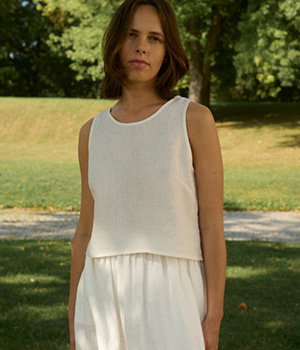
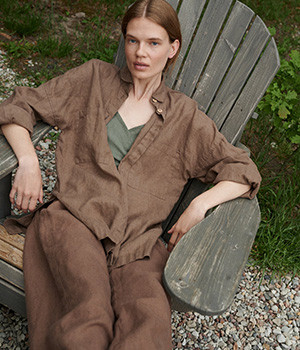
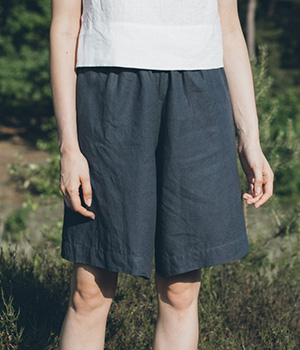
DTC: oversized
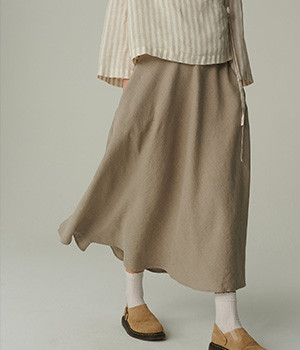
Wholesale: relaxed
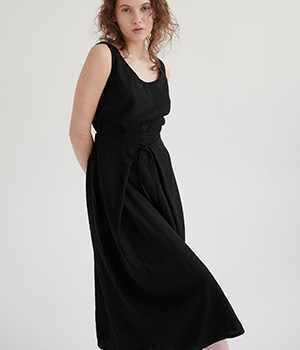
Corporate: graded
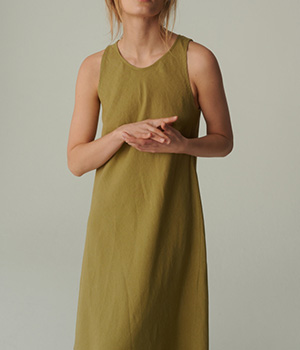
Resort: unlined
Why Channel Decides Silhouette More Than Country Does
Two brands can sell into the same country with the same fabric and need different blocks, because channel determines three things that no pattern can compensate for: how much the customer knows before buying, how much it costs to take the garment back, and what role the piece plays in the assortment.
Information at point of sale
Your own store can show model height, chest measurement, the size worn and a video of movement. A marketplace listing often shows one flat image and a size chart nobody reads. Volume that is explained sells; volume that is unexplained reads as the wrong size.
Returns exposure
Direct returns cost you shipping both ways plus processing. Wholesale returns cost you a buyer relationship. The more a channel punishes a fit miss, the more conservative the block should be, and the closer the body length should sit to what the market already buys.
Assortment role
A DTC hero piece has to look different from everything else on the page; a wholesale basic has to sit beside a buyer's existing range without competing with it. Boxy shapes work as heroes and badly as basics; relaxed shapes work as basics and weakly as heroes.
This is also why the country overlay comes second, not first. A German concept store and a German department store buy in the same country but not the same silhouette, because one sells styling and the other sells replacement. Our oversized linen shirt production notes cover the extreme case: what it takes to make volume look deliberate rather than accidental.
Silhouette by Sales Channel
The table below is the working version we send with a quote. Ease figures are chest ease over body at the base size; length is relative to a standard block. Treat them as starting points for a sampling brief, not as rules that override your own size chart.
| Channel | Silhouette | Chest ease | Body length | Fabric weight | What to sample first |
|---|---|---|---|---|---|
| Own DTC store | Oversized or boxy hero | 18–26 cm | Standard to +4 cm | 150–220 GSM | Signature style in two colourways, photographed on two models |
| Multi-brand wholesale | Relaxed | 10–16 cm | Standard | 140–190 GSM | Core shirt and dress in the buyer's best-selling colour |
| Boutique and concept store | Boxy, short | 16–24 cm | −4 to −8 cm | 170–240 GSM | One boxy top with a straight hem, one wide trouser |
| Resort, hotel and travel retail | Relaxed to oversized, unlined | 14–22 cm | Standard to +6 cm | 120–180 GSM | Shirt, short and dress in one fabric family |
| Marketplace and social commerce | Relaxed only | 10–14 cm | Standard | 140–180 GSM | One block, three colours, tight size range |
| Corporate, uniform and hospitality | Relaxed, consistent across sizes | 8–14 cm | Standard, seat-tested | 160–200 GSM | Full graded set at both extreme sizes |
| Department store and chain retail | Relaxed to lightly boxy | 12–18 cm | Standard, market-adjusted | 150–200 GSM | Three-size set with a fit session on a live model |
Ease figures assume a woven linen or linen-blend fabric. The same ease in a 110 GSM voile behaves like a much larger garment than in a 220 GSM canvas, so weight and silhouette should be signed off together.
Two rows in that table cause most of the disagreements we see. The first is DTC: brands often choose an oversized block for a channel that has excellent fit information, then photograph it on a single 175 cm model, which removes the advantage and produces returns from shorter customers. The second is marketplace: sellers frequently import a DTC bestseller into a channel with no fit content, where the same block creates a return problem that looks like a quality complaint.
The rule that resolves both: match the silhouette to the information, then close the gap with content. If you want an oversized shape in a low-information channel, budget for a size guide with garment measurements and a model height note, because that content is doing the job the block cannot do by itself. The content that carries volume in a weak-information channel is specific:
- Garment measurements, not body measurements. Chest, length and sleeve measured flat on the garment, so the customer can compare it against a piece they already own.
- Model height and size worn. One line under the image, not a paragraph in the description.
- A movement note. Whether the sleeve is meant to sit at the wrist or past it, and whether the hem is meant to hit the hip or below it.
The Market Overlay: What Changes on Top of Channel
Once the channel is settled, three market adjustments decide whether the shape reads correctly: body length, sleeve length and shoulder structure. The table below shows the direction of adjustment rather than absolute numbers, because base sizes differ by market and by customer tier.
| Market | Typical adjustment to the channel block | What buyers check first in sampling |
|---|---|---|
| Germany, Netherlands, Nordics | Shorten body slightly; keep volume structural; reduce trim | Whether the volume is justified; hand feel; no visible branding |
| France, Italy, Spain | Keep drape; avoid shortening; lighter weight | How the fabric falls on a moving body; colour depth |
| United Kingdom | Add 2–4 cm body length; keep armhole usable | Armhole comfort; hem position at the hip |
| United States | Add 3–5 cm body and sleeve length; widen sleeve opening | Length on a taller fit model; whether the shoulder collapses |
| Japan | Shorten body; square the shoulder; raise the hem line | Straightness of hem; inside finish; controlled volume |
| South Korea | Lengthen sleeve; drop shoulder further; keep body long | Sleeve length relative to wrist; shoulder line softness |
| Australia | Keep unlined; lighter weight; relaxed armhole | Heat comfort; crease recovery after packing |
Overlays compound. An oversized US wholesale order and an oversized Japanese DTC order need different body lengths and different shoulder treatments even if the chest ease is identical.
There is a cost consequence here that is easy to miss. Each overlay is a pattern change, and a pattern change on an existing block is cheap; a new block is not. Brands selling into three markets usually keep one block per channel and apply market overlays as grade-rule variations on length, which preserves the fabric buy and the marker while still delivering the length each market expects.
A Five-Step Way to Decide
The sequence below is designed to prevent the most expensive mistake in silhouette work: cutting a size set before anyone has worn the garment.
1
Name the channel and the information it gives
Write one sentence: where the garment is sold, what the customer sees before buying, and how returns are handled. That sentence eliminates most silhouettes immediately.
2
Pick the block, not the mood word
Relaxed, oversized or boxy, with chest ease, shoulder drop, armhole depth and body length expressed in centimetres. A supplier can cut this; a supplier cannot cut "easy but elevated".
3
Pair the block with a fabric weight
Oversized at 150–200 GSM, boxy at 170–240 GSM, relaxed at 120–180 GSM as starting ranges. Weight decides whether the shape holds or collapses, and the linen GSM guide explains how density and weave shift the hand at the same number.
4
Apply the market overlay
Adjust body length, sleeve length and shoulder structure for the market, then write the final numbers into the tech pack. Do this before the pattern is digitised, because changing length after grading means re-grading every size.
5
Verify on two bodies, then grade
One sample on a base-size fit model and one on a body two sizes away in the direction your customer base skews. Only after both pass should the size set be graded and the marker cut.
What to Verify at Sampling
Sampling is the only cheap moment to discover that a silhouette does not work. The checklist below is what we run with buyers before bulk release; it takes about an hour per style and prevents the two failures that cannot be fixed later, a collapsed shoulder and a hem that rides up when the customer moves.
Chest flat measurement against the tech pack, at the tolerance you will accept in bulk
Shoulder width and drop, measured point to point, not estimated by eye
Armhole depth and sleeve cap shape, checked by lifting both arms overhead
Sleeve opening and cuff proportion, especially on oversized blocks
Body length from high shoulder point, on the intended customer height
Hem behaviour while seated: no more than about 4 cm of rise
Straightness of the side seam and hem on boxy shapes
First-wash shrinkage in both directions at the printed care temperature
Run the checks in that order, because each one can invalidate the next. There is no point measuring hem rise on a sample whose armhole is already wrong, and no point washing a sample that will be re-cut. Record the numbers rather than the impression: "shoulder collapsed" is a note, while "armhole depth 3 cm deeper than spec, sleeve cap height 1.5 cm short" is an instruction the pattern room can act on.
- Measure before trying on. Flat measurements catch spec drift that a mirror hides.
- Try on two body types. Volume behaves differently on a 160 cm and a 175 cm frame, and differently again across the bust.
- Move in it. Lift arms, sit, walk, reach forward. Linen has little stretch, so every restriction shows up as a pull line.
- Photograph at two heights. Chest height flatters; waist height approximates a phone listing.
- Wash one piece. Linen blends typically shrink 3–7% on the first wash, and boxy shapes lose width visibly.
What the Wrong Choice Costs
Silhouette errors are rarely catastrophic per unit, which is why they survive so long. They show up as a few percent of returns, a wholesale account that reorders two styles instead of five, or a size set that sells through at the extremes and stalls in the middle. The production side is easier to quantify.
| Decision | Fabric effect | Typical FOB effect | Where it shows up later |
|---|---|---|---|
| Relaxed instead of fitted | +5–12% consumption | +2–4% | Almost nowhere; usually the safest upgrade |
| Boxy instead of relaxed | +5–10% consumption, more marker waste | +3–5% | Length complaints if the market expects a longer body |
| Oversized instead of relaxed | +10–18% consumption | +4–7% | Returns and "runs large" reviews in low-information channels |
| Re-cutting a block after grading | New marker, new sample set | One full sampling round | Calendar slip of 2–3 weeks before bulk |
FOB effects assume fabric at 30–45% of unit cost and labour at 25–35%, which is the normal split in a linen program. Replace the percentages with your own quote before modelling margin.
Read the last row carefully. The most expensive silhouette decision is not choosing oversized; it is choosing it late, after the size set has been graded. A block change at that point costs a sampling round and pushes the bulk start, and in a Q4 or resort calendar a two-week slip is often the difference between full-price sell-through and a markdown.
Do not approve a silhouette from a flat sketch or a single fit-model photo. Neither shows armhole collapse, hem rise, or how the shape behaves on a body two sizes away from the model — the three failures that generate most fit-related returns in linen.
Practical Ranges for Planning
MOQ
60 pieces per style per colour, so a two-silhouette test does not require a large commitment.
Sampling
7–12 days per round, with two rounds normal when a new block is being validated.
Bulk
25–35 days after sample approval; first orders run 35–60 days including fabric booking.
Sample fee
$40–150 per style, credited against the bulk order; swatches are free.
Inspection
AQL 2.5, with ISO 9001, OEKO-TEX Standard 100 and SEDEX in place.
Quote
48-hour initial response, 3–7 working days for a full costing.
Next Step
Send the channel, the market and the five controlling measurements, and we will come back with the block we would cut, the fabric weight we would pair with it, and the consumption figure at your order size.
Request a silhouette review Read the dress manufacturing guideSource: Linenwind production practice, Dongguan, China. Figures reflect standard program terms: MOQ 60 pieces per style per colour, sampling 7–12 days, bulk 25–35 days, first order 35–60 days, fabric 30–45% and labour 25–35% of unit cost, first-wash shrinkage 3–7%, fabric weight range 100–260 GSM. Ease and length ranges are working starting points for sampling briefs, not universal fit standards.