Casual Chic Linenwear Custom Manufacturing

Which Linen Content Ratio Should I Choose for Each Garment Type?
Direct answer
Choose 45–60% linen for shirts, 30–55% for dresses and skirts, 20–45% for tailoring, and 30–55% for loungewear. The partner fibre matters as much as the percentage: cotton for shirts, viscose or Tencel for drape, wool or polyester for shape recovery, cotton or modal for softness.
There is no universal "best" linen content. The ratio that works is the one that delivers the behaviour the garment needs — body, drape, recovery or softness — at a cost and care level the customer will accept. Below is the working table we use when a brand asks us to propose a linen blend, plus the myths that cause most sampling rounds to repeat.
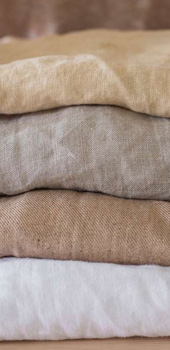
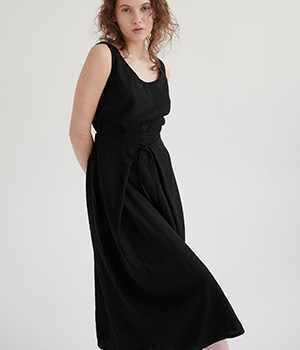
Shirts 45–60%
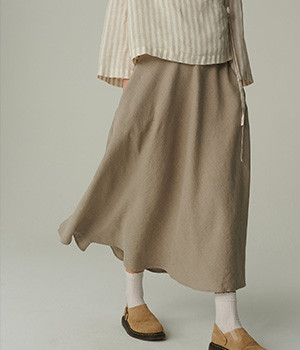
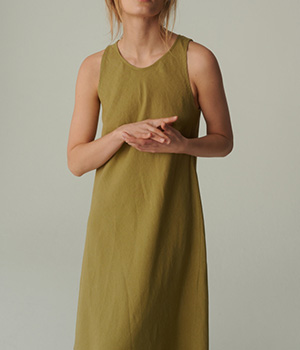
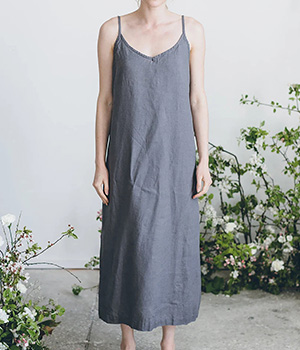
Dresses 30–55%
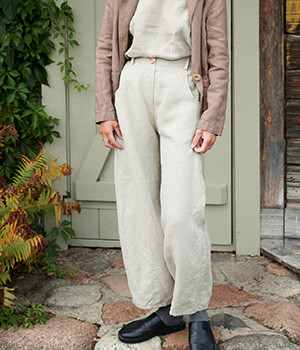
Tailoring 20–45%
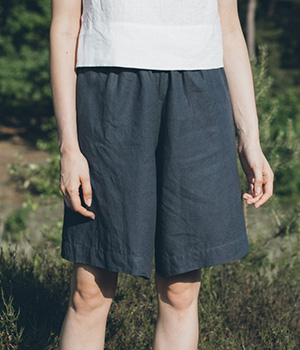
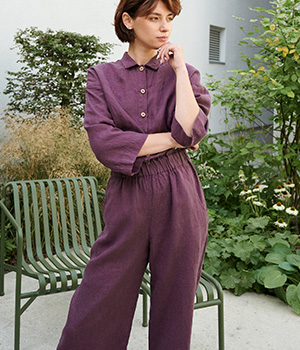
Loungewear 30–55%
What Changing the Ratio Actually Changes
Linen percentage is usually discussed as a quality question, but it is a behaviour question. Three properties move first when you shift the linen share, and each of them has a direct commercial consequence.
Drape and body
More linen means more body: the fabric stands away from the body and holds a shape. Less linen, with viscose or Tencel in the balance, means fluidity and movement. A bias-cut dress and a structured midi need opposite ends of this scale.
Crease and recovery
Linen creases where it bends and recovers slowly. Wool and polyester restore shape; cotton softens the crease without removing it. In tailoring, the linen share is capped by how much creasing the customer will tolerate at the elbow and seat.
Care and shrinkage
Blends in the 30–60% band typically show 3–7% first-wash shrinkage. The partner fibre decides whether that shrinkage is even across warp and weft or concentrated in one direction, which is what twists seams and hems.
Cost follows the same logic. Linen is the most expensive fibre in these blends, and fabric is normally 30–45% of garment cost, so each increase in linen share moves FOB in a way that becomes visible at order scale. Our breakdown of linen garment cost drivers shows how that fabric line interacts with labour at 25–35% of unit cost.
Linen Ratio by Garment Type
This is the reference table we use in first conversations. Ranges rather than single numbers, because weight and weave move the hand feel as much as the percentage does.
| Garment type | Linen share | Partner fibre | Reason for the band |
|---|---|---|---|
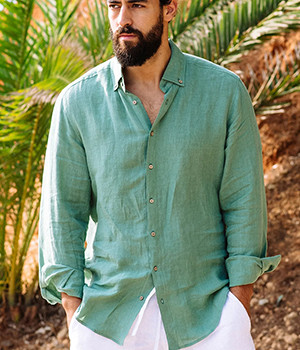
| Shirts and blouses | 45–60% | Cotton, Tencel | Keeps the linen surface and cooling effect while adding softness and opacity |
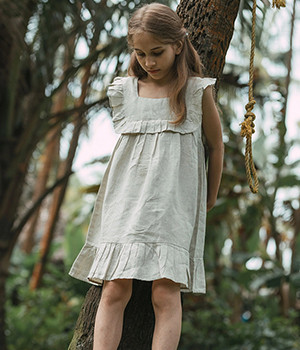
| Dresses and skirts | 30–55% | Viscose, rayon, Tencel | Drape and movement for bias cuts and fluid silhouettes |
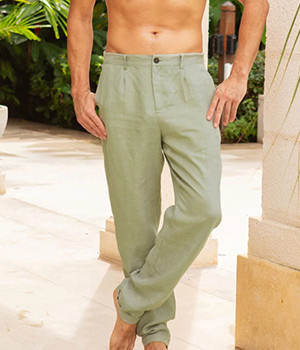
| Tailoring and suiting | 20–45% | Wool, viscose, polyester | Shape recovery and reduced bagging at elbow and seat |
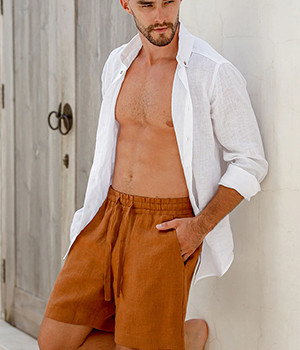
| Loungewear | 30–55% | Cotton, modal | Softness against skin after repeated washing |
| Resort and holiday shirts | 50–60% | Cotton, viscose | Open weave character with enough body for print and packing |
| Overshirts and outerwear | 55–70% | Cotton, hemp | Substance and abrasion resistance at 200–260 GSM |
Bands assume a woven fabric at a weight appropriate to the category. A 40% linen voile and a 40% linen canvas behave nothing alike, so always quote weight and weave alongside the ratio.
Two categories deserve a note. For shirts, 55/45 linen-cotton is the most common commercial blend because it holds the linen story without the care burden of pure linen; the linen-cotton blend guide covers yarn count and wash options that change the hand at the same ratio. For dresses, the 30–45% band with viscose is the workhorse for fluid shapes, and the linen-viscose notes explain how the viscose grade shifts drape without changing the percentage.
How to Choose in Four Steps
The sequence matters more than the starting number. Brands that begin with a linen percentage and then look for a partner usually spend an extra sampling round undoing the decision.
1
Define the garment's job
Write one sentence on what the garment must do: hold a shape, fall softly, survive a suitcase, or feel soft after ten washes. That sentence eliminates half the ratio range immediately.
2
Pick the partner fibre
Cotton for softness and opacity, viscose for drape, Tencel for a cooler smooth hand, polyester for recovery, wool for tailoring, modal for loungewear. The partner is the decision, not a detail.
3
Set the linen share inside the band
Move toward the top of the band when linen character and breathability are the selling point. Move toward the bottom when drape, softness or crease recovery matters more than authenticity.
4
Test before grading
Wash three specimens at the care temperature you intend to print, measure shrinkage in both directions, and confirm the hand on a hanging length rather than a flat swatch. Only then grade the pattern.
Step four is the one that gets skipped under deadline pressure, and it is the one that decides whether the ratio survives contact with customers. Viscose-rich blends are the clearest example: they can move more in the weft than the warp, so a side seam that looks straight on the sample table twists after the first home wash. The linen-rayon shrinkage guide sets out the test sequence we use for that family of blends, including how to separate relaxation from true shrinkage.
The Myth That Costs the Most: Higher Linen Is Better
"If 50% is good, 100% must be better"
Linen content is not a quality score. Every point of linen above the band buys character and breathability, and pays for it with creasing, stiffness, shrinkage risk and cost. A 100% linen lounge short that scratches at the waistband is a worse product than a 45% blend that softens with wear, even though the label reads better.
Three related misconceptions appear in almost every first brief:
- "Linen percentage is the main driver of quality." Yarn count, weave evenness, dye consistency and finishing control the perceived quality more than the headline percentage does.
- "A blend is a compromise." In most categories the blend is the engineered product. Pure linen is a specific aesthetic choice, not the default good version.
- "The customer checks the fibre label." Some do, but the customer feels the garment first. A blend that behaves well outperforms a high-linen garment that creases badly in the fitting room.
The practical test is simple: name the property you are buying with each additional point of linen. If you cannot name it, the extra percentage is marketing, and it will be paid for in returns.
What to Put in the Tech Pack
A ratio becomes a specification only when it carries tolerance, weight and a test method. Without those three, two suppliers can quote the same percentage and deliver different fabrics.
Fibre content by percentage, with ±3% tolerance per fibre
Fabric weight in GSM, measured on conditioned fabric
Weave or knit structure and yarn count
Finish: pre-shrunk, garment washed, enzyme, silicone
Shrinkage target and the standard used to verify it
Colour fastness minimum after domestic laundering
Inspection level at final, normally AQL 2.5
Who pays for testing, and which lot is tested
Tolerance is where most commercial arguments start. A supplier quoting ±5% and one quoting ±3% are not offering the same fabric, even when the headline ratio matches. Apply the same tolerance to every quote you compare, and state what happens if bulk lands outside it — a discount clause does not fix a garment that shrinks out of size.
How to Prove the Ratio Before Bulk
Testing does not need to be elaborate, but it does need to happen before grading. Four checks cover most of the risk in a linen blend program:
- Dimensional change: three washes at the labelled temperature, measured to ISO 5077 after ISO 6330 washing, reported separately for warp and weft.
- Colour fastness: change and staining after domestic laundering to ISO 105-C06, minimum grade 4 for most apparel programs.
- Strength: tensile to ISO 13934-1 and tear to ISO 13937-2, with minimums set by end use rather than copied from another category.
- Hand and drape: a hanging length assessed against your reference garment, because no lab number captures whether the fabric falls the way the design intended.
Test the bulk lot, not only the sample lot
Roll-to-roll variation in linen blends is normal. A shrinkage result from a single swatch is an indicator, not a specification — retest when bulk fabric arrives, and keep the sample result as the benchmark rather than the guarantee.
Weight Changes the Answer at the Same Ratio
Two shirts can carry the same 55/45 linen-cotton label and feel like different fabrics. Weight is the second variable, and it is the one buyers most often leave out of the brief.
- 120–140 GSM: light shirting and summer dresses. Drapes more, creases more visibly, and needs a tighter weave to stay opaque in pale shades.
- 145–175 GSM: the commercial middle. Holds a collar, survives a domestic wash cycle, and reads as a proper linen shirt rather than a voile.
- 180–220 GSM: overshirts, wide-leg trousers and unstructured jackets. More body, slower creasing, noticeably warmer.
- 230–260 GSM: outerwear and heavy separates. Abrasion-resistant but stiff off the roll, and usually needs a garment wash before it drapes at all.
The practical consequence is that a ratio approved at 130 GSM cannot simply be reordered at 200 GSM. The heavier cloth behaves like a different blend: less drape, more structure, and a different shrink curve because the weave density changes how much the yarn can relax. When a brand asks for "the same fabric, a bit heavier", the honest answer is a re-sample, not a re-order.
Cost, MOQ and Timing for a Ratio Trial
Testing a ratio does not require a full collection commitment. Most brands we work with start with stock fabric, one style and a small run, then scale the ratio that wins.
MOQ 60 piecesPer style per colour, which keeps a ratio test affordable
Sampling 7–12 daysPractical window 7–14 days once trims are confirmed
Bulk 25–35 daysAfter sample approval and fabric allocation
First order 35–60 daysSampling, approvals and production end to end
Sample fee $40–150Refunded against the bulk order; swatches free
50+ fabric specsHeld in stock across the 100–260 GSM range
Two rounds of sampling is normal for a blend program. A third round usually means the brief changed rather than the sample failing, and the cheapest way to avoid it is to send a reference garment with the hand feel you want alongside the written ratio.
Quick Answers to the Follow-Ups
Can I use 30% linen and still call it a linen garment? Legally, labelling rules are set by your market and usually require the actual percentage to be declared. Commercially, 30% reads as a cotton or viscose garment with linen character, so the marketing copy should match the behaviour rather than the aspiration.
Which ratio is easiest to care for? The lower half of each band, particularly with cotton or polyester in the balance. Higher linen shares crease more and move more on the first wash, which raises the care burden and the return rate if the label does not set expectations clearly.
Does a higher linen share always cost more? Almost always, because linen is the most expensive fibre in the blend and fabric is a large share of garment cost. The size of the difference depends on the partner fibre, the weight and the order volume, which is why ratio decisions belong in the costing sheet rather than in the swatch review alone.
What if my range needs one fabric across several styles? Pick the ratio for the most demanding style, then adjust weight per style. A 45% linen-cotton at 150 GSM can serve a shirt, a camp-collar overshirt and a simple dress, provided the pattern allowances reflect the same tested shrinkage. Trying to serve a tailored jacket and a bias dress from one blend usually produces a fabric that is wrong for both.
How do I compare two suppliers quoting different ratios? Normalise the quote: same consumption, same GSM, same tolerance, same wash, same test standard. Then compare landed cost per garment rather than fabric price per metre, because a cheaper fabric that consumes 8% more metres is not cheaper at the order level.
Need a ratio proposal for your range?
Send the garment type, target price band and care story. We will propose two ratios against stock fabric and quote within 3–7 working days, with an initial response inside 48 hours.
Send your brief Read more FAQsPrepared by Linenwind, a Dongguan-based B2B linen garment factory serving overseas brands for more than twenty years: OEM and ODM production, private label, MOQ 60 pieces per style per colour, ISO 9001, OEKO-TEX Standard 100 and SEDEX audited. Figures quoted reflect our standard production terms; fabric performance should always be confirmed by testing on the actual lot.