Casual Chic Linenwear Custom Manufacturing

How Do I Verify Flax Origin and Grade in a Quote?
Direct answer
Verify origin and grade with three artefacts: a document trail, a parameter line, and a physical sample.
To verify flax origin and grade in a quotation, ask for three things before you compare prices: a written origin declaration naming the country and the spinner, the measurable fibre parameters behind the quoted fabric (yarn count, staple class, shive tolerance, shrinkage), and a physical swatch or sample you can wash and inspect. A quote that offers a letter grade and a country name but no documents and no sample cannot be verified, no matter how credible the supplier sounds.
Origin declaration
Parameter line
Physical sample
48h initial reply
Why a Quote Alone Proves Nothing
A quotation is a commercial offer, not evidence. It tells you what a supplier is willing to promise at a price, and in the linen trade those promises are frequently written in vocabulary that cannot be tested. "European flax, A grade, premium quality" is a sentence that three different mills will price three different ways, because none of those three phrases has a fixed technical meaning. The word European may describe the fibre, the yarn, the weaving, the design studio, or simply the sales office.
This is not usually dishonesty. Flax is an agricultural fibre sorted commercially after processing, and the trade has never converged on one mandatory global grade scale. Mills use internal sorts labelled A, B, C or 1, 2, 3, and those labels shift with the harvest. The buyer's job is therefore not to decode the label but to replace it with things that can be checked. Once origin and grade are expressed as documents, numbers and a physical standard, a quote becomes comparable and a shipment becomes inspectable.
The distinction matters most at the moment of dispute. If your purchase order says "A grade linen" and the delivered fabric has visible specks, the conversation is about taste. If it says "maximum speck count per running metre against approved standard, Nm 40/1 combed line fibre, European flax with spinner declaration", the conversation is about specification. Same fabric, entirely different negotiating position.
The Three Verification Layers
Layer 1 — Documents
Origin declaration naming country and spinner, transaction certificates for any certified programme, and the mill's own certification scope. This layer answers "where did it come from and who stands behind the claim".
Layer 2 — Parameters
Yarn count, fibre class, fabric weight, shrinkage limit, colour standard and shive tolerance, all stated in units. This layer answers "what exactly am I buying" and makes two quotes comparable line by line.
Layer 3 — Physical proof
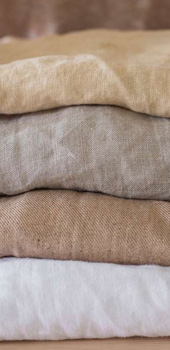
A swatch you can wash, then a sample garment you can sew and wear-test. This layer answers "does the fibre behave the way the paper says it will" and catches the gap between a spec sheet and a real roll.
Buyers who skip layer 1 buy a story. Buyers who skip layer 2 buy an argument. Buyers who skip layer 3 buy a surprise. All three are cheap to request at the quotation stage and expensive to retrofit after bulk has been cut. If you want the fuller picture of how fibre moves from field to finished garment, our flax-to-garment supply chain walkthrough maps each handover point where documentation should change hands.
A Six-Step Verification Sequence
1
Ask the origin question in writing, not on a call
Request the country of fibre growth, the spinning country and the weaving country as three separate answers. Most supply chains cross borders more than once, and a supplier who can only say "European" is telling you the marketing line rather than the logistics. Put the three answers in the quotation document so they become part of the offer.
2
Request the declaration and check the naming
Ask for a signed origin declaration on company letterhead that names the spinner or yarn supplier. Then check that the names match across documents: the spinner on the declaration should be the spinner on the yarn invoice, and the yarn count on the invoice should match the count on the fabric specification. Mismatched names are the most common sign that documentation was assembled after the fact.
3
Replace the letter grade with a parameter line
Ask the supplier to restate their grade as measurable values: staple class, spinning method, yarn count, fabric weight with tolerance, and a speck tolerance. If they cannot, treat the grade as unverified. Our guide to flax fibre grades and what buyers should specify gives the exact six parameters to request and the wording to use.
4
Get a swatch and wash it
Swatches should be free. Wash the swatch the way your customer will, dry it flat, and measure the change. First-wash shrinkage of 3–7% is normal for linen. What you are looking for is not zero shrinkage but predictable shrinkage, plus a surface that still matches the approved hand after washing.
5
Order a sample garment and test the seams
Sampling runs 7–12 days, with a 7–14 day window when fabric has to be sourced. This is where fibre behaviour becomes visible: collar roll, pocket bulk, seam grin at the armhole, and how the fabric presses. A flat swatch cannot show any of it.
6
Lock a signed physical standard before bulk
Keep a marked reference piece, signed by both sides, and inspect bulk against it at AQL 2.5. Without a signed standard, inspection becomes opinion, and opinion tends to favour the party with less to lose.
Quick Reference: What Each Claim Should Come With
| Claim in the quote | Evidence to request | Red flag if absent |
|---|---|---|
| European flax | Country of growth plus spinner name, in writing | Only "European" with no country or spinner |
| A grade / premium grade | Staple class, spinning method, yarn count, speck tolerance | Letter only, no numbers |
| Certified fibre | Transaction certificate with matching lot and scope | Logo on a brochure, no certificate number |
| Low shrinkage | Tested figure in % warp and weft after one wash | "Pre-shrunk" with no percentage |
| Colour consistency | Lab dip approval plus lot continuity statement | Photo approval only |
| Combed linen | Yarn specification naming combed line fibre | "Soft finish" used as a substitute |
A quotation that cannot populate the middle column is a quotation you cannot audit later.
Matching Verification Depth to Garment Category
Not every order needs the same depth of proof, and over-verifying a test order wastes weeks. The right depth depends on what the garment claims and what the channel requires.
| Category | Typical weight | Verification depth |
|---|---|---|
| Shirting and blouses | 110–150 GSM | Full: origin declaration, yarn count, speck tolerance, washed swatch |
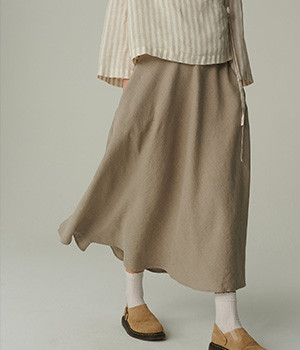
| Dresses and skirts | 140–190 GSM | Full minus certification unless claimed |
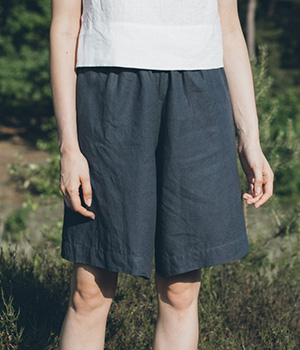
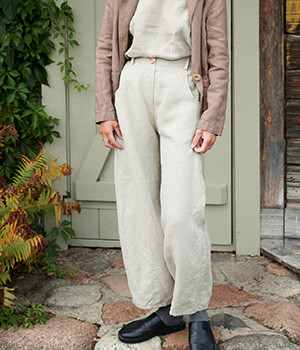
| Trousers and shorts | 180–240 GSM | Origin plus abrasion and shrinkage data |
| Overshirts and outerwear | 220–260 GSM | Parameter line plus washed sample; specks may be acceptable |
| Bedding and table linen | 150–200 GSM | Colour consistency and lot continuity emphasised |
Weights reflect our in-stock range of 100–260 GSM across more than fifty fabric specifications.
Two category notes are worth spelling out. First, lightweight white and pale shirting is the least forgiving application for shive specks, so the speck tolerance should be written before any lab dip is approved. Second, heavyweight overshirts often look better with visible slubs, which means a lower visual grade can be the correct commercial choice rather than a compromise. Verification is not about maximising grade; it is about matching the claim to the intent.
How to Write It on the RFQ
The most effective verification tool is a quotation template you control. Send the fields, ask suppliers to fill them in, and compare. A workable set looks like this:
- Fibre: 100% flax, country of growth, spinner name, no substitution without written approval.
- Class: combed line fibre, wet-spun, minimum staple length stated by the spinner.
- Yarn: Nm 40/1 warp and weft, or the supplier's nearest available count with a note.
- Fabric: 150 GSM ±5%, plain weave, shrinkage maximum 5% warp and weft.
- Surface: approved physical standard, maximum speck count per running metre.
- Documents: origin declaration, certificate of conformity, and test reports where claimed.
- Commercial: MOQ per style per colour, sampling days, bulk days, sample fee and refund terms.
When a supplier returns that template completed, you have something you can compare numerically. When a supplier returns a paragraph of adjectives, you have learned something useful before spending money. The template also protects the supplier, because it removes the risk of an open-ended approval loop at the end of production.
The one line that changes the conversation
"Please restate the grade as measurable parameters." Suppliers who know their yarn will answer immediately with counts and tolerances. Suppliers who are reselling someone else's fabric will need to go and ask, which tells you where the real manufacturing sits.
Verification Checklist Before You Sign
Country of growth, spinning and weaving stated separately
Origin declaration signed and matched to the spinner name
Grade restated as staple, spinning method, yarn count
Fabric weight with a tolerance, not a single number
Shrinkage figure in % after one wash
Speck tolerance expressed per running metre
Certificate scope and lot number, not just a logo
Washed swatch approved and retained
Sample garment fitted and seam-tested
Signed physical standard held by both parties
What a Verified Quote Should Tell You Commercially
Verification is not only about fibre. A credible quotation should also state the operating terms that determine whether the promise can be kept at volume. These are the numbers we publish because buyers ask for them repeatedly, and because hiding them only moves the surprise later.
MOQ60 pieces per style per colour
Sampling7–12 days, 7–14 day window
Bulk25–35 days
First order35–60 days including development
Sample fee$40–150, fully refundable; swatches free
InspectionAQL 2.5
Two of those numbers deserve emphasis. The 60-piece minimum applies per style and per colour, so a three-colour test order is 180 pieces in total rather than a single blended run — relevant when you are validating a fibre class with real sell-through. And the sample fee is refundable against the order, which means the cost of physical verification is a deposit rather than a sunk expense. For a fuller breakdown of where the money goes, see our note on the seven drivers behind custom linen costs.
Certification Is Not the Same as Origin
Buyers often conflate the two, and suppliers rarely correct them. Origin documentation answers where the fibre was grown and who spun it. Certification answers which standards the processing met and under what scope. A fabric can be certified for harmful substance limits without any origin claim, and it can carry an origin claim without any certification. Neither implies the other.
Our own scope covers the garment-making process: ISO 9001 for quality management, OEKO-TEX Standard 100 for harmful substance limits on the finished article, and SEDEX membership for social compliance. Fibre-level origin claims depend on the spinner's documentation, and we will say plainly which documents we can obtain for a given yarn rather than implying a certification we do not hold. If your marketing depends on an origin story, raise it at the quotation stage; retrofitting documentation after bulk production is usually impossible. Our overview of digital product passports for linen apparel explains why this paperwork is becoming a commercial requirement rather than a nice-to-have.
If the Documents Do Not Match
Mismatches happen, and most are clerical rather than fraudulent. What matters is that you escalate in a fixed order instead of jumping straight to an accusation, because a supplier who is given a clear path to correct a document usually does.
- Ask for a corrected document, not an explanation. Name the specific field that disagrees and request a reissued declaration. Explanations cannot be filed; corrected paperwork can.
- Check whether the yarn was substituted. A different spinner name usually means a different yarn lot, which means the approved hand and shade may not repeat. Ask for the substitution in writing and re-approve the swatch if it was made from the earlier lot.
- Escalate to a third-party inspection only when values fail. Use a lab test for shrinkage, strength or colourfastness when the numbers, not the names, are in question. Testing names is rarely productive; testing behaviour usually is.
- Record the outcome in the purchase order for next season. Verification that is not written down is repeated from scratch on the next order, at the same cost in time and goodwill.
One further practical note: keep the approved standard and the declaration together in the same file. When a claim is questioned a year later, the pair is what allows a buyer to reconstruct the decision without relying on memory or on a salesperson who has since changed company.
Limitations to state honestly
Verification has real limits. Origin declarations are only as good as the spinner's integrity, and few garment factories can audit a farm. Harvest variation means a grade approved in one season may not repeat exactly in the next, which is why lot continuity matters more than the label. And a washed swatch predicts behaviour, it does not guarantee it across an entire roll. We would rather tell you these limits at the quotation stage than defend a claim we cannot support after delivery.
Need the documentation pack for a specific fabric?
Tell us the garment, the weight and the market, and we will send the closest in-stock specifications with the yarn details, origin documents available for that lot, and a swatch set.
Request a verification pack More sourcing answersPrepared by Linenwind, a linen garment manufacturer in Dongguan, China, producing OEM, ODM and private label linen for brands in Europe and North America for more than twenty years. Published figures reflect current production terms: MOQ 60 pieces per style per colour, sampling 7–12 days, bulk 25–35 days, first order 35–60 days, sample fee $40–150 fully refundable, AQL 2.5, ISO 9001, OEKO-TEX Standard 100 and SEDEX.