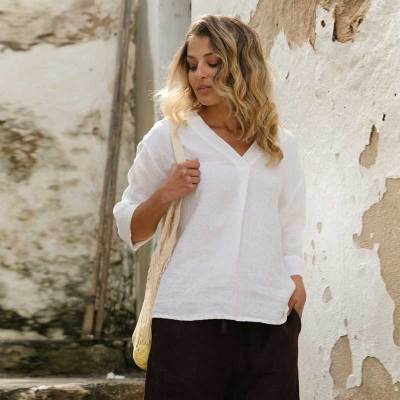
Casual Chic Linenwear Custom Manufacturing
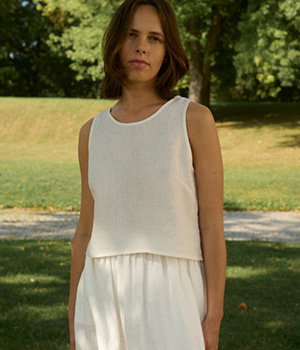
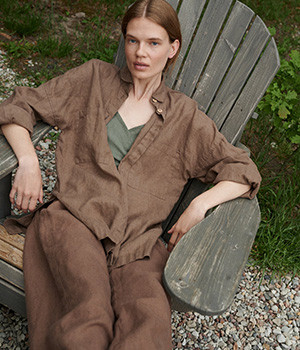
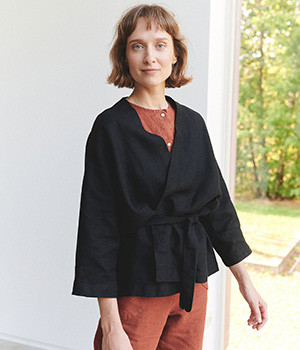
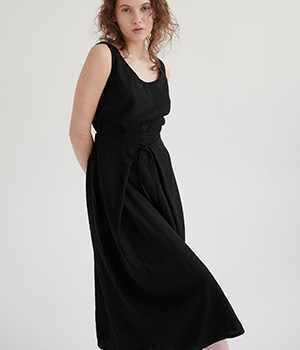
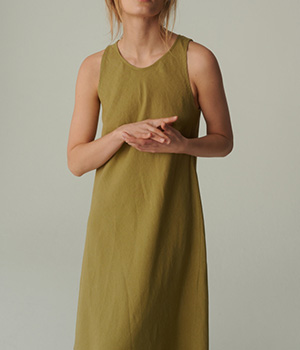
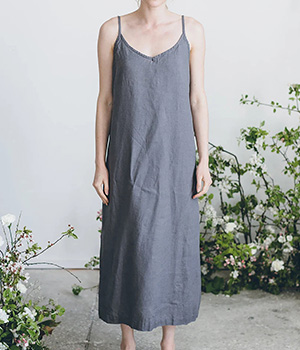
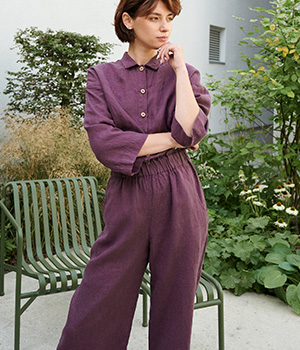

Capsule Collection: How Many Styles Before MOQ Becomes a Problem?
Capsule Planning
Capsule Collection: How Many Styles Before MOQ Becomes a Problem?
For a first linen capsule, MOQ usually becomes a problem somewhere between 12 and 16 styles, not because the factory refuses the order but because the commitment outgrows the brand's ability to sell it through. At 60 pieces per style and colour, 12 styles in three colours is 2,160 pieces before any reorder. The practical working range is 6-12 styles: below 6, fixed development cost dominates each unit; above 12, fabric articles, sampling rounds and cash exposure rise faster than the extra styles contribute. The right number is the one your channel can sell through in one season, not the largest range you can design.
60 pcs MOQ per style / colour
6-12 styles, first capsule
7-12 days sampling
35-60 days first order
This answer focuses on the style-count economics. For the full cost model behind it, including fabric articles, sampling rounds and the 8-12 band, see our guide to capsule collection costing.
Where the Problem Actually Starts
MOQ is a fixed number per style and colour: 60 pieces. On its own, 60 pieces is not a problem. It becomes a problem when the total commitment created by style count and colour count exceeds what the brand can sell at full price within the season, or when the cash required to produce that commitment arrives before the revenue that would fund it.
That is why two brands can order the same number of styles and have completely different experiences. A brand with an existing audience, a proven best seller and a reorder plan can carry 14 styles comfortably. A first-time brand with no list, one channel and a launch date in eight weeks will feel 14 styles as a cash and content crisis long before production starts.
Three thresholds matter, and they arrive in this order:
- The cash threshold. Units multiply by your ex-works cost. At 60 pieces per SKU, every added style-colour combination is another 60 units of fabric, labour, trims, freight and duty committed before a single sale.
- The sampling threshold. Each new style needs a fit sample and often two rounds. Sampling runs 7-12 days per round on confirmed fabric, so style count converts directly into calendar risk when the launch date is fixed.
- The sell-through threshold. Every SKU needs enough demand to clear at full price. Beyond a certain count, the slowest styles absorb warehouse space, content budget and markdown allowance that the best sellers need.
The first threshold is arithmetic and easy to see. The third is the one that quietly turns a well-reviewed collection into a margin problem six months later.
It helps to understand why the minimum exists at all. A 60-piece run is roughly the smallest quantity that lets a factory buy fabric at a sensible per-metre rate, lay a cutting spread without excessive waste, and keep one dye lot consistent across the run. Below that, the mill either refuses the fabric order or prices it as a short run, and the factory absorbs the difference in cutting room time. The minimum is therefore a production reality rather than a sales tactic, which is why negotiating it downward rarely produces the saving a brand expects.
The number also interacts with colour. Each colour is a separate dye lot and often a separate fabric minimum, so colour count multiplies commitment in a way that is easy to miss when the range is laid out as a mood board. A capsule that looks like ten products on a page can be thirty purchase orders in the factory's system once colours are counted.
6-8 styles: safe zone
Enough breadth for a DTC landing page and a small wholesale conversation. Fixed development cost is spread across a manageable unit count, and the range can be reordered quickly. Best for a first capsule or a new category test.
8-12 styles: working band
The practical range for most first capsules. Development cost is well amortised, fabric can still be consolidated into three or four articles, and sampling fits into two windows. Requires discipline on colours and fabric sharing.
12-16+ styles: pressure zone
Viable only with a proven channel, a content team and a clear kill list. Fabric articles multiply, sampling becomes sequential, and the cash commitment can exceed what one season can sell through at full price.
Five Steps to Size a Capsule Against MOQ
1
Count SKUs, not styles
Multiply styles by colours. That is the number that carries the 60-piece minimum. Ten styles in three colours is 30 SKUs, not 10. Write the number down before you fall in love with the range.
2
Set a sell-through target per SKU
Decide what percentage of each SKU you expect to sell at full price in the season. If a SKU cannot clear its own unit cost plus content and fulfilment at that rate, it is a candidate for removal or for a smaller colour range.
3
Multiply units by your landed cost
Use your quoted ex-works price plus freight, duty and inspection to get a landed unit cost. Multiply by total units to see the cash commitment. Compare that figure with the capital you can leave tied up for a full season.
4
Map fabric and block reuse
List every distinct fabric article and every distinct pattern block. If a first capsule needs more than four fabrics or more than eight blocks, consolidate before sampling. Reuse is the cheapest way to keep style count without multiplying cost.
5
Check the calendar against the cash
Sampling takes 7-12 days per round, bulk 25-35 days, and a first order 35-60 days including development and shipping preparation. If the launch date cannot absorb that sequence, cut styles rather than compress quality checks.
The Arithmetic: What Style Count Commits
| Plan | SKUs | Units at 60 pcs | Sample pieces (2 rounds) | Fabric articles |
|---|---|---|---|---|
| 6 styles × 2 colours | 12 | 720 | 12-24 | 2-3 |
| 8 styles × 3 colours | 24 | 1,440 | 16-32 | 3-4 |
| 12 styles × 3 colours | 36 | 2,160 | 24-48 | 4-5 |
| 16 styles × 3 colours | 48 | 2,880 | 32-64 | 6-8 |
Sample pieces assume two prototype rounds per new block and can be lower when styles share a block and a fabric. Figures use our standard 60-piece minimum per style and colour; they are planning arithmetic, not a quotation.
The jump from 8 to 16 styles doubles the style count but quadruples the cash commitment and roughly doubles the number of fabric articles. That is the point where most first capsules stop being a merchandising exercise and become a financing decision. It is also the point where the unit cost stops falling meaningfully, because the fixed development cost has already been amortised across the first eight styles. Our capsule collection cost model sets out the full layer-by-layer arithmetic behind these figures.
Colour is the quieter multiplier. Moving from two colours to four on a 10-style capsule takes the commitment from 1,200 to 2,400 pieces without adding a single silhouette. Colourways are usually cheaper than styles in pattern and fit terms, but they are not free in units, dye lots or photography.
Style Count by Channel
| Channel | Style count | Colour depth | Why this works |
|---|---|---|---|
| DTC launch | 6-8 | 2-3 | Content and cash are the constraint; reorder speed matters more than width |
| Wholesale / multi-brand | 10-14 | 3-4 | Buyers need range width and size depth for a shop floor |
| Marketplace | 12-20 | 2-3 | Search coverage rewards more listings; depth can stay shallow |
| Hospitality / uniform | 4-6 | 2-3 | Few roles, deep units, repeat orders; consistency beats novelty |
| Resort / boutique | 8-12 | 4-6 | Colour-led buying; more colourways, fewer silhouettes |
Treat these as starting points. The correct number shifts with sell-through history, audience size and whether the brand can reorder within the same season.
Wholesale is the channel where style count is hardest to cut, because a buyer needs enough options to fill a rail. Even there, width can come from colour and wash rather than from new blocks. Three shirt shapes in four washes and three colours can read as a full shirt wall while keeping pattern work to three blocks.
Hospitality inverts the logic entirely. A hotel programme may need only four styles, but each one in three colours and a deep size run, because the requirement is consistency across a property rather than novelty for a shopper. Applying a DTC style count to a uniform programme usually produces too many styles and too few units per style.
How to Tell MOQ Is Becoming a Problem
Warning signals to check before approving the range
Total units exceed what your channel sold in the same season last year, with no new distribution planned.
More than four distinct fabric articles in a first capsule.
More than eight distinct pattern blocks, or more than two styles that need a new block each.
Sampling cannot finish two rounds before your fabric booking date.
You cannot name the customer and the occasion for a style in one sentence.
Photography and content budget per SKU has not been added to the plan.
The cash for bulk arrives after the ship date rather than before it.
Two or more styles exist mainly to make the lookbook look balanced.
If two or more of these are true, the range is probably one or two drops too ambitious for the season. The fix is rarely a smaller ambition; it is a phased release. Launch 8 styles, keep 4 in development, and add them once the first sell-through data arrives. That sequence protects cash and gives the second drop a real reason to exist.
Levers That Reduce Commitment Without Breaking MOQ
The minimum is fixed, but the composition of the order is not. These levers reduce total units or total risk while keeping each style at or above the 60-piece minimum.
- Share fabric across styles. One article can cover four silhouettes. This reduces fabric minimums, dye lots and shrinkage allowances at once.
- Launch with fewer colours. Two colours instead of four halves the unit commitment on the same style count. Add the third or fourth colour in the second drop.
- Use stock fabric and stock shades. More than 50 linen specifications are held in stock across 100-260 GSM, which avoids custom dye minimums and usually shortens sampling.
- Phase the drop. Eight styles now and four later spreads cash, content and warehouse load across the season.
- Reorder the proven style. A repeat on a best seller is cheaper per unit of learning than a new style, provided the fabric is still available.
What does not work is asking for 30 pieces and expecting the unit price to hold. Below the fabric minimum, the mill either declines, applies a surcharge or prices the short run at a higher per-metre rate. The cost moves rather than disappears, which is the mechanism explained in how low-MOQ linen orders affect price and lead time and in why manufacturers require a minimum order quantity.
What Cutting Style Count Will Not Fix
Reducing style count lowers commitment, but it does not fix a weak product-market fit, a launch date that is already too close, or a fabric that shrinks beyond the pattern allowance. First-wash shrinkage of 3-7% is normal for linen and must be compensated in the pattern regardless of how many styles you produce. If the capsule is failing because the silhouettes do not suit the customer, a smaller range of the same silhouettes will fail more cheaply, not succeed. Style count is a cost lever, not a merchandising strategy.
There is also a floor. Below six styles, a capsule often cannot fill a landing page, support a wholesale conversation or justify a photo shoot. The fixed cost per unit rises sharply because patterns, grading, sampling and content are spread across too few pieces. A four-style capsule can work for a uniform programme or a single-category brand, but it is a weak shape for a general apparel launch.
What to Send for a Capsule Quotation
Style list
Number of styles, category of each, and which ones share a block.
Colour plan
Colours per style, whether shades are stock or custom, and any Pantone references.
Fabric direction
Weight range in GSM, weave preference, and whether you want stock or developed fabric.
Launch date
The date the goods must be in your warehouse, not the date the collection goes live.
Tech pack status
Whether specs exist, or whether development support is needed from sketches.
Quality requirements
Any test reports, labelling rules or retail compliance the order must meet.
With those six inputs we can price the range and flag where style count is creating unnecessary cost. We reply within 48 hours and issue a full quotation in 3-7 working days once the tech pack is complete. Sample fees run $40-150 per style and are fully refundable against the bulk order; swatches are free.
Planning a first linen capsule?
Send your style list and colour plan and we will tell you where the commitment curve turns for your channel, before you commit to sampling.
Request a Capsule Quote Browse Sourcing FAQsScope: linen and linen-blend apparel manufacturing in Dongguan, China. Standard terms referenced: MOQ 60 pieces per style and colour, sampling 7-12 days (7-14 day window), bulk 25-35 days, first order 35-60 days, sample fee $40-150 refundable, AQL 2.5 inspection, ISO 9001 / OEKO-TEX Standard 100 / SEDEX. Unit figures are planning arithmetic based on the stated minimum, not a price quotation. Last reviewed November 2026.