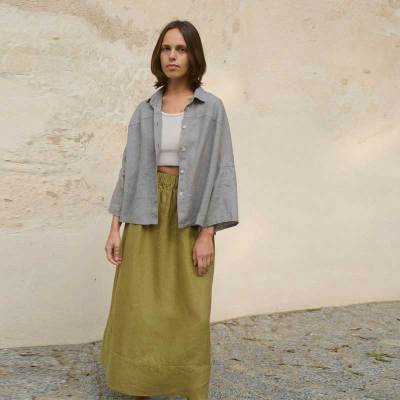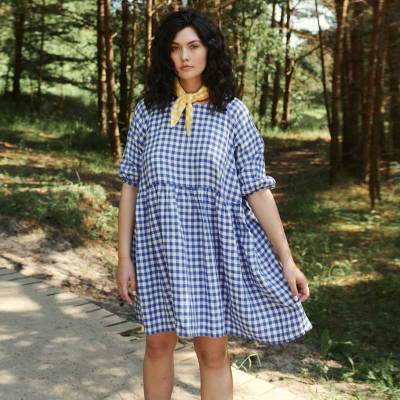
Casual Chic Linenwear Custom Manufacturing
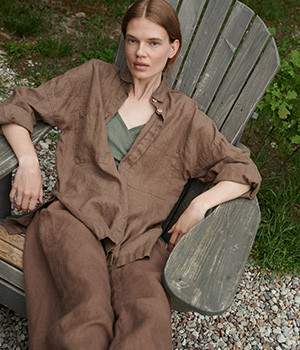


Why do linen clothing manufacturers require a minimum order quantity?
Why Do Linen Clothing Manufacturers Require a Minimum Order Quantity?
Short Answer
Linen clothing manufacturers require a minimum order quantity because many production costs—
such as fabric preparation, labor setup, washing, and quality control—are fixed per order rather
than per piece. MOQ ensures production efficiency, cost control, and consistent quality for
labor-intensive linen garments.
Why MOQ Is Especially Important for Linen Production
Compared with cotton or synthetic fabrics, linen requires more controlled and labor-intensive production processes.
- Higher SMV (standard minute value) for sewing
- Mandatory fabric pre-washing and shrinkage control
- Batch-based dyeing, washing, and finishing
- Stricter quality inspections due to natural fiber variability
These steps create fixed costs that do not scale down efficiently for very small orders.
Key Reasons Linen Manufacturers Set MOQs
1) Fabric and Material Minimums
- Linen mills often impose minimum weaving or dyeing quantities
- Cutting efficiency decreases with very small batches
- Excess fabric becomes waste or dead stock
MOQ helps ensure that fabric utilization remains commercially viable.
2) Labor and Production Line Setup
Even the smallest linen order requires full preparation:
- Pattern making and grading
- Cutting marker setup
- Sewing line configuration
- Operator preparation for linen handling
MOQ allows these setup costs to be distributed across enough units.
3) Washing and Finishing Are Batch-Based
- Linen garments are commonly pre-washed or garment-washed
- Industrial washing machines have minimum load requirements
- Underfilled machines increase cost and energy waste
MOQ aligns order size with efficient washing and finishing capacity.
4) Quality Control and Compliance
Quality assurance steps apply regardless of order size:
- Fabric inspection
- Shrinkage and colorfastness testing
- Inline and final quality inspections
These controls involve fixed labor and time costs that MOQ helps justify.
5) Production Scheduling Efficiency
- Very small orders disrupt production flow
- Frequent line changes reduce factory efficiency
- MOQ supports stable and predictable scheduling
MOQ vs Brand Risk: The Trade-Off
| Aspect | Low MOQ | High MOQ |
|---|---|---|
| Unit price | Higher | Lower |
| Inventory risk | Lower | Higher |
| Flexibility | High | Lower |
| Production efficiency | Lower | Higher |
Why Some Linen Manufacturers Offer Low MOQ
Manufacturers that support low MOQ typically have:
- In-house CAD and sampling capabilities
- Flexible and well-managed production lines
- Strong process and quality control systems
- Experience with small-batch linen production
Low MOQ is a capability built through systems and experience, not a default setting.
How We Handle MOQ at Linenwind
At Linenwind, we balance production efficiency with brand flexibility.
- Low MOQ of 60 pieces per style
- In-house CAD, cutting, sewing, and QC
- Controlled washing and shrinkage testing for small runs
- SMV-based costing for transparent pricing
- Guidance on style and color consolidation to optimize MOQ
Learn more about our OEM and ODM workflow: linen clothing manufacturing services
Explore linen styles suitable for low MOQ production: custom linen shirt collections
FAQ — Minimum Order Quantity in Linen Manufacturing
Q1. Is MOQ negotiable for linen clothing?
A1. Sometimes. MOQ flexibility depends on fabric type, construction, and production capacity.
A1. Sometimes. MOQ flexibility depends on fabric type, construction, and production capacity.
Q2. Does low MOQ affect quality?
A2. Not if the manufacturer has proper process control and experience with small batches.
A2. Not if the manufacturer has proper process control and experience with small batches.
Q3. Can startups work with linen manufacturers?
A3. Yes. Many manufacturers now support low MOQ programs for startups and testing.
A3. Yes. Many manufacturers now support low MOQ programs for startups and testing.
Q4. Why is linen MOQ higher than cotton?
A4. Linen requires more labor, washing, and shrinkage control, increasing fixed production costs.
A4. Linen requires more labor, washing, and shrinkage control, increasing fixed production costs.
Q5. What is a typical MOQ for linen clothing?
A5. Most linen clothing manufacturers set MOQ between 60 and 200 pieces per style.
Discuss MOQ Options
A5. Most linen clothing manufacturers set MOQ between 60 and 200 pieces per style.