Casual Chic Linenwear Custom Manufacturing
What Linen Colors Are Trending for 2027?
Linen Color Development
What Linen Colors Are Trending for 2027?
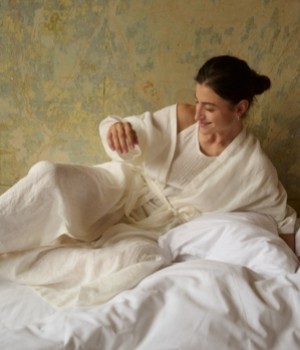
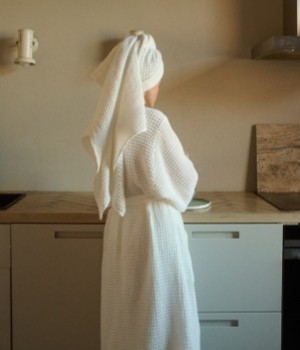
For 2027, linen is moving toward two poles: warm undyed neutrals (natural flax, oatmeal, bone, sand, clay) and deeper botanical darks (sage, olive, ink indigo, charcoal, aubergine), with a smaller group of sun-faded brights reserved for resort and DTC drops. The practical answer for a brand is narrower than the trend list: pick two or three shades that can be supplied from stock fabric or repeated as a documented dye recipe, because a trending shade that cannot be reordered is a one-season color, not a program.
The Six Color Families Being Booked for 2027
The direction below comes from the 2027 briefs we are quoting at our Dongguan facility, not from a forecast service. It is a working palette: each family is paired with the route that produces it most reliably and the commercial reason buyers give for choosing it.
Undyed and Ecru
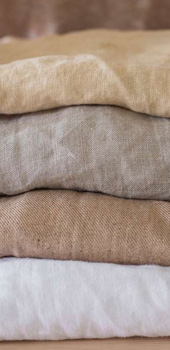
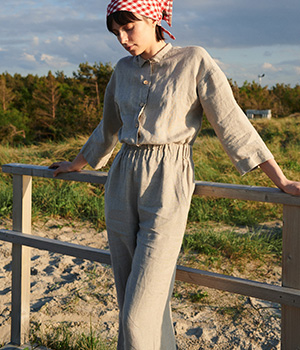
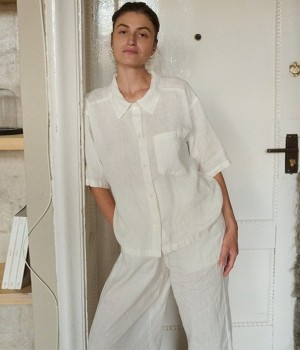
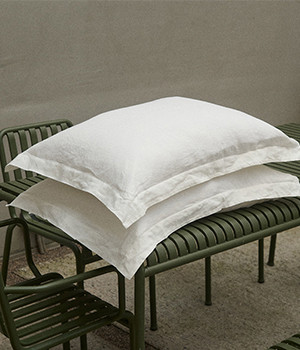
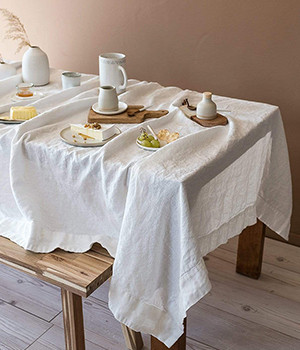
Natural flax, oatmeal and unbleached shades. Sold as a clean-label, low-intervention story and used as the base of tonal layering. Not a fixed color: the shade moves with harvest and retting, so it has to be sold as a natural range rather than an exact match.
Warm Mineral Neutrals
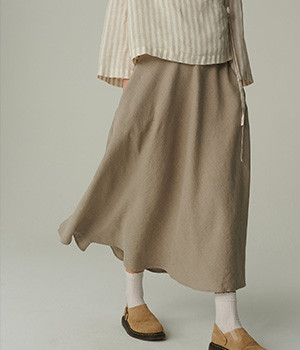
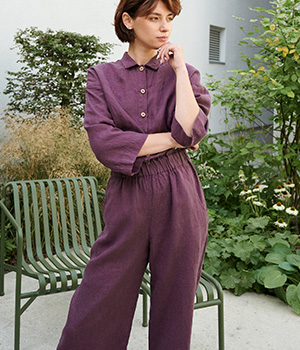
Bone, sand, warm stone and clay. The commercial core of most spring ranges because they photograph well, sit beside each other without clashing, and hide creasing better than cool greys. Usually piece-dyed reactive on a semi-bleached base.
Botanical Mid-Tones
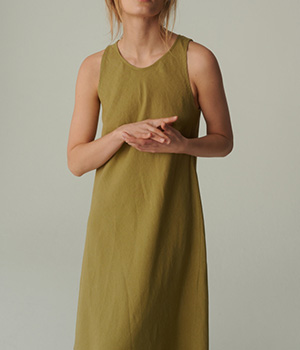
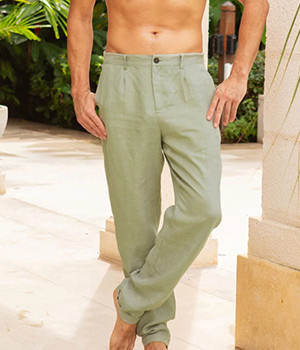
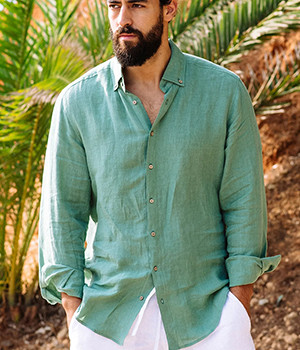
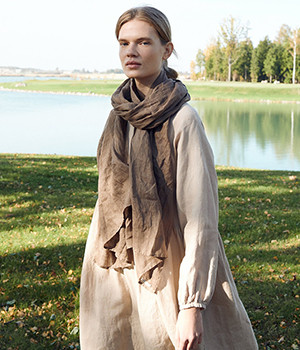
Sage, olive, moss and eucalyptus. These carry the unisex and lifestyle part of the range. The risk is metamerism: a green that matches in daylight can drift toward grey or yellow under warm retail lighting, so approval under three light sources matters.
Deep Botanical and Ink
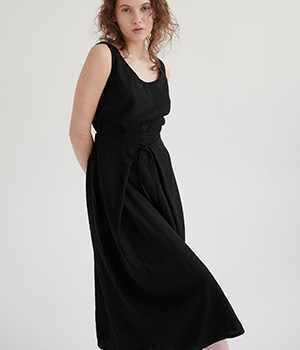
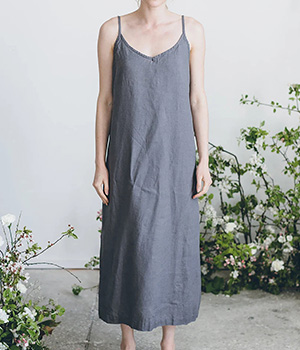
Ink indigo, deep olive, charcoal and aubergine. This is how linen moves into fall and winter layering. Deep shades are the most technically demanding: they need higher dye concentration, longer cycles and a vat or high-depth reactive route to hold rub fastness.
Sun-Faded Brights
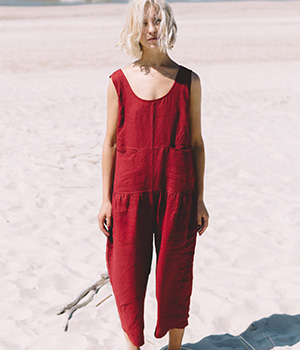
Washed coral, dusty marigold and faded azure. Small-run, campaign-led colors, often garment-dyed so a brand can commit late. Light fastness is the usual failure point, especially for window display, so the test belongs in the purchase order.
Yarn-Dyed Patterns
Tonal stripes, checks and chambray effects. Not a color family so much as a construction decision: the color is built into the yarn before weaving, which gives the cleanest pattern but the highest minimum and the longest lead time.
What Each Family Costs You in Production
Two families that look equally simple on a mood board can differ by two weeks and a meaningful dye premium. The table below is the one we use at inquiry stage to tell a brand where the real constraint sits. Pale shades on a standard base are the easiest; deep shades on a short lot are the hardest, because the dye concentration goes up while the lot size goes down.
| Family | Dye route | Difficulty | What drives the cost |
|---|---|---|---|
| Undyed / ecru | Wash and finish only | Low, but variable | Raw fiber selection and shade grading, not dye |
| Warm neutrals | Piece dye, reactive | Low to medium | Base whiteness; optical brightener control |
| Botanical mid-tones | Piece dye, reactive or vat | Medium | Metamerism checks, extra dip rounds |
| Deep botanical / ink | Piece dye, vat or high-depth reactive | High | Dye concentration, longer cycle, soaping, rub fastness re-test |
| Sun-faded brights | Garment dye or piece dye | Medium to high | Small lot surcharge, light fastness testing |
| Yarn-dyed patterns | Yarn dye before weaving | High | Per-color yarn minimum, weaving lead time |
Difficulty reflects the number of process controls, not the price of the fabric alone. A high-difficulty shade on a 300-piece order can cost more per unit than a medium shade on 3,000 pieces.
When a brand asks us to quote a full palette, the useful sorting question is not "which shade is most on trend" but "which shades can we hold as standing color and which have to be developed." That splits a twelve-shade mood board into a workable range very quickly.
- Standing color: a shade we can run from stock fabric or a repeatable recipe, usually a natural, a warm sand and a deep olive or ink. Fastest to quote, easiest to reorder, lowest cost per unit.
- Developed color: a custom shade that needs a lab dip and a dedicated dye lot. Justified for the campaign hero shade, less so for a supporting tone that only appears in one style.
- Test color: a shade run in a small garment-dyed drop to see how it sells before it earns a place in the core range. Higher unit cost, lower inventory risk.
- Pattern color: a yarn-dyed stripe or check, planned separately because its minimum and lead time sit outside the normal color cycle.
For the mechanics behind these routes, including how yarn dyeing differs from piece and garment dyeing, the detailed comparison is in our linen dyeing methods guide. What matters at the palette stage is simpler: every shade you add to the range is a route decision, and route decisions carry minimums.
From Reference Shade to Bulk: The Matching Sequence
Color matching is a sequence with sign-off gates. Skipping a gate is what produces the sample that looked right and the bulk that did not.
1
Send a physical reference
A Pantone TCX or TPX code is a target; a piece of fabric or a previous garment is evidence. If you only have a code, say which light you chose it under, because a code viewed on a monitor is not a specification.
2
Lock the fabric quality and base
Confirm GSM, weave and base shade (bleached, semi-bleached or natural). The same recipe on a different base is a different color, and this is the single most common source of "you changed my shade" disputes.
3
Develop the lab dip
We produce two or three variants around the target rather than one, typically in 5 to 7 working days for a reactive shade on linen. The first dip is a direction, not a final answer.
4
Measure and read under three lights
Each dip is measured on a spectrophotometer and expressed as a ΔE value against the standard, then viewed under D65, TL84 and incandescent. The number tells you the distance; the eye tells you the undertone.
5
Approve and retain the standard
The approved dip becomes the physical contract. Both sides keep a signed, dated piece stored flat, dark and dry. Without it, a reorder has no referee.
6
Scale to bulk with a first-off check
The recipe is scaled to the production lot and checked at the head of the run before the full lot is committed. This catches the difference between a five-gram dip and a five-hundred-kilo lot.
7
Record the recipe and dye lot
Concentration, auxiliaries, temperature curve, cycle time, machine and lot number are archived. That record is what makes the second order a reorder instead of a new development.
Most timelines slip at step five, not step three. A brand that reviews dips once a week adds a week to every round, and two rounds plus bulk dyeing is already three weeks before a meter is produced. If you need the full picture of what to send with a first request, see our Pantone and custom dyeing FAQ.
Tolerances and Fastness to Specify
"Match the sample" is not a specification. Put three numbers in the purchase order: the tolerance against the approved standard, the fastness targets for the end use, and the test method used to verify both.
| Property | Method | Typical target | Failure it prevents |
|---|---|---|---|
| Shade vs approved dip | Spectrophotometer, ΔE CMC 2:1 | Lab dip ≤1.0, bulk ≤1.5 | Sample-to-bulk mismatch, re-shoot and markdown |
| Shade within lot | Head, middle, tail measurement | ≤1.0 across the lot | Panel-to-panel variation in one garment |
| Wash fastness | ISO 105-C06 | 4-5 change, 4-5 staining | First-wash fading and cross-staining |
| Rub fastness | ISO 105-X12 | Dry 4, wet 3-4 | Croching on deep shades, transfer onto light layers |
| Light fastness | ISO 105-B02 | 4-5 for pale and mid shades | Window display fading within a season |
| Perspiration fastness | ISO 105-E04 | 4 change, 4 staining | Underarm fading on lighter shades |
| pH of extract | ISO 3071 | 4.0-7.5 | Skin irritation claims and retail gate failure |
Fastness targets should match the end use. A resort shirt that is washed weekly needs a higher wash-fastness target than a jacket lining that is dry-cleaned.
Deep shades are where these numbers earn their keep. Linen does not absorb dye as evenly as cotton, so a heavy ink or charcoal can look correct on the face of the fabric and still crock on a pale garment worn underneath. The test programme behind these values, including shrinkage and pilling, is set out in our linen fabric testing guide.
Narrowing the Palette to a Working Range
A palette becomes a program when it is small enough to repeat. The sequence below is how we help a brand cut a mood board down to a range that can actually be produced, replenished and photographed in one season.
- Sort by role, not by preference. Assign every shade to one of four jobs: base, core neutral, seasonal hero or accent. A range with two heroes and no base has a photography plan but no replenishment plan.
- Check stock availability before falling in love. More than 50 fabric specifications between 100 and 260 GSM are held in stock, and a shade that exists on one of them can be quoted in 48 hours. A shade that needs a new base adds both a dip and a fabric minimum.
- Cap the custom development. Two or three custom shades per season is the practical ceiling for a first order, because each one carries a lab dip, a bulk dye lot and a reorder record to maintain.
- Test the reorder before the launch. Ask the mill what the second lot would cost and when it could run. If the answer is unattractive at development stage, it will not improve after the style sells out.
- Write the color into the tech pack. Dip reference, base quality, tolerance, fastness targets and the retained standard all belong in the document the factory works from, not in an email thread.
This is also where the sustainability story has to stay honest. Undyed and ecru shades are often presented as the lower-impact option, but the fiber still has to be grown, retted, spun, woven and finished, and the natural shade varies by lot. A brand that describes undyed linen as a precise color, or as an unqualified environmental claim, creates a compliance problem for itself in both the EU and the US. The evidence side of that conversation is covered in our sustainable linen options guide.
Color Approval Checklist
Before a dip is approved, confirm each item. Every one of these has caused a bulk rejection at some point, and none of them costs money to check at approval stage.
Reference is physical, or the code plus its lighting condition is documented
Dip is on the production quality, GSM and base shade
ΔE recorded against the standard, not just "looks close"
Viewed under D65, TL84 and incandescent for metamerism
Wash, rub and light fastness tested on the dip, not assumed
First-wash shrinkage checked, especially for garment dye
Physical standard signed, dated and retained by both parties
Recipe and dye lot reference archived for the reorder
Lead Times and Minimums by Route
Color decisions change the calendar more than they change the design. The figures below are our standard planning values for linen apparel, measured from an approved brief rather than from first contact.
Lab dip
5-7 working days per round for reactive shades on linen; up to 10 days for a yarn-dyed package. Two rounds is normal, three is not unusual for a tight reference.
Bulk piece dye
10-20 days on top of greige availability, depending on shade depth and the dye house load in the season.
Sampling
7-12 days from an approved brief and confirmed fabric. Sample fee 40-150 USD, credited against the bulk order; swatches are free.
Bulk production
25-35 days after fabric is ready. A first order, including sampling and fabric, typically lands 35-60 days from confirmation.
Garment minimums
60 pieces per style per color, with stock shades the fastest route. Custom garment dye commonly starts at 200-500 pieces per color.
Cost share
Fabric is typically 30-45 percent of garment cost and labor 25-35 percent, so a dye premium lands on the largest line and compounds across the order.
Three Color Mistakes That Cost a Season
Approving a dip on the wrong base. A shade developed on bleached fabric and produced on semi-bleached fabric is a different color, and the difference is largest exactly where it hurts: pale neutrals. Lock the base in writing before the dip.
Choosing deep shades without a rub test. Ink, charcoal and deep olive are the shades most likely to crock. If the garment will be worn against light layers or light upholstery, specify dry 4 and wet 3-4 and ask for the result before bulk.
Building a color card with no repeatable core. Twelve custom shades on a 60-piece minimum is 720 pieces of one style per color cycle. Launch on three stock shades, add one custom hero, and keep the accent for a limited drop.
Fitting 2027 Color Into the Calendar
For a spring 2027 delivery, color development belongs in the fourth quarter of 2026. Palette direction and base selection in October to early November, lab dips through November, samples in approved shades by early December, and bulk fabric booked before the Chinese New Year cutoff in February, which removes roughly three weeks of capacity. Brands that approve dips within 48 hours of receipt recover about two weeks across the program; brands that review weekly lose a week per round. The full 2027 design-to-delivery sequence, including where color sits relative to sampling and bulk, is in our 2027 collection timeline, and the broader season direction is covered in our 2027 linen trend planning guide.
Need a shade matched on your fabric quality?
Send a Pantone code or a physical swatch with the GSM and base you have in mind. Linenwind quotes in 3-7 working days, replies to first inquiries within 48 hours, and runs 60-piece minimums per style per color with AQL 2.5 inspection.
Request a Color Match See Color Guidance for LinenSource: Linenwind, Dongguan linen garment factory. Figures reflect our own production planning for OEM and ODM linen apparel; fastness targets follow ISO 105 test methods and are stated as typical values for EU and US retail, not as universal guarantees. Certification scope: ISO 9001, OEKO-TEX Standard 100, SEDEX. Shade tolerance values are measured on a spectrophotometer at ΔE CMC 2:1.