
Casual Chic Linenwear Custom Manufacturing
What Makes European Linen High Quality?
Direct Answer
What Makes European Linen High Quality?
European linen is high quality because of its fibre, its growing conditions, and its certification system. Flax grown in France, Belgium, and the Netherlands produces long staple fibres — commonly 30–90 cm, several times longer than cotton's 2–4 cm — which spin into finer, smoother, stronger yarns. The cool maritime climate and skilled field retting deliver clean, uniform fibre, and certification schemes such as European Flax (PEFC-endorsed traceability) and Masters of Linen (European processing) let a buyer verify origin instead of trusting a label. Finally, controlled mill pre-treatment keeps shrinkage predictable — residual shrinkage is typically held to 3% or below after pre-treatment. The result is a more consistent, more defensible premium fabric — provided the rest of the garment production is disciplined too. High quality is not automatic; it is the outcome of long fibre, careful processing, and verifiable documentation at every step.
Fibre staples 30–90 cm
European Flax · Masters of Linen
Shrinkage controlled to ≤3% after pre-treatment
~80% of world flax grown in the EU
Five Reasons European Linen Stands Out
Quality in linen is decided long before the fabric reaches a cutting table. These five factors — fibre length, climate, retting, certification, and processing discipline — are the ones that separate European linen from the general market, and they are the same factors a buyer should verify when evaluating any "European linen" quotation.
Long Fibre Staples
European line fibre typically runs 30–90 cm. Longer staples mean fewer yarn joins, a smoother yarn surface, stronger fabric, and that crisp-but-fluid linen hand at lighter weights (100–160 gsm).
Climate & Retting Skill
Normandy, Flanders, and the Netherlands offer cool, humid growing conditions and a ~100-day cycle. Growers control field retting precisely — over-retted fibre is weak, under-retted fibre is harsh.
Audited Certification
European Flax is PEFC-endorsed with a chain of custody; Masters of Linen certifies European processing; Belgian Linen certifies Belgian flax woven in Europe. Claims can be checked at lot level.
European Linen vs. Regular Linen: What the Premium Buys
| Attribute | European Linen | Regular Linen |
|---|---|---|
| Origin & traceability | Certified EU flax, PEFC-audited | Origin often undisclosed or mixed |
| Fibre staple length | 30–90 cm, mostly line fibre | Mixed line and tow; shorter staples |
| Yarn and hand feel | Finer, smoother, more uniform | Coarser, more slubs and irregularities |
| Certification documents | European Flax / Masters of Linen / Belgian Linen | Typically none beyond general OEKO-TEX |
| Shrinkage control | Predictable when mill pre-treated and tested | Variable by mill |
| Fabric cost | Higher — a clear premium per metre | Lower |
| Retail narrative | Verifiable European origin and story | Generic "100% linen" |
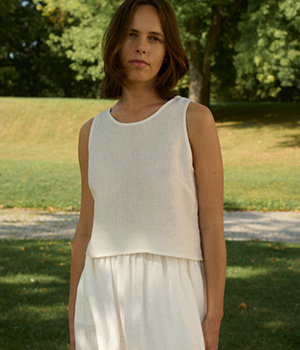
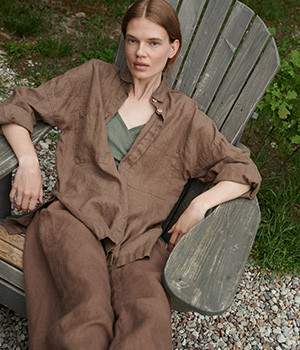
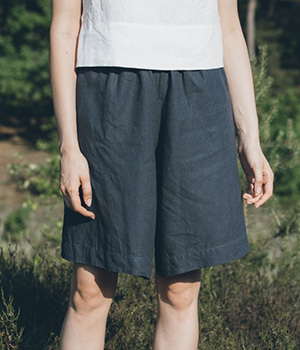
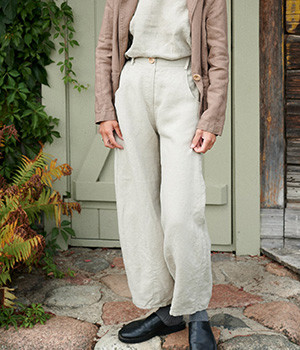
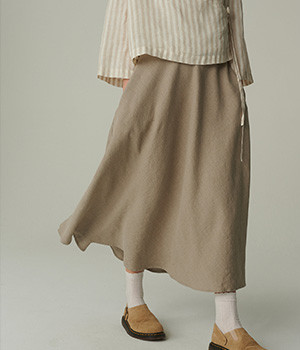
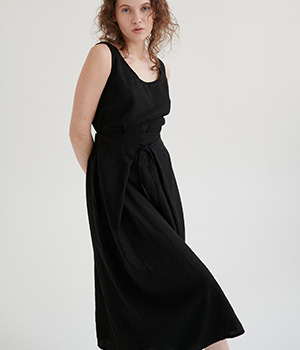
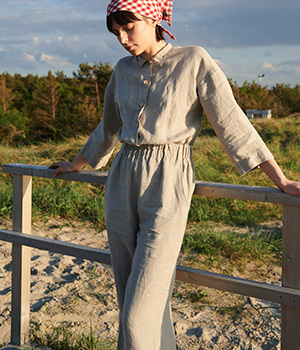
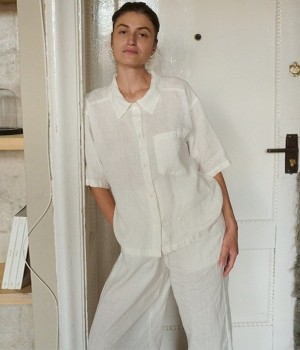
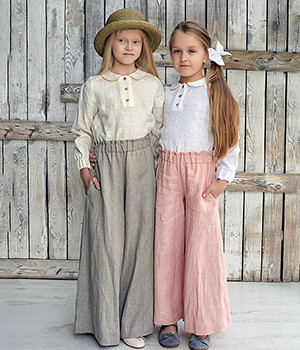
European linen is the same flax fibre family grown under stricter, traceable conditions. The premium buys consistency, certification, and a marketing claim you can document — not a fundamentally different material. See how certified fabric translates into a finished product in our European linen blouse and skirt set program.
How to Verify European Linen Before You Buy
High quality is only useful if you can prove it. Use this four-point check when a supplier quotes "European linen" — and read more in our product FAQs:
Ask for the certificate by name — European Flax (fibre origin), Masters of Linen (European processing), or Belgian Linen. "European quality" without a named certificate is a description, not a claim.
Request lot-level documentation — the certificate should map to the specific fabric lot you are buying, not to the mill's general marketing materials.
Confirm the processing tier — European flax woven in Asia costs less than fabric also woven and finished in Europe. Decide which claim your brand needs before comparing prices.
Check shrinkage and quality data — a serious supplier tests each lot (residual shrinkage held to 3% or below after pre-treatment) and shares the report before cutting. At Linenwind, fabric-lot shrinkage testing is standard and documented, and our OEM linen manufacturing guide walks through the full production workflow.
How Quality Survives from Field to Finished Garment
1
Certified Growing & Retting
Flax is grown in Europe's maritime regions and field-retted under controlled timing, then scutched and hackled to separate long line fibre from short tow fibre.
2
Spinning & Weaving
Long staples spin into finer, more uniform yarns. Fabric is woven in Europe (Masters of Linen / Belgian Linen) or elsewhere from certified flax — the certificate tells you which.
3
Pre-Treatment & Testing
The mill pre-treats the fabric and tests shrinkage before cutting, so residual shrinkage is predictable and patterns can carry the correct allowance.
4
Garment Production with QC
Cutting, sewing, and finishing are inspected inline at each stage, with final inspection before packing — the stage where good fabric is either protected or ruined. A factory without linen-specific sewing and finishing experience will waste certified fabric; this is why we run a dedicated linen production workflow at our 3,000+ sqm factory in Dongguan, Guangdong, with ISO 9001 quality management and OEKO-TEX Standard 100 fabrics.
Common Follow-Up Questions
Is European linen always higher quality than regular linen?
Not automatically. The fibre and certification advantages are real, but the final garment also depends on weaving density, finishing, pre-treatment, and sewing quality. A poorly finished garment from certified fabric can still disappoint, while a well-made garment from good uncertified flax can perform excellently. European linen raises the probability of consistency; it does not guarantee the result by itself.
Does European linen wrinkle less than regular linen?
Linen wrinkles by nature — it is a stiff, low-elasticity fibre, and no origin label changes that. What European linen offers is a smoother, more uniform yarn and often a softer finish, which can reduce the harsh, random creasing of coarser fabric. If wrinkle resistance is the priority, consider linen blends or finishing treatments rather than relying on origin alone.
Can I order certified European linen at a low MOQ?
Yes. At Linenwind the standard MOQ is 60 pieces per style, with sampling in 7–14 days and bulk production in 25–35 days, so a brand can test certified European linen on a small first order and scale up once the style performs. Certified fabric carries a cost premium, but the MOQ structure stays the same as for our standard linen program.
Limitations to Keep in Mind
- Certificate ≠ finished garment quality. Certified fabric sewn badly still ships a bad product. Pair certified fabric with disciplined manufacturing and QC.
- European linen still shrinks. Untreated linen shrinks 3–7% on first wash. Pre-treatment and pattern allowance are what make the difference — ask for the test report.
- The premium is real. Certified European fabric costs more per metre. For price-led basics, standard linen is often the smarter commercial choice; for premium or EU-market lines with origin claims, the premium pays for itself.
- Not every "European" claim is certified. Uncertified European-origin flax exists and is fine — but it should be priced and labelled honestly, not marketed as certified.
Related Reading
Our full European Linen Guide: Quality, Features and Benefits goes deeper into grades, weaving regions, and what European linen means for B2B brands. For the cost question, see Is European Linen Worth the Cost for Fashion Brands?.
Want Certified European Linen for Your Collection?
Linenwind is a linen-specialist OEM factory in Dongguan, Guangdong, China: ISO 9001 quality management, OEKO-TEX Standard 100 fabrics, 60 pcs MOQ per style, 7–14 day sampling, 25–35 day bulk production. We can source certified European flax fabric or work with fabric you supply. Browse our linen catalog for design reference before you write to us.
Last updated: August 2026. Certification facts reflect the European Flax and Masters of Linen schemes operated by the Alliance for European Flax-Linen and CELC; commercial terms reflect Linenwind's standard offer. Certificate availability and pricing depend on the specific fabric lot and market conditions. Contact us for current fabric options and certificates.