Linen Color Trends 2027: Dyeing and Color Matching for Fashion Brands
Linen Color Trends 2027: Dyeing and Color Matching for Fashion Brands
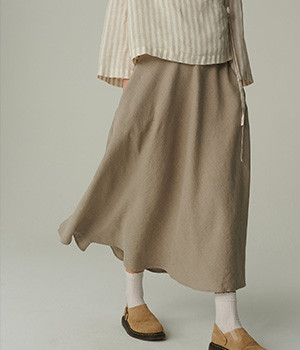
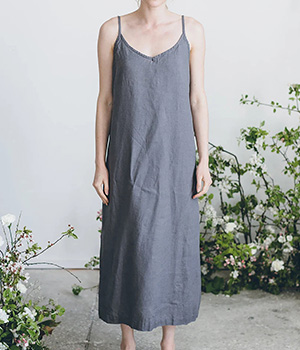
The 2027 linen palette is moving in two directions at once: softer, warmer neutrals that read as undyed, and deeper botanical darks that carry linen into fall and winter. For a brand, the trend is the easy part. The hard part is turning a reference shade into a bulk order that stays within tolerance across three reorders.
This guide covers both halves. First, the color families we are quoting most often for 2027 briefs and what each one demands from a fabric. Second, the production side: which dye route suits which shade, how a lab dip is approved, what colorfastness and lot-consistency numbers to write into a purchase order, and how color decisions change MOQ, cost and lead time at a Dongguan linen factory running 60-piece minimums.
It is written for brand owners, sourcing managers and designers who already know the silhouette they want and are now choosing the shade that has to survive a wash test, a photo shoot and a second production run six months later.
Color is the cheapest design decision to change and the most expensive one to get wrong. A shade that shifts half a step between the sample and the bulk delivery will photograph differently, sit next to last season's stock awkwardly, and generate the kind of return rate that never shows up in a spec sheet. That is why the useful conversation in 2026 is not "which colors are trending" but "which colors can we repeat." The palette below is filtered through that second question.
The 2027 Linen Color Direction at a Glance
Across the 2027 briefs we are pricing, six families account for most of the requests. They are not equally easy to produce. The table below pairs each family with the dye route that usually suits it and the risk that most often shows up at bulk stage.
| Shade family | Reference shades | Usual dye route | Where it sells | Main production risk |
|---|---|---|---|---|
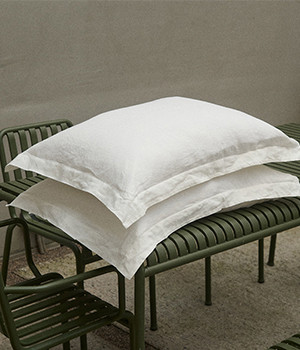
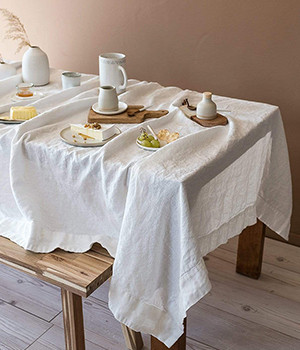
| Undyed and ecru | Natural flax, oatmeal, unbleached | No dye, washed finish only | Resort, home, clean-label ranges | Lot-to-lot variation in the raw fiber; "natural" is a range, not a fixed color |
| Warm mineral neutrals | Bone, sand, clay, warm stone | Piece dye, reactive | Spring/summer core, workwear | Yellowing under optical brighteners; shade drift on pale lots |
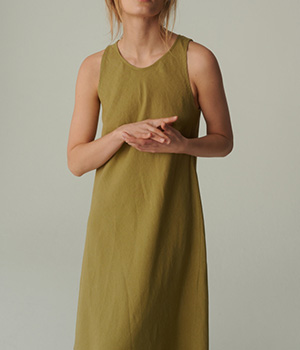
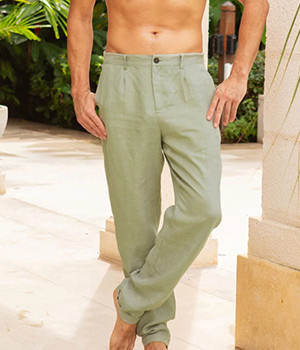
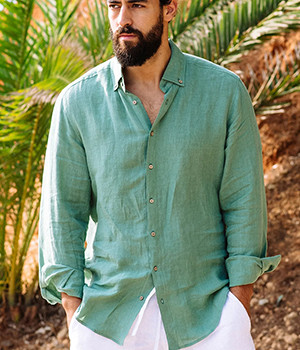
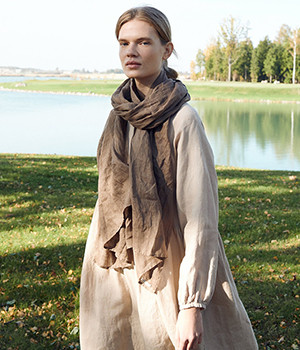
| Botanical mid-tones | Sage, olive, moss, eucalyptus | Piece dye, reactive or vat | Resort, lifestyle, unisex | Metamerism between daylight and store lighting |
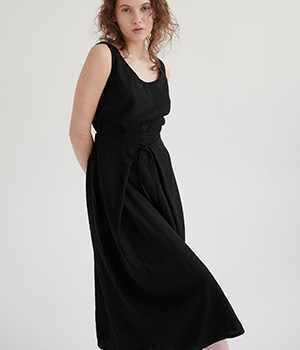
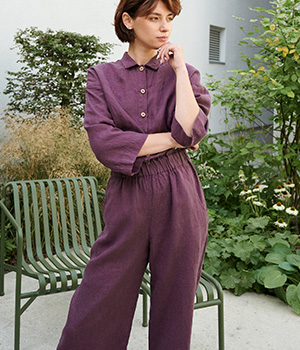
| Deep botanical and ink | Ink indigo, charcoal, deep olive, aubergine | Piece dye, vat or high-depth reactive | Fall/winter, outerwear, premium | Croching, poor rub fastness, uneven penetration on slubs |
| Sun-faded brights | Washed coral, dusty marigold, faded azure | Garment dye or piece dye | DTC drops, capsule collections | Light fastness and repeatability across small lots |
| Yarn-dyed patterns | Tonal stripes, checks, chambray effects | Yarn dye before weaving | Shirting, home textiles | High minimums per color; long lead time |
Two observations matter more than the individual shades. First, the neutral end of the market has become more specific: buyers are no longer asking for "beige" but for a named warm stone with a defined undertone, because that shade has to sit beside a second neutral in the same collection. Second, the dark end has become more technical: deep olive and ink on linen are the shades most likely to fail a rub test if the dye house treats linen like cotton.
If you are still deciding how color fits into the wider season, the broader direction is covered in our 2027 linen fashion trend planning guide; this article stays on the color and dyeing layer.
Why Linen Takes Color Differently From Cotton
Most color problems on linen start with the assumption that linen behaves like cotton. It does not. Linen is a bast fiber with a high degree of crystallinity and a smooth, waxy outer surface, and both features reduce how quickly dye molecules penetrate the fiber. In practice this means three things for a color brief.
Shades read lighter on linen. The irregular yarn surface and the natural sheen reflect more light than a flat cotton poplin, so the same recipe that produces a mid-grey on cotton can look half a step lighter on linen. When a brand sends a paper Pantone reference, the dye house has to interpret it against the fabric, not against the chip. This is why a lab dip on the actual quality matters more than a digital approval.
Depth costs time, not just money. Reactive dyes on linen need longer fixation and more careful soaping to reach a deep, level shade. A pale sand might run through a standard cycle; an ink indigo typically needs a higher dye concentration, a longer cycle and a vat or high-depth reactive route. Rushing that cycle produces the classic failure mode: a shade that looks correct on the face of the fabric and is 10 to 15 percent lighter in the crease.
Slubs create visual heathering. Linen's thicker and thinner yarn sections take dye at slightly different rates, which is part of the character of the fabric and part of the reason two panels cut from the same roll can look different under directional light. For solid-color programs this is acceptable within a shade band. For tight color matching against a non-linen reference, it has to be discussed before the lab dip, not after.
Practical rule: approve color on the fabric quality you will actually produce, in the GSM you will actually run. A lab dip on a 140 GSM plain weave is not evidence for a 240 GSM heavy linen, and a dip on a bleached base is not evidence for a natural base.
Linen also behaves differently after washing. First-wash shrinkage on linen typically runs 3 to 7 percent, and the same wash that removes residual shrinkage can shift the shade slightly, especially on deep colors. Garment-dyed programs build that shift into the process; piece-dyed programs need to test it before the bulk is cut. The testing protocols for both are set out in our linen fabric testing guide.
Choosing the Dye Route: Piece, Yarn or Garment
There are three routes, and the right one is determined by the shade, the quantity and the look you want, in that order. Brands often choose garment dyeing because it sounds more artisanal, then discover that the minimum is higher and the shade range is narrower than expected.
| Route | How it works | Best for | Typical minimum | Added lead time |
|---|---|---|---|---|
| Piece dyeing | Fabric is dyed in rope or beam form before cutting | Solid colors, core programs, large repeat orders | Driven by fabric minimum, often 300-500 m per shade | 10-20 days on top of greige availability |
| Yarn dyeing | Yarn is dyed before weaving or knitting | Stripes, checks, chambray, patterns that cannot be printed | Often 300-500 kg per color per yarn count | 15-25 days, plus weaving |
| Garment dyeing | Cut-and-sewn garments are dyed as finished pieces | Small drops, washed and faded looks, seasonal color tests | Commonly 200-500 pcs per color | 7-12 days after sewing, plus wash and dry |
Piece dyeing is the default for a reason: it gives the widest shade range, the most consistent hand feel and the lowest cost per meter at volume. Its constraint is the fabric minimum, not the garment minimum. If a brand wants 60 pieces in three colors, the fabric still has to be dyed in commercial lots, so the practical answer is usually to select from stock shades or to accept a higher effective fabric cost per garment.
Yarn dyeing is the only route for true stripes and checks, and it is the route with the longest critical path. A yarn-dyed stripe in four colors is effectively four dye lots that all have to match each other and then survive weaving. Lead times of five to six weeks for the fabric alone are normal, which is why yarn-dyed programs belong in a 2027 plan started in the fourth quarter of 2026.
Garment dyeing gives the soft, lived-in surface that sells in DTC photography, and it lets a brand hold undyed stock and commit to color late. The trade-off is that the garment, not the fabric, is the dye vessel: seams pucker differently, trims and threads must be dye-compatible, and the shade range for deep colors is narrower because the garment cannot take the same mechanical action as open-width fabric. It is also the route where shrinkage allowance has to be built into the pattern, because the dye cycle and the wash cycle both move the garment.
For a side-by-side explanation of how each route works mechanically, including the difference between yarn-dyed and piece-dyed construction, see our linen dyeing methods comparison. The decision above is the commercial summary; that article is the process detail.
The Color Matching Workflow, Step by Step
A repeatable shade is the output of a sequence, not a single approval. The sequence below is the one we run for custom linen programs, and each step has a defined output that the brand signs off before the next step begins.
- Color brief and reference. The brand supplies a reference: a Pantone TCX or TPX code, a physical swatch, or a previous garment. Physical references are more reliable than codes because they carry the surface and the undertone. If only a code is available, state the lighting condition it was chosen under.
- Quality and base selection. The mill confirms the fabric quality, GSM and base shade (bleached, semi-bleached or natural). The same recipe on a different base is a different color, so this step locks the variable that most often causes disputes.
- Lab dip. The dye house produces a small dip, usually 5 to 7 working days for a reactive shade on linen, longer for a yarn-dyed package. We send two to three variants around the target rather than one, because the first dip is a direction, not an answer.
- Instrumental and visual assessment. Each dip is measured on a spectrophotometer against the standard and read under D65, TL84 and incandescent light. The numeric result is a ΔE value; the visual result is whether the undertone is warmer, cooler, greener or redder than the reference.
- Approval and standard retention. The approved dip becomes the physical standard. Both parties keep a signed, dated piece, stored away from light. Without a retained standard, a reorder argument has no referee.
- Bulk dye lot. The dye house scales the approved recipe to the production lot, with a first-off shade check before the full lot is committed. This is the step that catches the difference between a 5-gram dip and a 500-kilo lot.
- In-line shade check. Fabric is checked at the head, middle and tail of the lot. Shade variation within a roll is measured, not eyeballed, and any roll outside the band is cut out rather than shipped.
- Final shade band and records. The brand receives the measured result against the approved standard, plus the recipe and dye lot reference for future reorders. Those records are what make the second order possible.
The approval step is where most timelines slip. A brand that reviews dips once a week adds a week to every round, and two rounds plus a bulk lot is already three weeks of color development before a single meter is dyed. If the calendar is tight, the fix is to compress the review loop, not to skip the dip. Our custom dyeing and Pantone matching FAQ covers what a brand needs to send with the first request.
Tolerances, Colorfastness and What to Write Into the PO
"Match the sample" is not a specification. A purchase order needs three numbers: the tolerance against the approved standard, the fastness targets for the intended use, and the test method used to verify both. The values below are the ones we work to on linen apparel; they are typical for the European and US market rather than universal, and a brand with a stricter retail requirement should state it at inquiry stage.
| Property | Test method | Typical target for linen apparel | What fails if it is missed |
|---|---|---|---|
| Shade against standard | Spectrophotometer, ΔE CMC 2:1 | Lab dip ≤1.0; bulk ≤1.5 | Visible mismatch between sample and bulk, re-shoot and markdown |
| Shade within lot | Measured at head, middle, tail | ≤1.0 across the lot | Panel-to-panel variation in the same garment |
| Colorfastness to washing | ISO 105-C06 (AATCC 61) | 4-5 change, 4-5 staining | Fading and cross-staining in the first home wash |
| Colorfastness to rubbing | ISO 105-X12 (AATCC 8) | Dry 4, wet 3-4 | Croching on deep shades, marks on light garments worn underneath |
| Colorfastness to light | ISO 105-B02 (AATCC 16) | 4-5 for pale and mid shades | Window displays fading within one season |
| Colorfastness to perspiration | ISO 105-E04 | 4 change, 4 staining | Underarm fading and staining on lighter shades |
| pH of extract | ISO 3071 | 4.0-7.5 | Skin irritation claims, retail compliance failures |
| Formaldehyde | ISO 14184-1 | Under 75 mg/kg, lower for babywear | OEKO-TEX and retail gate failure |
Two of these deserve emphasis. Rub fastness is the most common failure on deep linen, because pigment sits on the surface of a fiber that does not absorb evenly; a vat route or a longer soaping cycle solves it, but only if the requirement is stated before the lot is dyed. Light fastness is the most common failure on pale fashion shades displayed in shop windows, and it is not visible at delivery, which is exactly why it belongs in the PO and not in a conversation after the season.
Write it down: "Bulk shade to approved dip within ΔE 1.5 CMC 2:1; wash fastness 4-5 per ISO 105-C06; rub fastness dry 4 / wet 3-4 per ISO 105-X12." One sentence, three tests, and most shade disputes disappear before they start.
Keeping Reorders on Shade
The second order is where color programs are actually tested. The fabric is the same, the recipe is the same, and the shade is still slightly off, because the dye lot, the water, the machine and the operator have all changed. Four controls reduce that risk to a manageable level.
- Keep the physical standard, not the digital file. A Pantone code is a target; the approved dip is the contract. Store it flat, dark and dry, and replace it only when both parties agree.
- Archive the recipe with the dye lot. Concentration, auxiliaries, temperature curve, cycle time and machine. Without the record, the next lot is a new development, not a reorder.
- Use the same mill and the same base quality. Switching a base from semi-bleached to bleached shifts pale shades more than most brands expect.
- Allow a small overage on the dyed lot. Dyeing 3 to 5 percent extra fabric is cheaper than re-dyeing a short lot, and it covers the cuts made when a roll falls outside the shade band.
There is also a commercial control: order the reorder before the stock runs out. A shade that has to be matched in a hurry goes to whichever machine is free, and machine-to-machine variation on deep shades is real. Planning fabric alongside the garment reorder, rather than after the sell-through report, keeps the dye house on the same equipment.
Building a 2027 Color Card That Survives Production
Most first-time linen brands build a color card that is too wide and too custom. A 12-color range on a 60-piece minimum per style per color is 720 pieces of one style before a single bestseller is identified. The card below is the structure we recommend for a 2027 launch, and it is deliberately boring in the middle.
- Three core shades taken from stock fabric: usually a natural or ecru, a warm sand and a deep olive or ink. These carry 60 to 70 percent of volume and can be replenished quickly.
- Two seasonal shades developed as custom lab dips: the color that carries the campaign, plus one supporting mid-tone.
- One accent reserved for a single style or a limited drop, ideally garment-dyed so the commitment stays small.
- One pattern if the range needs it, planned as a yarn-dyed stripe or check with its own longer lead time.
This structure keeps six shades in the range while limiting custom development to two or three. It also means the reorder conversation is about stock shades, which is where lead time and cost are most predictable. Our stock fabric range covers more than 50 specifications between 100 and 260 GSM, which is why a core neutral can usually be quoted in 48 hours and sampled in 7 to 12 days.
Color also interacts with the sustainability story. Undyed and ecru linens are attractive because they avoid a dye process, but they are not automatically a lower-impact claim: the fiber still has to be grown, retted, spun, woven and finished, and the natural shade varies by lot. If the 2027 range leans on undyed or recycled options, the claim has to match the evidence, as set out in our guide to sustainable linen options.
Matching Color to Market and Garment
European and US buyers are asking for different things from the same palette in 2027. European briefs skew toward warm, low-chroma neutrals with a visible fiber character; the shade is expected to look like linen rather than like a dyed cotton. US briefs, particularly in DTC and resort, lean toward cleaner, more saturated mid-tones with strong photography performance. Both want the same thing underneath: a shade that repeats.
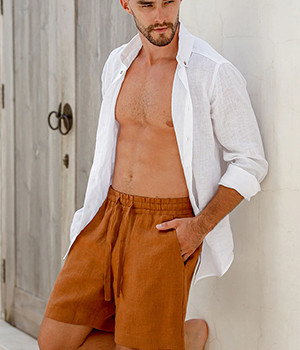
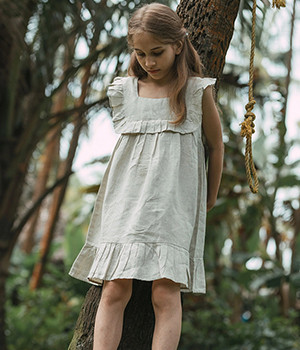
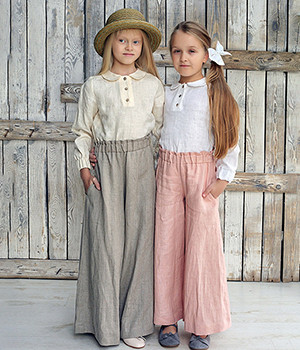
Garment type changes the calculation too. A deep shade on a shirt reads as intentional and hides wrinkles; the same shade on a wide-leg trouser shows every crease and every shade variation, so the within-lot tolerance has to be tighter. Pale shades on dresses are more forgiving of slubs but less forgiving of yellowing, which is why the base and the finishing route matter as much as the dye. For childrenswear, the fastness and chemical requirements tighten, and pale shades are usually the safer commercial choice.
One more constraint worth naming: dark linen shows pilling and abrasion more than light linen, and it cannot be spot-cleaned without leaving a halo. If a brand is planning a deep charcoal or ink for a product that will be worn against light upholstery or carried against a light bag, the rub fastness requirement should be raised at development stage, not discovered by the customer.
Cost and MOQ Impact of Color Decisions
Color is a cost line, and it is easier to plan when the increments are explicit. The table below compares the three practical options for a first order. The figures are planning ranges from our own quotations, not market averages; they move with shade depth, fabric weight and the season's dye house load.
| Option | Typical MOQ | Development time | Cost effect | Best used for |
|---|---|---|---|---|
| Stock shade | 60 pcs per style per color | No lab dip; sample in 7-12 days | Base fabric cost, no dye premium | Core range, fast launch, reorders |
| Custom piece dye | 60 pcs per style per color, subject to fabric minimum | Lab dip 5-7 days, bulk dye 10-20 days | Adds a dye premium plus a small lot surcharge on short runs | Seasonal hero shade, brand signature color |
| Custom garment dye | Commonly 200-500 pcs per color | 7-12 days after sewing | Higher unit cost, lower inventory risk | Small drops, washed looks, late color commitment |
| Custom yarn dye | Often 300-500 kg per color | 15-25 days plus weaving | Highest fabric cost, highest minimum | Stripes, checks, structured patterns |
Within the garment cost, fabric is typically 30 to 45 percent and labor 25 to 35 percent, so a dye premium lands on the largest single line and compounds through the whole order. That is why stock shades matter commercially: they move the color decision out of the critical path without moving the design decision. A brand can launch on three stock shades and add a custom hero color in the second drop, once the style has proven itself.
Sample fees for a custom color program run 40 to 150 US dollars and are credited against the bulk order; swatches are free. A lab dip itself is normally not charged when it is part of a bulk development, but repeated rounds after approval do attract a fee at most mills, which is another argument for sending a physical reference and a clear lighting condition at the start.
A Practical 2027 Color Calendar
Working back from a spring 2027 delivery, color development has to start in the fourth quarter of 2026. The sequence below assumes a first order with one custom shade and two stock shades, and it includes the Chinese New Year window, which removes roughly three weeks of production capacity in February.
| Window | Action | Output |
|---|---|---|
| October to early November 2026 | Lock palette direction, select base qualities and GSM | Color brief with physical references |
| November 2026 | Lab dip round one and two, light and fastness pre-check | Approved dip and retained standard |
| Late November to early December 2026 | Fit and sales samples in approved shades | Sample set for wholesale and content |
| December 2026 | Bulk fabric booking, dye lot scheduled before the CNY cutoff | Confirmed dye slot and delivery date |
| January 2027 | Bulk dyeing, cutting, sewing | Production in progress |
| February 2027 | CNY slowdown, then finishing and QC | AQL 2.5 inspection |
| March 2027 | Delivery and reorder decision on core shades | Reorder PO with archived recipe |
The calendar is tight but realistic: sampling runs 7 to 12 days from an approved brief, bulk production 25 to 35 days after fabric is ready, and a first order typically lands 35 to 60 days from confirmation. The variable that breaks the plan is not the dye house, it is late shade approval. A brand that approves dips within 48 hours of receipt gains two weeks across the program. The wider timeline, including design and sampling dependencies, is set out in our 2027 collection planning timeline.
Color Questions Buyers Ask Before Booking
Next Step: Turn the Palette Into a Signed-Off Dip
The 2027 palette rewards brands that treat color as a production decision rather than a mood board. Pick the two or three shades that carry the range, confirm the fabric quality and base, and put the tolerance and fastness numbers into the purchase order before the first dip is requested. Everything after that is execution.
Linenwind is a Dongguan-based linen garment factory working with brands on OEM and ODM programs: 60-piece minimums per style per color, sampling in 7 to 12 days, bulk production in 25 to 35 days, AQL 2.5 inspection, and ISO 9001, OEKO-TEX Standard 100 and SEDEX behind the quality system. We quote in 3 to 7 working days from a complete brief and reply to first inquiries within 48 hours.
Send a physical reference or a Pantone code with the fabric quality you have in mind, and we will come back with a dip plan and a realistic calendar. Start with our contact page, or check which colors work best for linen garments if the palette is still open.