
Linen Blend Ratios by End Use: Choosing Content for Cost, Drape and Care
Linen Blend Ratios by End Use: Choosing Content for Cost, Drape and Care
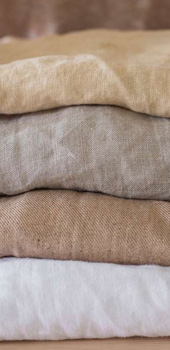
There is no single correct linen blend ratio. The right linen share is set by what the garment has to do: a resort shirt needs crisp body that survives a suitcase, a bias-cut dress needs drape and movement, a tailored jacket needs recovery at the elbow and seat, and a lounge short needs softness against skin after ten washes. In practice, most commercial linen programs sit between 30% and 60% linen, paired with cotton, viscose or rayon, Tencel, polyester, silk, wool or hemp — and the difference between a 45% and a 60% linen shirt is visible on the hanger, measurable in the wash test, and roughly two dollars per unit in fabric cost.
This guide gives ratio bands by garment type, explains what the remaining percentage does to drape, crease, shrinkage and care, and shows how to write a ratio into a tech pack so that three suppliers quote the same fabric. It is written for brand owners and sourcing managers buying finished garments, not yarn, so the numbers are framed around what you can specify and what you can test on a sample.
We build linen programs at Linenwind, a Dongguan factory that has been cutting and sewing linen for overseas brands for more than twenty years, with more than fifty fabric specifications held in stock and a sampling window of seven to fourteen days. That position — between the mill and your label — is where blend decisions get locked, and where most of the expensive mistakes happen. If you are still mapping the fibre story before choosing a ratio, the linen-cotton blend guide is the natural starting point for the most common pairing in the category.
The Quick Answer: Ratio Bands by Garment Type
If you need a starting point rather than a lecture, the table below is the short version. Each band assumes a woven linen-blend fabric in a weight appropriate to the category, and each is a range rather than a fixed number because yarn count, weave and finish move the hand feel as much as the percentage does.
| Garment type | Linen share | Usual partner fibre | What the ratio buys you |
|---|---|---|---|
| Shirts and blouses | 45–60% | Cotton, Tencel | Crisp body, visible slub, controlled cost, machine-wash care |
| Dresses and skirts | 30–55% | Viscose, rayon, Tencel | Drape and movement without the stiffness of pure linen |
| Tailoring and suiting | 20–45% | Wool, viscose, polyester | Crease recovery, shape retention, reduced seat bagging |
| Loungewear and soft separates | 30–55% | Cotton, modal | Softness after repeated washing, less prickle, easy care |
| Resort and holiday shirts | 50–60% | Cotton, viscose | Open weave character with enough body for print |
| Outerwear and overshirts | 55–70% | Cotton, hemp | Substance and abrasion resistance at 200–260 GSM |
Treat the bands as decision anchors, not regulations. A 40% linen voile and a 40% linen canvas behave nothing alike, because weight and weave carry as much of the outcome as the fibre content does. What the ratio controls is the ceiling and floor: how much moisture the fabric can absorb, how quickly it releases creases, how much it will shrink on the first wash, and how much the greige fabric costs before a single seam is sewn.
Two numbers are worth memorising before you brief a mill. First, linen fibre is expensive relative to cotton and viscose, so every ten points of linen share moves fabric cost in a way you will feel on a 5,000-piece order. Second, linen is dimensionally restless: blends in the 30–60% range typically show 3–7% first-wash shrinkage unless the fabric is pre-shrunk or garment-washed, and the partner fibre changes how that shrinkage expresses itself across warp and weft.
Why a Higher Linen Percentage Is Not Automatically Better
The most expensive misconception in linen sourcing is that linen content is a quality score. It is not. Linen percentage is a set of trade-offs, and at some point on the curve every additional point of linen costs you something: drape at the low end for soft categories, crease recovery in tailoring, softness in loungewear, and money almost everywhere.
Pure linen is genuinely excellent at the things linen is famous for: it absorbs moisture quickly, releases it quickly, feels cool against skin in humid heat, develops a dry handle that reads as natural rather than slick, and ages into a softness that most blends cannot imitate. It is also stiff off the roll, wrinkles where it bends, and can feel rough against the neck and underarm in the first several wears.
That is why the trade built blends in the first place. The partner fibre is not filler. It is the component that buys the property you cannot get from linen alone:
- Cotton adds softness, opacity and a more predictable shrink curve, and it is the cheapest way to bring a linen shirt into a mid-market price band.
- Viscose and rayon add drape and fluidity, which is why they dominate dresses and wide-leg trousers; they also make the fabric heavier in hand at the same GSM.
- Tencel (lyocell) adds a smooth, slightly cool touch and better moisture management than viscose, at a higher fibre cost.
- Polyester adds crease recovery, strength and dimensional stability, and is the pragmatic choice where a garment must look pressed after a flight.
- Silk adds lustre and a fluid hand for premium capsules, but pushes cost and care requirements up sharply.
- Wool adds resilience and thermal regulation for tailoring, at the cost of hand-feel complexity and dry-clean care.
- Hemp adds durability and a drier, more rustic surface for outerwear and workwear-adjacent categories.
The practical rule: choose the partner fibre first, then tune the linen percentage until the sample behaves the way the category requires. Brands that start from a linen number and then look for a partner tend to spend three sampling rounds discovering what a two-minute conversation about end use would have settled.
A 55/45 linen-cotton shirt and a 55/45 linen-viscose shirt are not substitutes. Same linen share, completely different drape, opacity, shrink behaviour and care story. Always specify the partner fibre, not just the linen percentage.
Shirts and Blouses: 45–60% Linen With Cotton or Tencel
Shirting is the category where linen blends earn their keep most obviously. A 55/45 linen-cotton poplin or plain weave at 120–160 GSM gives you the dry, slubbed surface that reads as linen, with enough opacity and softness that the shirt works against skin and survives a domestic wash cycle without becoming a rag.
Below about 40% linen, the fabric starts to read as cotton with a texture story rather than a linen shirt, and the cooling benefit fades in humid weather. Above about 65%, you gain authenticity but lose the easy-care promise most mid-market customers expect: creasing becomes pronounced, the collar points curl after washing, and the first-wash shrinkage moves toward the top of the 3–7% band.
What to specify beyond the ratio
- Yarn count: a 60/2 or 50/1 linen warp with a finer cotton weft reads smoother at the collar; a heavier slub yarn gives the rustic look but pills faster at friction points.
- Weight: 120–150 GSM for summer shirting, 160–180 GSM for overshirts and camp-collar styles.
- Finish: a light enzyme or silicone wash softens the hand without destroying the slub; garment washing adds cost but reduces residual shrinkage to roughly 2–3%.
- Shrinkage allowance: if you skip garment washing, cut with a pattern allowance sized to the tested shrinkage, not to a guess.
For brands building a first linen shirt program, the most efficient route is a 55/45 linen-cotton in a stock weight, sampled in your target wash, with shrinkage measured before the pattern is graded. That sequence avoids the classic failure where a beautiful sample shrinks into a size below spec after the first customer wash. Our Tencel blend breakdown covers the upgrade path if you want a smoother, cooler hand at a higher fabric cost.
Dresses and Skirts: 30–55% Linen With Viscose, Rayon or Tencel
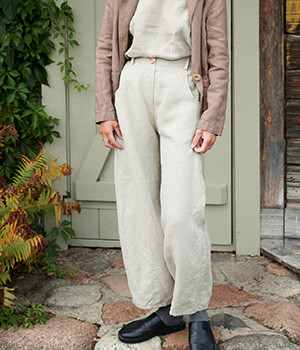
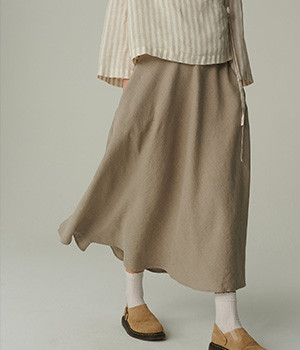
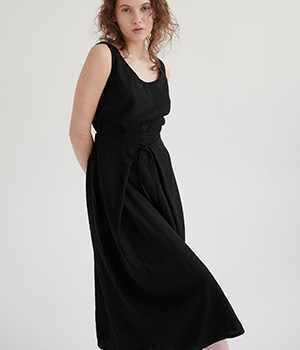
Dresses are where linen percentage most visibly changes the product. Pure linen in a dress reads architectural: it holds a shape, stands away from the body and creases at every bend. That can be exactly right for a structured midi, and exactly wrong for a bias-cut slip dress or a fluid wide-leg jumpsuit.
The 30–45% band, paired with viscose or rayon, is the workhorse for fluid dresses. Viscose contributes drape, weight and a soft fall, while the linen keeps the surface from looking synthetic and adds breathability in heat. At 45–55% linen with Tencel, you get a drier hand and better moisture management, which suits day dresses and travel capsules.
Weight matters as much as ratio here. A 140–170 GSM linen-viscose drapes; the same ratio at 200 GSM becomes a shirtdress or a skirt with body. For tiered skirts and gathered waists, stay at the lower end of the weight range or the gathers turn into bulk at the hip.
Practical checks for drape categories
- Ask for a hanging sample, not a flat swatch. Drape only shows when gravity is applied.
- Test shrinkage in both directions: viscose-rich blends can move more in the weft than the warp, which twists side seams.
- Check opacity against a hand behind the fabric at the intended weight, especially in pale undyed shades.
- Confirm the press plan: linen-viscose blends can shine under a hot iron, so finishing instructions belong in the tech pack.
The linen-viscose notes go deeper on the summer dress case, including how the viscose grade changes the hand at the same ratio. If your range includes a linen-rayon dress, pair the ratio decision with a shrinkage plan early — the linen-rayon shrinkage guide explains why this blend needs its own test protocol rather than a copy of the cotton program.
Tailoring and Suiting: 20–45% Linen With Wool, Viscose or Polyester
Tailoring is the category where high linen content is most often a mistake. A jacket has to hold a shoulder, recover at the elbow, and resist bagging at the seat after an hour in a chair. Pure linen does none of those things well, which is why linen suiting has historically been a compromise between breathability and shape.
The 20–35% band with wool or a wool-viscose blend is the sweet spot for unstructured summer jackets: enough linen to breathe and to show texture, enough wool to recover. At 35–45% with viscose or a fine polyester, you get a crisper, more affordable cloth for travel suits and wide-leg trousers, at the cost of some of the natural surface character.
| Tailoring piece | Suggested linen share | Partner | Watch-out |
|---|---|---|---|
| Unstructured blazer | 25–35% | Wool, wool-viscose | Canvas and fusing choice matters more than the ratio |
| Pleated trousers | 30–45% | Viscose, polyester | Knee bagging; specify recovery test after 2 hours hanging |
| Waistcoat | 25–40% | Wool, viscose | Shrinkage at the armhole seam |
| Travel suit | 35–45% | Polyester, viscose | Press shine; lower iron temperature in finishing |
Because tailoring carries the highest labour content per unit, the fabric decision is only part of the cost story. Cutting, fusing, pressing and the number of fitting rounds typically dominate the difference between a $90 jacket and a $160 jacket. That relationship — fabric at 30–45% of garment cost and labour at 25–35% — is covered in more detail in our cost driver breakdown, and it is the reason a small ratio change in tailoring rarely delivers the saving buyers expect.
Loungewear and Soft Separates: 30–55% Linen With Cotton or Modal
Loungewear punishes any fabric that needs special handling. The garment is worn against skin, washed often, and judged on the third month rather than the first wear. This is the category where a moderate linen share paired with cotton or modal outperforms a high-linen fabric that feels noble in the showroom and scratchy in the laundry basket.
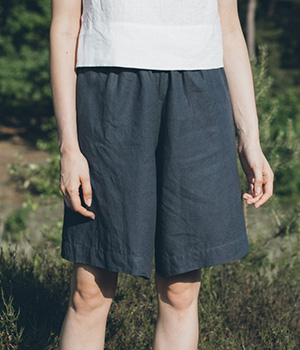
At 30–45% linen with cotton, you get breathability and a dry touch with enough softness for sleepwear and pull-on shorts. At 45–55% with modal, the fabric gains drape and a cooler hand, which suits wide-leg pants and robe styles. Above 60%, expect prickle at the neckline and shoulder seams unless the fabric has been heavily washed, and expect the seam grin that comes with a stiff fibre under tension.
Two construction notes matter more than most brands expect. First, use a softer thread and a finer needle at the collar and armhole, because linen-blend edges abrade skin. Second, specify the wash cycle in the tech pack — a garment-washed lounge short and a piece-dyed one will not shrink the same way, and the difference shows up as a hem that rises 8 mm after five washes.
What the Ratio Does to Landed Cost
Linen is the most expensive fibre in most of these blends, so ratio is a cost lever. The size of the lever depends on the partner fibre and the fabric weight, but the direction is consistent: more linen means a higher greige price per metre, and the effect on FOB is muted or amplified by consumption per garment.
A transparent way to model it is to separate the fabric line from everything else. If fabric represents 30–45% of garment cost, and a ratio change moves fabric price by a defined amount per metre, the FOB effect is roughly that difference multiplied by consumption, plus a small markup for waste and cutting loss. A shirt consuming 1.7 m at a $1.50/m fabric difference carries about $2.55 of fabric cost difference before waste; on a 5,000-piece order that is a five-figure decision, which is why the ratio conversation belongs in the costing sheet rather than in the design review.
| Decision | Cost effect | What you give up |
|---|---|---|
| Raise linen from 45% to 60% | Higher fabric cost per metre | Some softness, more creasing, tighter care story |
| Swap viscose for Tencel at same ratio | Moderate increase | Little — mostly a price and positioning decision |
| Add garment wash | Added unit cost and lead time | Residual shrinkage drops to roughly 2–3% |
| Move to a heavier GSM | Higher consumption per garment | Weight and warmth; drape in soft categories |
| Reduce to 30% linen in a cotton base | Lower fabric cost | Linen character becomes a texture note, not the story |
There is no universal price list in this category, because fabric price depends on yarn count, weave, finish and order volume. What you can standardise is the comparison method: quote every option on the same consumption, the same wash, and the same tolerance, so the ratio decision is made on like-for-like numbers instead of on swatch-room impressions.
Care, Shrinkage and the 3–7% Rule
Every linen blend moves on the first wash. The usual range is 3–7% dimensional change, with the exact figure driven by the linen share, the weave tightness, the partner fibre and whether the fabric was pre-shrunk or the garment was washed. Planning for zero shrinkage is planning for a returns problem.
The partner fibre changes the shape of that shrinkage. Cotton-rich blends tend to shrink fairly evenly in warp and weft. Viscose-rich blends can move more in one direction, which shows up as a twisted side seam or a hem that sits unevenly. Polyester-rich blends shrink least but can still relax after the first domestic wash, especially in a loose weave.
- Test before you grade: wash a 50 cm square three times at the care temperature you intend to print, and measure after each cycle.
- Separate relaxation from shrinkage: a fabric that relaxes 2% in the first wash and then stabilises needs a different allowance from one that keeps moving.
- Lock the care label to the test: if the label says 30°C, test at 30°C; a 40°C test on a 30°C label understates the risk.
- Decide on garment wash early: it adds cost and lead time, so it belongs in the initial costing, not in the post-sample rescue.
A shrinkage result from a single swatch is not a specification. Test at least three specimens from different parts of the roll, and repeat after bulk fabric arrives, because roll-to-roll variation in linen blends is normal.
Writing the Ratio Into a Tech Pack
A ratio on a design sheet is an intention. A ratio in a tech pack is a contract. The difference is the detail you attach to it: tolerance, test method, and the consequence of failure.
At minimum, a linen blend specification should state the fibre content by percentage, the tolerance band, the fabric weight in GSM, the weave or knit, the finish, the shrinkage target and the test standard used to verify it. A typical commercial tolerance is plus or minus 3 percentage points on each fibre, which is wide enough to be manufacturable and tight enough to protect the hand feel you approved.
- Fibre content: linen 55% / cotton 45%, tolerance ±3%.
- Weight: 145 GSM ±5%, measured on conditioned fabric.
- Shrinkage: maximum 5% warp and weft after three washes at 30°C, tested to ISO 6330 and measured to ISO 5077.
- Colour fastness: minimum grade 4 for change and staining after domestic laundering, tested to ISO 105-C06.
- Strength: tensile and tear minimums appropriate to the garment's end use, tested to ISO 13934-1 and ISO 13937-2.
- Inspection: AQL 2.5 at final inspection, with critical defects defined separately from major and minor.
Add the commercial layer too: who pays for the lab test, which lot is tested, and what happens if the bulk fabric lands outside tolerance. Orders that skip those three clauses tend to resolve disputes with discounts instead of data, and discounts do not fix a garment that shrinks out of size.
Five Ratio Mistakes That Cost Sampling Rounds
Most blend problems we see are not chemistry problems. They are briefing problems, and they repeat in recognisable patterns.
- Specifying a percentage without a partner fibre. "60% linen" is not a fabric specification; 60% linen with 40% viscose and 60% linen with 40% cotton are different products.
- Choosing the ratio on a flat swatch. Drape and crease behaviour only appear when the fabric hangs and bends. Ask for a hanging length, not a 20 cm square.
- Ignoring the wash test until after grading. Shrinkage discovered after the pattern is graded means a full re-grade, or a garment that fails its own size chart.
- Pushing linen content to win a marketing line. A "70% linen" claim on a garment that creases badly and scratches at the neck is a returns driver, not a selling point.
- Comparing quotes at different tolerances. A supplier quoting ±5% and one quoting ±3% are not quoting the same fabric, even at the same headline ratio.
Each of these is cheap to fix in the brief and expensive to fix in bulk. The pattern across all five is the same: the ratio was treated as a number to advertise rather than a specification to test.
Sampling Path and Timeline
A blend program does not need to be slow, but it does need a sequence. In our experience the reliable order is: confirm end use and care story, select two candidate ratios, request stock swatches, test shrinkage and hand on the preferred candidate, then build the first sample in the production wash.
Typical timings on that path, for a linen program with stock fabric:
- Swatches: free, dispatched quickly once the shortlist is agreed.
- Sampling: 7–12 days per round, with a practical window of 7–14 days once trims and labels are confirmed.
- Sample fee: $40–150 per style depending on complexity, refunded against the bulk order.
- Bulk: 25–35 days after sample approval and fabric allocation.
- First order end to end: 35–60 days including sampling, approvals and production.
- MOQ: 60 pieces per style per colour, which keeps a ratio test affordable at the start of a program.
Two rounds is normal. Three rounds usually means the brief changed rather than the sample failing, and the cheapest way to avoid the third round is to send the mill a reference garment with the hand feel you want, alongside the written ratio. A physical reference resolves ambiguity that a percentage cannot.
Frequently Asked Questions
Is a higher linen percentage always better quality?
No. Linen content is a trade-off, not a grade. Higher linen brings breathability and a drier hand, but it also brings more creasing, more first-wash shrinkage and, in tailoring or loungewear, worse recovery and softness. Quality is whether the blend delivers the behaviour the garment needs, consistently, at the agreed tolerance.
What is the most common linen blend for shirts?
55/45 linen-cotton is the most widely used shirting blend because it keeps the linen surface and cooling behaviour while adding softness, opacity and a more predictable shrink curve. Tencel is the usual upgrade when a smoother, cooler hand is worth the higher fabric cost.
How much will a linen blend shrink on the first wash?
Expect 3–7% dimensional change unless the fabric is pre-shrunk or the garment is washed. The exact figure depends on linen share, weave, partner fibre and wash temperature. Test three specimens at the labelled care temperature before grading the pattern.
Can I get a linen look at 30% linen content?
Yes, at the level of texture and surface interest. At 30% the fabric reads as a cotton or viscose garment with linen character rather than as a linen garment. That is often the right commercial choice for volume programs, provided the marketing copy does not overclaim.
Which partner fibre is best for drape?
Viscose or rayon gives the most drape per point of cost, which is why it dominates dresses, skirts and wide-leg trousers. Tencel gives a drier, cooler drape at a higher price. Cotton gives softness but holds shape, so it is the wrong partner when fluidity is the goal.
What tolerance should I put on the fibre content?
Plus or minus 3 percentage points per fibre is a workable commercial standard. Tighter tolerances are possible but restrict which mills can quote and usually add cost. Whatever you choose, apply the same tolerance to every supplier you compare.
The Short Version
Choose the partner fibre first, set the linen share to the behaviour the garment needs, and test the result before you grade the pattern. Shirts land at 45–60% linen with cotton or Tencel; dresses at 30–55% with viscose, rayon or Tencel; tailoring at 20–45% with wool, viscose or polyester; loungewear at 30–55% with cotton or modal. Write the ratio with a tolerance, a weight, a shrinkage target and a test method, and the sample round stops being a negotiation about taste.
If you are building a linen blend program for a coming season, the fastest way to shorten the loop is to send your target garment, care story and price band together, and let the mill propose two ratios against stock fabric. You can send your brief to our team and get an initial response within 48 hours, with a quotation in 3–7 working days. More specification guidance sits on our FAQ page, including how we handle sampling fees, MOQ and bulk timing.