Is Linen Polyester Blend Good?
Yes, a linen polyester blend is a good fabric for many garments — but only when the use case matches its strengths. The blend combines flax's natural texture and breathability with polyester's wrinkle resistance, dimensional stability, and lower cost. It is an excellent choice for workwear, uniforms, travel pieces, and entry-to-mid price collections where easy care and shape retention matter more than the purest natural-fibre story. It is a weaker choice for extreme-hot-climate wear, luxury or sustainability-led lines, where 100% natural linen performs better and tells a cleaner story.
What "Good" Depends On
A blend is not objectively better or worse than pure linen — it is better for specific requirements. The question to ask is not "is linen polyester blend good?" but "good for what?". Every garment has a job: a chef's shirt must survive daily laundering and look crisp at 6 pm; a resort dress must feel cool on a 35°C beach; a travel blazer must recover from a suitcase overnight. The blend wins the first job, loses the second, and ties the third depending on the ratio.
In manufacturing terms, the blend is also friendlier to consistent production. Polyester stabilises the yarn, which reduces the shrinkage variation that pure linen can introduce into a size run. That means fewer fit surprises between the sample and bulk, and fewer returns after the customer's first wash. For a brand scaling a style, that predictability has real commercial value.
From the factory side, a blend is not a shortcut — it demands its own discipline. Linen and polyester accept different dye classes, so an even shade requires a two-stage dye process rather than a single bath. Sewing tension must be tuned so the mixed yarn does not pucker, and heat-setting during finishing is what locks in the dimensional stability the blend is known for. A factory that handles pure linen well does not automatically handle blends well, which is why the fabric expertise of the supplier matters as much as the ratio you choose.
Where a Linen Polyester Blend Performs Best
Easy Care and Wrinkle Recovery
Polyester gives the fabric quick crease recovery and low-iron behaviour. Garments look presentable after travel, packing, and a full working day — the main reason uniforms and workwear use blends.
Durability and Shape Retention
Polyester strengthens the yarn and helps the garment hold its silhouette through repeated washing. Collars, cuffs, and seams stay cleaner-looking for longer than on pure linen.
Lower Cost and Colour Stability
Polyester fibre is cheaper than flax, so the blend is usually priced below comparable pure linen. It also holds dye well and resists fading, which reduces shade complaints across production runs.
Common Blend Ratios and What They Deliver
| Ratio | Character | Best For |
|---|
| 70% linen / 30% polyester | Mostly linen look and feel, light wrinkle control | Shirts, tunics, relaxed dresses |
| 55% linen / 45% polyester | Balanced natural look with easy-care performance | Workwear, uniforms, everyday separates |
| 50% linen / 50% polyester | Smoother, highly stable, strong crease recovery | Blazers, trousers, travel pieces |
Ratios are written linen-first. The higher the polyester share, the better the shape retention and the lower the breathability. Ask for swatches at two ratios before committing — the hand-feel difference is obvious in person.
Blend vs 100% Natural Linen in One View
| Attribute | Linen Polyester Blend | 100% Natural Linen |
|---|
| Breathability | Good, reduced by polyester | Excellent — best for hot weather |
| Wrinkling | Low; recovers quickly | High; creases are part of the look |
| First-wash shrinkage | Lower; polyester stabilises | Higher; controlled to 3-7% by pre-shrinking |
| Care convenience | Machine wash, cool iron, fast dry | Machine wash, ironing or relaxed styling |
| Fabric cost | Lower | Higher, especially European flax |
| Sustainability story | Contains synthetic fibre | Renewable, biodegradable plant fibre |
Choose by requirement, not by habit: blends for performance and price; pure linen for breathability, authenticity, and sustainability.
When a Blend Is Not the Right Choice
Skip the blend when the product is sold on natural purity, or when it will be worn in extreme heat. For premium resortwear, luxury lines, and eco-positioned brands, 100% linen is the honest choice — a blend weakens the material story and traps more heat against the skin. Also avoid high-polyester ratios for garments that will be ironed at high heat, because polyester can melt or shine permanently; always label blends "cool iron only".
How to Evaluate a Blend Before You Order
1
Request swatches at two ratios. Compare, for example, 70/30 and 55/45 in the same colour, so you can feel the difference between "mostly linen" and "easy care".
2
Do the crush test. Crush a swatch in your fist for ten seconds, then release. A good blend recovers visibly; the recovery speed tells you what customers will experience.
3
Check the GSM. Confirm the target weight and tolerance, typically +/-5%. A blend can perform at a lighter weight than pure linen, which changes costing and drape.
4
Ask for shrinkage data. Request the mill's tested first-wash shrinkage for the exact lot. Blends shrink less than pure linen, but every lot should still be tested and heat-set.
5
Order a lab dip. Linen and polyester dye differently; a two-stage dye process is needed for an even shade. Approve a lab dip before bulk so the colour is locked.
MOQ 60 pieces per style per colour
Sampling 7-14 days, two fit rounds included
Bulk production 25-35 days from approval
ISO 9001, OEKO-TEX Standard 100, SEDEX
Frequently Asked Questions
Does a linen polyester blend breathe?
Yes, but less than pure linen. Polyester does not absorb and release moisture like flax, so the blend is cooler than all-polyester yet warmer than 100% linen. For office and travel wear the difference is minor; for very hot climates or high-activity use, pure linen is better.
Does a linen polyester blend shrink?
Much less than pure linen. The polyester component adds dimensional stability and heat-setting locks the fabric in place during finishing. With proper pre-shrink treatment, first-wash shrinkage on a blend is typically below the 3-7% range of pure linen.
Can a linen polyester blend be dyed in any colour?
Yes, but the dyeing is more demanding than on pure linen because the two fibres accept different dye classes. A reliable factory uses a two-stage disperse-plus-reactive process and verifies shade consistency across lots. Approve a lab dip to avoid surprises.
How should customers care for a blend?
Machine wash at 30-40°C on a gentle cycle, line dry or low tumble, and iron at low to medium heat only. High heat can melt or shine polyester. Blends dry faster than pure linen, which is a genuine convenience for travel and workwear lines.
Is a blend good for children's clothing?
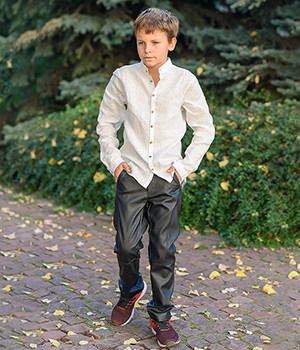
Generally yes. The easy-care and durable properties suit active children's wear, and the lower cost keeps retail prices accessible. Choose a higher linen ratio for breathability and check that trims and labels are child-safe; specify OEKO-TEX-certified fabric if skin sensitivity is a concern.
Can I order a blend made with recycled polyester?
Yes, recycled polyester is available as a yarn option in many mills, including for linen blends. It reduces the virgin-plastic footprint while keeping the same easy-care performance. Disclose the recycled content accurately on the label — vague "eco blend" wording invites scrutiny from both consumers and B2B buyers.
What should I send to get a quote for a blend?
Send your tech pack or reference photos with the target ratio, GSM, weave, and colour reference. With those details a factory can quote accurately on the first pass — at Linenwind you will receive a detailed quote within 48 hours, and we can quote the same style in pure linen as well so you can compare price and hand feel.
Unsure whether a linen polyester blend or 100% linen fits your style? Send us your tech pack or reference photos and we will quote the same design in both fabrics, with swatches and shrinkage data — from first sample to bulk production.
Contact Linenwind
Read the full linen polyester guide
Sources: Linenwind production data (MOQ 60, sampling 7-14 days, bulk 25-35 days) · 100% linen buyer's guide · Request a quote