


Why Linen Clothing is the Future of Sustainable Fashion
Why Sustainable Fashion Matters
The fashion industry produces millions of tons of textile waste every year. For procurement professionals and brand owners sourcing responsibly, linen has emerged as a leading material choice. Made from the flax plant, linen offers a rare combination: a centuries-proven fiber that meets modern sustainability standards, paired with a manufacturing process that remains low-impact across its entire lifecycle.
This guide walks through the measurable environmental advantages of linen, the manufacturing capabilities available at scale, and how to select a linen clothing manufacturer aligned with your brand's sustainability goals.
1. The Environmental Case for Linen
1.1 Water Consumption
According to the European Confederation of Flax and Hemp, flax requires virtually no irrigation when grown in its natural climate zones. A lifecycle assessment published by the Flax Fibre Production study quantified the water footprint at approximately 9 liters per kilogram of fiber, compared to 10,000 to 20,000 liters for conventionally grown cotton.
| Fiber | Water Usage L/kg | Irrigation |
|---|---|---|
| Linen flax | approx 9 | Rain-fed |
| Organic cotton | 2,500 to 5,000 | Often required |
| Conventional cotton | 10,000 to 20,000 | Heavily irrigated |
| Polyester | 0 production water | Petrochemical |
For a B2B buyer sourcing 5,000 custom linen uniforms, the water savings from choosing linen over organic cotton can exceed 12 million liters.
1.2 Carbon Footprint
Flax is a low-input crop. A study by the French Institute of Textile and Apparel found that linen production emits approximately 1.3 kg CO2e per kg of fiber, compared to 5.9 kg for organic cotton. Additionally, flax plants absorb carbon during growth, making linen a carbon-sequestering material throughout its agricultural phase.
1.3 Biodegradability
Linen is 100 percent biodegradable. Under industrial composting conditions, a 100 percent linen garment decomposes within two to four weeks, compared to polyester which persists in landfills for over 200 years. This lifecycle advantage is increasingly relevant as Extended Producer Responsibility regulations expand across the EU.

2. Manufacturing at Scale
2.1 Production Capacity
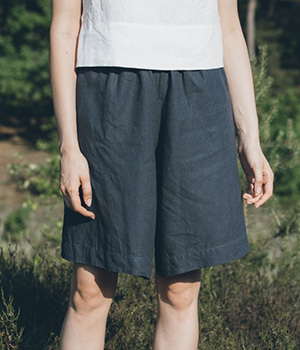
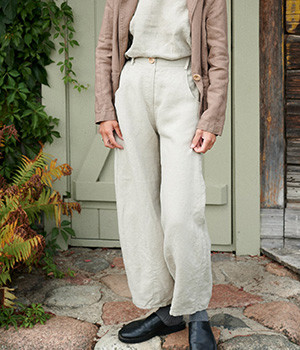
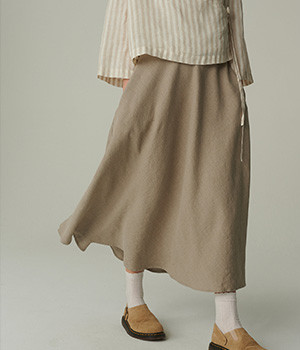
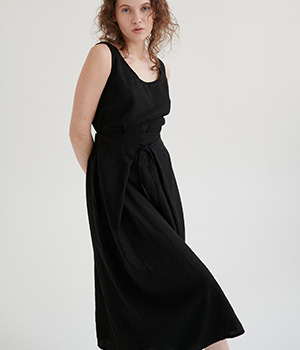
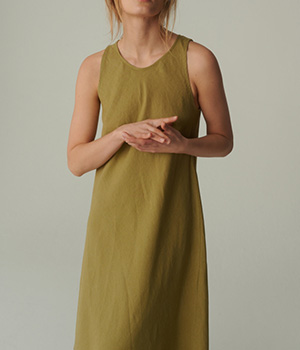
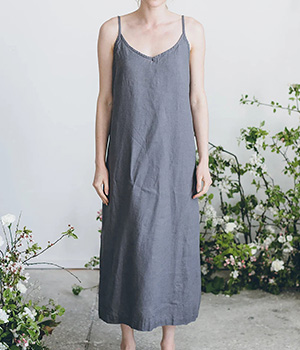
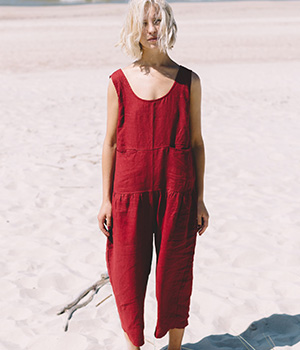
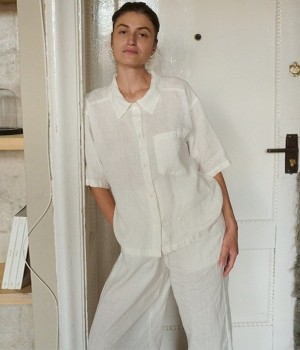
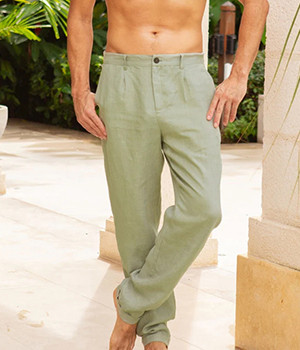
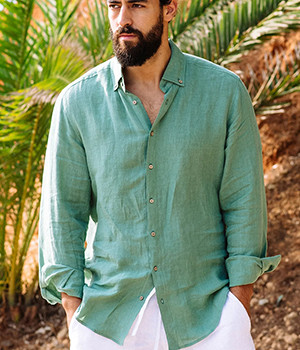
A medium-scale linen OEM factory with 50 to 100 sewing stations can produce 3,000 to 8,000 linen garments per month. At Linenwind, our production covers custom linen dresses, shirts, trousers, jackets, and uniforms with MOQs ranging from 100 to 500 pieces per design. Typical lead times are 30 to 50 days from confirmed order.
2.2 Quality Certifications
B2B buyers should verify these certifications when evaluating linen manufacturers:
- OEKO-TEX Standard 100 for fabric safety
- GOTS for organic fiber and ethical production
- ISO 9001 for quality management
- ISO 14001 for environmental management
- Masters of Linen for European flax provenance
Approximately 85 to 90 percent of global linen production still uses European flax, but spinning and garment manufacturing increasingly occur in China, India, and Bangladesh. Buyers should verify full supply chain traceability.
2.3 Dyeing and Finishing
While flax fiber itself has a low environmental footprint, the dyeing stage can significantly alter a garment's overall impact. Yarn-dyed linen uses 30 to 40 percent less water than piece-dyed fabric. Enzyme washes and low-impact wrinkle-resistant finishes are now available with OEKO-TEX certification, offering a middle ground between performance and sustainability.

3. Sourcing Linen Clothing
3.1 Fabric Weight Guide
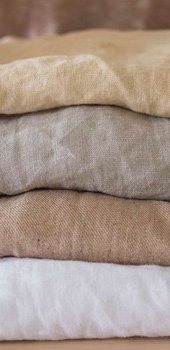
Linen fabric weight ranges from 100 gsm for shirts to 400 gsm for outerwear. Lightweight linen 100 to 150 gsm works best for shirts and summer dresses. Mid-weight 150 to 220 gsm suits trousers and skirts. Heavyweight 300 to 400 gsm is ideal for jackets and coats. All linen garments should be pre-shrunk before cutting to manage the 4 to 8 percent first-wash shrinkage.
3.2 Cost Comparison
As of mid-2026, standard European flax linen fabric costs approximately 8 to 14 USD per meter, roughly 30 to 50 percent above standard cotton. Organic linen ranges from 12 to 18 USD per meter. However, linen garments typically last two to three times longer than cotton equivalents, reducing total cost per wear.
3.3 Linen Blends
For buyers concerned about wrinkling, a 55/45 linen-cotton blend or 70/30 linen-tencel blend retains linen's natural breathability while improving wrinkle resistance and drape. These blends can still be positioned as sustainable options.
4. FAQ
Is linen truly more sustainable than organic cotton?
On a per-kilogram basis, linen uses 90 to 99 percent less water than conventional cotton and 50 to 80 percent less than organic cotton. Flax is rain-fed in most growing regions and requires minimal fertilizers or pesticides.
What MOQ should I expect from a custom linen manufacturer?
Typical MOQs range from 100 to 300 pieces per design for established manufacturers, depending on garment complexity and customization level.
How long does a typical custom linen order take?
Expect 30 to 50 days from confirmed purchase order to shipment, including fabric procurement, pattern grading, sample approval, production, and final quality control.
What certifications should a reliable linen manufacturer have?
At minimum: OEKO-TEX Standard 100, ISO 9001, and third-party social compliance audit such as BSCI or SEDEX. Masters of Linen certification is recommended for European market entry.
Can I get GOTS-certified organic linen?
Yes, but availability is limited to approximately 3 to 5 percent of global linen production. Lead times for organic linen orders may be two to four weeks longer than standard linen.
5. How to Choose a Linen Manufacturer
When evaluating potential linen manufacturers, verify fabric origin, lead time reliability, MOQ per style, sample policy, quality metrics, sustainability certifications, and after-sales support in writing. Prioritize manufacturers with clear supply chain transparency and verifiable third-party audits.
6. Conclusion
Linen is one of the few textile fibers that actively delivers environmental benefits from farm to end of life. Its minimal water requirements, low carbon footprint, zero-waste crop utilization, and full biodegradability make it a genuinely regenerative material when sourced responsibly. For B2B buyers, the question is not whether linen is sustainable but how to find a manufacturing partner that translates these advantages into commercially viable products without greenwashing.
At Linenwind, we manufacture custom linen clothing with full OEKO-TEX certification and traceable European flax sourcing. Contact our team to discuss your requirements.