

Small-Batch Linen Production: Low MOQ Strategies for Emerging Brands
Small-batch linen production is not a large order cut down to size. It is a different way of buying: fewer pieces per style, more styles at once, and a fixed cost per unit that behaves nothing like a bulk programme. For an emerging brand, that difference is the whole game. Get the structure right and a sixty-piece run becomes a profitable test of a new silhouette; get it wrong and the same run quietly costs more per unit than a full production order ever would.
This guide sets out the small-batch strategies that actually move the numbers. It explains how a low-MOQ order is priced and where the fixed cost sits, how to buy fabric when you cannot meet a mill minimum, how to build a capsule that shares fabric and trims across several styles, the calendar from sample to repeat, and the phased path from a first test run to a programme that behaves like a real collection. The figures are the ones we publish: a minimum of 60 pieces per style per colour, counter samples in 7-12 days, bulk production in 25-35 days and a first order of roughly 35-60 days. Linenwind is a Dongguan linen garment manufacturer with more than 20 years of OEM and ODM experience, so the framework below is the one we use with new brands every week. If you are still writing the plan before the first order, our guide to how to start a linen clothing brand covers the earlier steps, and the minimum itself is explained in our FAQ on the minimum order quantity for custom linen clothing.
Small Batch Is a Buying Strategy, Not a Smaller Order
A brand that orders 60 pieces per style is not simply running a factory at low volume. It is making a set of deliberate choices about cash, risk and learning speed, and those choices change how the whole order should be structured. The first choice is quantity per style: enough to sell through a genuine audience, small enough that unsold stock does not bury the business. The second is breadth: several styles carried at once, so the collection reads as a range rather than a single test. The third is timing: a short enough cycle that the brand can learn from real sales and adjust before committing more capital.
Those three choices pull in different directions, and that tension is what makes small-batch production a strategy rather than an order size. Spreading a fixed set-up cost across 60 pieces raises the cost per unit compared with 600, but it also caps the downside if a style does not sell. Carrying five styles instead of one spreads fabric and trim decisions across a wider surface, which can either raise cost or lower it depending on how carefully those decisions are made. And a fast cycle means the brand has to be ready to approve, reorder and re-plan on a rhythm that a larger company would schedule months ahead.
The practical answer is to stop treating a small run as an awkward bulk order and start treating it as a portfolio decision. Each style carries a share of the fixed cost; each fabric and trim choice either adds to or dilutes that cost; and the calendar is built so the first run pays for the learning that makes the second run cheaper. Read that way, a low-MOQ programme is not a compromise forced on a new brand — it is the most efficient way to find out what actually sells before the money gets serious.
Small-batch success is decided before the order is placed. Choose quantity, breadth and timing together, and the run pays for itself; choose them one at a time and the fixed cost lands entirely on the first style.
How a Low-MOQ Order Is Priced: Where the Fixed Cost Sits
Unit price looks like a single number, but it is really four costs stacked together: material, labour, the share of fixed set-up your quantity has to carry, and the manufacturer's margin. Material and labour scale fairly predictably with quantity. The set-up share is the part that punishes small orders, because pattern making, grading, marker planning, sample rounds, cutting set-up and per-style trims are largely fixed whether you make 60 pieces or 600. Divide the same fixed pot by ten times fewer units and the per-piece figure rises — that is the honest reason a low-MOQ price is higher, not an arbitrary small-order surcharge.
Understanding which costs are fixed also tells you where you have leverage. If the pattern and sample already exist, the set-up share drops sharply on a repeat. If you choose a fabric the factory already holds, you avoid a sourcing charge. If you keep trims standard rather than custom, you avoid another fixed cost. Our detailed guide on MOQ tiers in custom linen manufacturing breaks the structure down tier by tier, and the wider cost picture is set out in why custom linen clothing costs what it costs.
| Cost Element | How It Behaves at Low Volume | How to Manage It |
|---|---|---|
| Fabric | Scales with quantity, but a mill minimum can apply per colour | Use held stock specifications; consolidate colours |
| Labour (sewing, finishing) | Roughly proportional; less efficient on short runs | Keep construction standard for your category |
| Pattern, grading, marker | Fixed — spread over few pieces, so it stands out | Reuse an approved block where possible |
| Sampling | Fixed per style; refundable against first bulk | Budget one revision round, not three |
| Trims and labels | Fixed per style; custom items carry higher minimums | Standard trims first, custom later |
| Finishing (pre-shrink, wash) | Semi-fixed batches per lot | Group styles that share the same finish |
Table 1: where a low-MOQ price is built. The rows that change most between 60 and 600 pieces are the fixed ones — pattern work, sampling and per-style trims — which is exactly where a small brand should apply the most planning.
One number buyers often miss is the sampling cost, because it is small and refundable and therefore easy to forget when modelling the unit price. Our standard sample fee is 40-150 US dollars per style and is fully refunded against your first bulk order of the same style, with swatches free. That structure exists because a sample is a decision tool, not a revenue line, and it is the cheapest way to remove cost risk before bulk. The mechanics of negotiating the rest of the structure — price, MOQ and payment terms together — are covered in our guide to negotiating with a linen manufacturer, while the direct question of how quantity moves the price is answered in the FAQ how does MOQ affect pricing at linen clothing manufacturers.
Fabric Strategy for Small Runs: Stock, Colour and Minimums
Fabric is where a small run is most often derailed, because cloth is bought in rolls and rolls have minimums that ignore how many garments you actually need. A colour that is beautiful in a swatch book may require a mill minimum far above your total order, and trying to meet it turns a lean test run into an inventory problem. The single most useful move a small brand can make is to buy from fabric the factory already holds, rather than commissioning a new colour or weave.
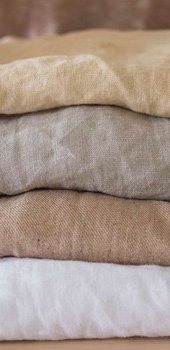
We keep 50+ linen specifications available in stock precisely so a small brand can start without a mill minimum. That library lets you choose a weight (the range runs from around 100 to 260 GSM), a weave and a colour that already exist, which removes both the sourcing wait and the minimum-order risk. If you do need a custom colour, the practical answer is usually to accept a slightly higher fabric quantity and use the surplus across more than one style rather than paying for a unique lot that serves a single garment. Our guide to how much linen fabric costs explains how weight, weave and finish move the price.
Three habits keep fabric cost under control on a small run. First, consolidate colours: one or two fabrics across the whole capsule will always beat five fabrics across five styles. Second, allow for the real consumption of linen, which does not stretch, so cutting yield is less forgiving than a knit — a marker that wastes 12 percent of the cloth is 12 percent of your fabric budget. Third, plan for the natural-fibre behaviour that linen brings: first-wash shrinkage is held to 3-7 percent by pre-shrink or a controlled wash, and that finishing must be scheduled into the run rather than treated as an afterthought. How the unit price is built from fabric, labour and finishing is set out in the FAQ how do linen clothing manufacturers calculate unit pricing.
[IMAGE_PLACEHOLDER alt="Close-up of folded linen fabric swatches in warm neutral and natural dye tones laid on a cutting table beside a measuring tape, soft daylight, clean editorial product photography style"]Building a Small Capsule That Shares Fabric and Trims
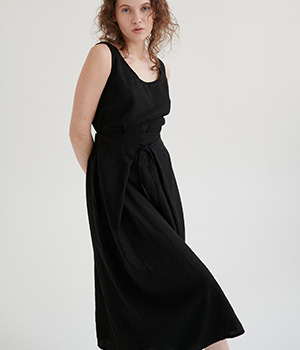
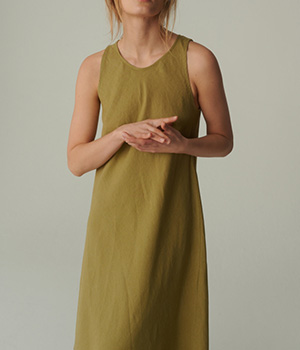
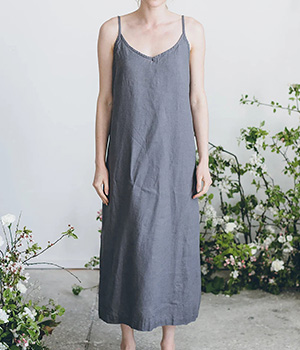
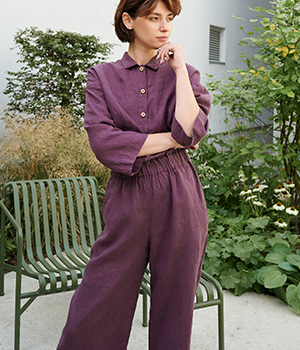
The fastest way to make a low-MOQ programme economical is to design a capsule rather than a set of unrelated styles. A capsule is a small group of garments that deliberately share fabric, trims, thread, labels and often a common block, so the fixed costs of set-up and material serve several products at once. Three to five styles is the usual sweet spot: broad enough to look like a range, narrow enough that the shared costs stay shared.
The design choices that make a capsule work are mostly invisible to the customer. Using one fabric across two or three styles means the fabric order is larger and the per-metre cost lower, and it means any surplus cloth from one style can be cut into another instead of sitting idle. Sharing a trim set — the same buttons, the same interfacing, the same care label — avoids paying a separate minimum for each style. Reusing a single block across a shirt and a dress, or across a top and a tunic, cuts pattern and grading work sharply. None of these choices makes the collection look repetitive if the silhouettes and colourways differ enough; they simply stop three products from paying for three separate set-ups.
A capsule also gives a small brand a cleaner story to tell, because a tight, coherent range reads as a point of view rather than a scatter of samples. Our guide to how to develop linen capsule collections walks through the planning, and the same logic applies whether the capsule is a first test run or a seasonal drop. The rule of thumb is simple: every time you add a new fabric or a new custom trim, you are adding a fixed cost that has to be paid by the whole order, so add one only when it earns its place.
Design the capsule around shared inputs, not just shared aesthetics. One fabric, one trim set and a reused block can cut the fixed cost per style far more than any negotiation on the piece rate.
The Small-Batch Calendar: Sampling, Bulk and the Repeat Cycle
A small run does not shorten the calendar — it simply makes the calendar easier to correct. The stages are the same as any custom linen order, and they should be planned with the same honesty. A counter sample takes 7-12 days, with a realistic sampling window of 7-14 days for a complex style or one that needs fabric sourcing. Bulk production takes 25-35 days from approved sample and deposit to goods ready for inspection, and a first order totals roughly 35-60 days end to end before shipping. The value of a small run is that a misjudged style is discovered in a sixty-piece order, not a six-hundred-piece one.
| Stage | Typical Duration | What a Small Brand Should Do in This Window |
|---|---|---|
| Sampling | 7-12 days (window 7-14) | Approve in one consolidated round; confirm fit and fabric |
| Bulk production | 25-35 days | Prepare the shop, content and photography while goods run |
| Inspection and packing | 1-2 days within production | Review the AQL 2.5 report before goods are released |
| First order total | About 35-60 days | Sell the test run and read real demand before reordering |
| Repeat order | Closer to the bulk window | Reorder the winners; the pattern and sample already exist |
Table 2: the small-batch calendar. The repeat row is the point of the whole exercise — a second order of a proven style skips the sampling round and behaves much more like a bulk run.
Two timing habits separate brands that scale smoothly from those that do not. The first is approving the sample decisively: a file that waits three days for feedback adds three days to the end of the run, and a drip of small changes is worse than one clear response. The second is placing the repeat order early, because the whole advantage of a proven style is that its lead time is shorter and more predictable. The sampling mechanics are explained in the FAQ how long does it take to make samples and the cost in what is the sampling cost and is it refundable, while the full stage-by-stage timeline is set out in our guide to linen clothing lead times.
Phased Scaling: From a 60-Piece Test to a Repeat Programme
Small-batch production is most useful when it is treated as the first phase of a scaling plan rather than a permanent ceiling. The brands that grow with a linen manufacturer are the ones that move through clear phases, spending a little to learn before spending more to grow. The sequence below is the one we recommend to a new brand, and it works because each phase funds the next.
- Run a test capsule. Place a small order across a few styles at 60 pieces per style per colour, using held stock fabric and standard trims to keep the fixed cost contained.
- Sell and read the data. Let real sales, not assumptions, decide which styles, colours and sizes deserve a second order. Small runs make this feedback cheap.
- Repeat the winners. Reorder the proven styles; because the pattern, sample and fabric specification already exist, the sampling round is reduced and the unit cost falls.
- Broaden the range. Add new styles around the fabrics and trims that performed, so each addition still shares an input rather than starting from nothing.
- Consolidate and scale. As quantities rise, negotiate on the larger volume, lock in a production window and move toward a seasonal calendar rather than a series of one-off runs.
The first order is where a brand pays to learn; every later order should harvest that learning. That is why starting with a manufacturer who specialises in small runs is more valuable than starting with the largest factory available — the specialisation is what makes the first phase affordable. Our FAQ how do I start a custom linen order covers the first conversation, and how to start working with a clothing manufacturer sets out the relationship from the supplier side. The reason a specialist beats a generalist on a small run is explained in why specialised linen manufacturers deliver better value than large-scale OEM factories.
[IMAGE_PLACEHOLDER alt="Founder of a small fashion brand reviewing linen garment samples and a sales dashboard on a laptop in a bright studio, warm neutral styling, realistic documentary photography style"]The Real Trade-Offs of Low MOQ
Low MOQ is a genuine advantage for an emerging brand, but it is not free, and a plan that ignores the trade-offs will be surprised by them. The first trade-off is unit cost: fewer pieces carry the same fixed set-up, so the per-piece price is higher than a large order, and that difference is structural rather than negotiable. The second is fabric choice: working from stock specifications protects the small order, but it also means the widest range of custom weaves and colours, and the lowest per-metre prices, sit behind larger minimums. The third is finishing efficiency: pre-shrink and wash are run in batches, so a very small quantity may be grouped with other work rather than scheduled alone.
None of these trade-offs is a reason to avoid small-batch production; they are simply the price of flexibility, and they should appear in your cost model from the start. The mistake is to expect large-order economics from a small order and to treat the difference as a failure of negotiation. The honest position is that a low-MOQ run buys optionality and speed, and it earns its place whenever the risk of a wrong bulk order is higher than the premium on the unit price.
Ask the right question: not "why is my small order more expensive per piece?" but "is the premium worth paying to find out what sells before I commit to volume?" For most emerging brands, it is.
Whether a low-MOQ manufacturer suits a new brand at all is a fair question, and we answer it directly in the FAQ is a low MOQ linen clothing manufacturer suitable for new brands. The short answer is yes, provided the brand treats the first order as a test with a plan attached rather than a one-off purchase.
Common Mistakes on a First Small-Batch Run
Most disappointing first runs fail for the same handful of reasons, and almost all of them are planning errors rather than manufacturing problems. The list below is the one we would put in front of any emerging brand before a first order.
- Too many fabrics and trims. Every extra fabric or custom trim adds a fixed cost that the small quantity has to absorb; a capsule should share inputs, not multiply them.
- Choosing on unit price alone. The lowest quote often hides a fabric substitution or a wider set-up that shows up later as rework, which is more expensive than the saving.
- Skipping the sample to save a week. The counter sample is the cheapest risk-reduction step available, and bulk problems are far more expensive to fix than a sample revision.
- Approving in drips. A file that waits days for a partial answer adds those days to the end of the run; consolidate feedback into one clear response.
- Forgetting the repeat. The point of a first small run is to make the second order cheaper; if the winners are not reordered early, the learning is wasted.
- Ignoring the natural-fibre steps. Pre-shrink and finishing protect the garment; skipping them to save time shifts the problem onto the customer.
The wider pattern behind these mistakes is well known to anyone building a label, and we cover it in common mistakes to avoid when starting your own brand. The one that costs the most is usually the first: a brand spreads its small quantity across too many distinct inputs and then wonders why the unit price is high. Whether a manufacturer can support the run at all is answered in the FAQ can linen clothing manufacturers support small batch production.
Small-Batch Linen Questions Buyers Ask Most
What counts as small-batch linen production?
For custom linen, a small batch is usually an order measured in tens of pieces per style rather than hundreds. Our standard minimum is 60 pieces per style per colour, which keeps a first order accessible while still covering the fixed set-up that every style requires. It is best understood as a strategy for testing demand cheaply, not as a permanently small order. See whether manufacturers support small batch production.
Why is a low-MOQ order more expensive per piece?
Because the fixed costs do not shrink with quantity. Pattern making, grading, marker planning, sampling and per-style trims are largely the same whether you make 60 pieces or 600, so a small order carries a larger share of each. The premium is structural, not a surcharge; it falls on repeat orders once the pattern and sample already exist. The calculation is explained in the FAQ how does MOQ affect pricing.
How do I keep the fabric cost down on a small run?
Buy from fabric the factory already holds rather than commissioning a new colour or weave, and consolidate colours across the capsule. We keep 50+ linen specifications in stock for exactly this reason, which removes the mill minimum that would otherwise sit behind a single small style. Surplus cloth from one style can also be cut into another rather than sitting idle.
How many styles should a first small batch include?
Three to five styles is the usual sweet spot. That is broad enough to read as a range and to learn what sells, but narrow enough that the shared set-up, fabric and trims can serve every style. Adding a sixth style is easy; adding a sixth fabric or a sixth custom trim is where the fixed cost starts to climb. See how to develop linen capsule collections.
Does a small order take longer to make?
Not inherently. Sampling still takes 7-12 days and bulk production still takes 25-35 days, because those windows reflect the work, not the volume. A very small order can sometimes be grouped with other work for pre-shrink and finishing, but the main stages run to the same rhythm. The timeline is set out in our guide to linen clothing lead times.
Can I grow from a small order to larger volumes?
Yes, and that is the intended path. A repeat order of a proven style skips the sampling round and tracks closer to the bulk window, so the unit cost falls and the schedule tightens. Brands that reorder early, around the fabrics and trims that performed, scale without paying the first-order learning cost twice. The steps are set out in our FAQ how do I start a custom linen order.
Are there manufacturers that accept low MOQ orders?
Yes, though the term covers a wide range. A specialist linen factory structured for small runs will hold stock fabric, keep standard trims and accept a low minimum per style, whereas a large general factory may quote a low minimum but struggle to give the order attention. The questions to ask are the same ones in any qualification. See low MOQ linen manufacturers for startups.
How do I reduce cost without losing quality?
Reduce fixed costs, not quality steps. Reuse an approved block, use held stock fabric, keep trims standard, consolidate colours and approve in one pass — each of these removes a cost without touching the garment. What you should not cut is the counter sample or the pre-shrink finish, because those protect the fit and after-wash behaviour that the customer actually buys. The levers are summarised in the FAQ how can brands reduce costs when working with linen clothing manufacturers.
Bottom Line for Emerging Brands
Small-batch linen production rewards planning more than volume. A low-MOQ order is priced by the fixed costs it must carry — pattern work, sampling, per-style trims — so the strategy is to share those costs across a capsule rather than pay for them style by style. Buy from held stock fabric, consolidate colours, keep trims standard, and let a first test run tell you which styles deserve a repeat. The calendar does not shorten for a small order, but it becomes far more forgiving, because a misjudged style is discovered at sixty pieces rather than six hundred.
Start with a capsule of three to five styles at 60 pieces per style per colour, approve the sample in one pass, and place the repeat early on the winners. Do that and the first run pays for the learning that makes every later order cheaper and faster. If you are ready to plan a small-batch linen programme against your own styles, send us the brief through the inquiry form, review how we work on the contact page, or read the companion FAQ on the minimum order quantity for custom linen clothing to confirm what a first order looks like.