
Linen Clothing MOQ Explained | Minimum Order Guide for Brands (2026)
Linen Clothing MOQ Explained: Minimum Order Quantity Guide for Brands
MOQ is one of the most important factors when brands begin working with linen apparel factories. It affects your starting investment, unit cost, sampling plan, inventory risk, and long-term production strategy.
This guide explains how linen clothing MOQ works, why manufacturers set minimums, how MOQ affects cost, and how brands can start with lower-risk production plans.
What Does MOQ Mean in Linen Clothing Manufacturing?
MOQ stands for minimum order quantity. It refers to the smallest number of units a manufacturer is willing to produce for one order, one style, one color, or one production batch.
In linen clothing manufacturing, MOQ is especially important because linen fabric sourcing, washing, dyeing, cutting, and finishing all involve setup costs. For fashion brands working with professional Linen Clothing Manufacturers, understanding MOQ helps you plan product development more clearly and avoid unexpected costs.
Simple explanation: Lower MOQ reduces your inventory risk, but it often increases the unit cost. Higher MOQ usually lowers unit cost, but it requires a larger upfront investment.
Why Do Linen Clothing Manufacturers Set MOQ?
MOQ is not simply a sales rule. It is based on real production limitations, fabric minimums, labor planning, machine setup, cutting efficiency, and quality control costs.
Fabric Sourcing
Linen fabric mills may require minimum yardage for weaving, dyeing, washing, or custom colors.
Production Setup
Factories need to arrange patterns, cutting, sewing lines, trims, labels, and QC before production starts.
Cost Efficiency
Small orders spread setup cost across fewer pieces, which increases the unit price.
1. Fabric Sourcing Requirements
Linen fabric often involves minimum fabric yardage, dyeing batch requirements, and finishing minimums. If a brand requests a custom color or special fabric treatment, the fabric supplier may require a higher minimum than the garment factory itself.
2. Production Efficiency
Even a small batch requires pattern preparation, cutting markers, machine setup, sewing line arrangement, ironing, finishing, inspection, and packing. When the quantity is too small, production efficiency decreases and labor cost per garment becomes higher.
3. Quality Control and Setup Cost
Quality control is required for every order, regardless of size. A 30-piece order and a 300-piece order both need fabric inspection, measurement checking, stitching review, and final packing checks. This is why very low MOQ often comes with a higher unit cost.
Typical MOQ for Linen Clothing in 2026
MOQ varies depending on the manufacturer, product type, fabric availability, customization level, and order structure. However, most linen garment production can be grouped into three common MOQ ranges.
| Brand Type | Typical MOQ Range | Best Use Case |
|---|---|---|
| Startup Brands | 30–100 pcs/style | Testing new designs, validating market demand, launching capsule collections |
| Growing Brands | 100–300 pcs/style | Seasonal collections, wholesale drops, repeat orders, stable product lines |
| Established Brands | 500+ pcs/style | Large-scale production, retail distribution, high-volume wholesale programs |
Many modern manufacturers now offer low MOQ options to support small brands and market testing. However, brands should still understand that low MOQ may come with trade-offs in fabric selection, color customization, and unit pricing.
MOQ vs Cost: Understanding the Relationship
MOQ has a direct impact on garment cost. When quantity increases, many fixed costs are spread across more units, which usually lowers the cost per piece.
| MOQ Level | Unit Cost | Main Reason |
|---|---|---|
| Low MOQ | Higher | Setup, sampling, fabric sourcing, and labor costs are divided across fewer units. |
| Medium MOQ | Moderate | Offers a balance between flexibility and production efficiency. |
| High MOQ | Lower | Bulk production improves cutting efficiency, fabric purchasing, and labor planning. |
For a deeper pricing breakdown, read the supporting article Linen Clothing Cost Guide.
Practical strategy: Many brands start with low MOQ to test products, then increase quantity after identifying best-selling designs. This helps reduce inventory risk while improving cost efficiency over time.
MOQ by Linen Product Type
Different linen garments have different MOQ requirements because construction complexity, fabric consumption, size grading, trims, and finishing vary by product category.
| Product Type | MOQ Difficulty | Reason |
|---|---|---|
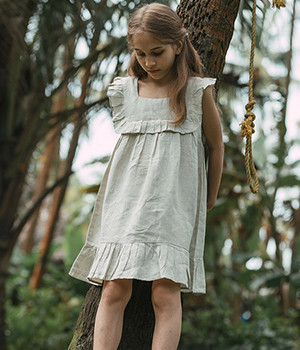
| Linen Dresses | Medium to High | Dresses often require more fabric, fit control, and style-specific pattern work. |
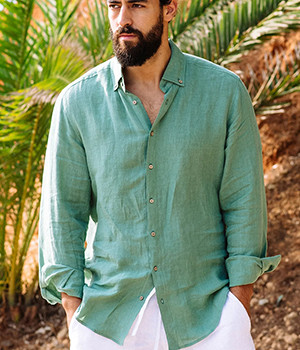
| Linen Shirts | Medium | Shirts are easier to standardize but require accurate collars, cuffs, and button placement. |
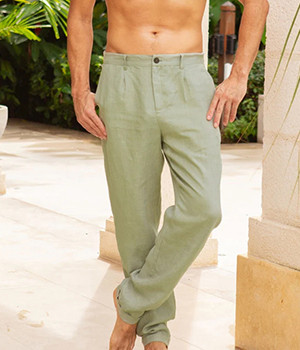
| Linen Pants | Medium | Pants require careful fit control around waist, hip, rise, and inseam. |
| Linen Skirts | Low to Medium | Skirts can be simpler, but waistband, length, and shrinkage control still matter. |
| Linen Sets | High | Sets include multiple garments, which increases fabric usage and production coordination. |
Linen Dresses
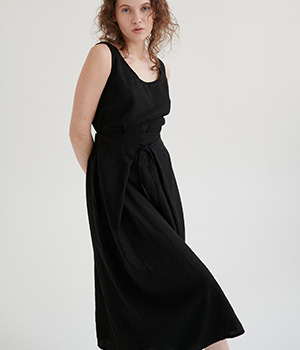
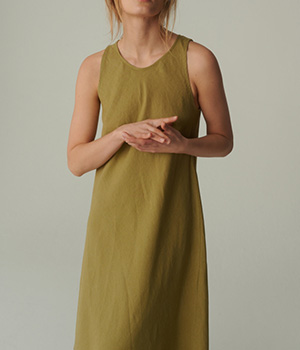
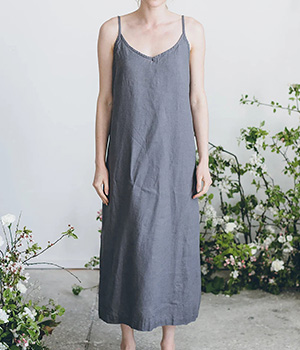
Linen dresses usually require more fabric and more fit development than basic tops. Styles such as maxi dresses, wrap dresses, and structured dresses may require higher MOQ because of pattern complexity and fabric consumption.
Linen Shirts
Linen shirts often have moderate MOQ because they can be standardized more easily. However, details such as collars, cuffs, buttons, embroidery, and garment washing can still affect cost and minimums.
Linen Pants and Bottoms
Linen pants and skirts require careful size grading and shrinkage testing. Pants may have more complex fit requirements, while skirts may offer more flexibility for small-batch production.
Linen Sets
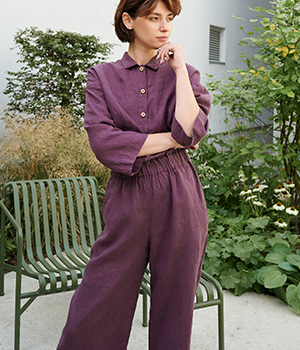
Linen two-piece sets often have higher MOQ because each set includes multiple garments. Brands should calculate MOQ based on both the top and bottom components.
How to Work with Low MOQ Linen Manufacturers
Low MOQ production is useful for startups, boutique labels, seasonal launches, and test collections. However, brands need to structure their orders carefully to keep costs manageable.
1. Start with Simple Designs
Simple silhouettes reduce development time, pattern complexity, and sewing difficulty. For example, basic linen shirts, elastic-waist skirts, relaxed tops, and simple dresses are often easier for low MOQ production than highly structured designs.
2. Use Available Fabrics
Using available or stock fabrics can reduce fabric minimums and shorten development time. Custom-dyed fabrics usually require higher minimums because dye houses often set their own batch requirements.
3. Limit Color and Size Variations
Too many colorways or size splits can make a small order inefficient. A better approach is to start with fewer colors and a focused size range, then expand after confirming demand.
4. Combine Styles with the Same Fabric
If you are developing multiple styles, using the same linen fabric across dresses, shirts, skirts, or pants can help meet fabric minimums while keeping garment MOQ more flexible.
5. Build a Long-Term Relationship
Manufacturers may offer better MOQ flexibility to brands with repeat orders, clear communication, and realistic growth plans. A strong supplier relationship can reduce friction over time.
MOQ Negotiation Strategies for Brands
MOQ is sometimes negotiable, but negotiation works best when brands understand the factory’s production logic. Instead of simply asking for the lowest possible MOQ, offer a practical order structure.
Effective MOQ Negotiation Methods
- Combine several styles using the same fabric
- Reduce the number of colors in the first order
- Use stock fabrics instead of custom-dyed materials
- Offer a clear repeat-order plan if the first launch performs well
- Accept a slightly higher unit cost for lower starting quantity
- Keep trims, labels, and packaging simple in the first order
Common MOQ Mistakes to Avoid
MOQ planning mistakes can create inventory pressure, cash flow problems, or production delays. Brands should avoid making decisions based only on the lowest quantity or the lowest price.
- Ignoring MOQ during early product planning
- Ordering too much inventory before testing demand
- Requesting too many colorways in a small batch
- Choosing a factory without flexible MOQ support
- Not understanding how low MOQ affects unit cost
- Using custom fabric before validating the design
Case Example: Starting with Low MOQ
A startup linen brand may begin with 50 pieces per style across two or three simple designs. The brand may choose one linen fabric in two neutral colors to reduce fabric minimums and simplify production.
After launching the first collection, the brand can analyze sales data, customer feedback, fit performance, and return reasons. Best-selling styles can then be reordered at 150–300 pieces per style, lowering the unit cost and improving stock planning.
This phased approach allows the brand to reduce risk, validate the market, and scale production more confidently.
Why Work with Linenwind
At Linenwind, we support fashion brands with flexible custom linen clothing production, including small-batch testing, OEM development, ODM support, sampling, bulk production, quality control, and export coordination.
- Low MOQ support for small-batch testing
- Custom linen garment development for dresses, shirts, tops, pants, skirts, and sets
- OEM and ODM services for global fashion brands
- Fabric sourcing, sampling, production, QC, packaging, and export support
- Dedicated communication throughout the production process
You can explore related development through our Custom Linen Dresses collection or learn more about our Linen Clothing OEM & ODM services.
Start Your Low MOQ Linen Clothing Project
If you are planning a small-batch linen collection, Linenwind can help you develop samples, control MOQ, manage fabric options, and scale production when your best-selling styles are ready.
Contact UsFrequently Asked Questions
What is the lowest MOQ for linen clothing?
Some linen clothing manufacturers support MOQ as low as 30 pieces per style, depending on fabric availability, design complexity, color requirements, and customization details.
Can I mix sizes within the MOQ?
Yes. Most manufacturers allow size distribution within the MOQ. However, very wide size ranges may increase pattern grading and production complexity.
Does MOQ affect pricing?
Yes. Lower MOQ usually means higher unit cost because setup, fabric sourcing, labor planning, and quality control costs are divided across fewer garments.
Can startups work with linen manufacturers?
Yes. Many linen clothing manufacturers support startups with small-batch sampling and low MOQ production, especially when brands use simple designs and available fabrics.
How can I reduce MOQ pressure?
You can reduce MOQ pressure by using stock fabrics, limiting colorways, simplifying designs, combining styles with the same fabric, and building a long-term production plan with your manufacturer.
Final Thoughts
MOQ is one of the most important factors in linen clothing manufacturing. It affects your starting investment, unit cost, fabric options, production planning, and inventory risk.
By understanding how MOQ works, why factories set minimums, and how to negotiate realistic order structures, brands can launch linen collections more confidently and scale production sustainably.