
Custom Linen Clothing Manufacturer: Complete Guide for Brands
Custom Linen Clothing Manufacturer: Complete Guide for Brands
Choosing a custom linen clothing manufacturer is one of the most consequential sourcing decisions a fashion brand can make. Linen is not a forgiving fabric: it shrinks, relaxes, and behaves differently from cotton or synthetics at every production stage, so the factory you select determines your product quality, return rates, delivery reliability, and ultimately your brand reputation. This guide explains what a linen clothing manufacturer actually does, how OEM, ODM, and private label models differ, which capabilities to evaluate before signing, and what realistic MOQs, sampling timelines, and lead times look like.
Whether you are a startup testing your first capsule collection, a boutique brand scaling a proven style, or a DTC label adding linen to an existing assortment, the same core questions apply: What services should the factory provide? What should you prepare? How do you verify quality control and certifications? How much should a first order cost? This guide answers each of these questions with concrete parameters, not generic advice.
The information below reflects how Linenwind, a linen-specialized OEM/ODM manufacturer in Dongguan, China, runs custom linen programs for brands across Europe, North America, Australia, and Asia. The numbers used throughout — MOQ of 60 pieces per style, 7–14 day sampling, 20–30 day bulk production, monthly output of 60,000 pieces — are the actual operating parameters we quote to clients, and they are consistent with the details published across our service FAQs.
What Is a Custom Linen Clothing Manufacturer?
A custom linen clothing manufacturer is a production facility that makes linen garments to a brand's specifications rather than selling only ready-made stock. The manufacturer takes responsibility for fabric sourcing, pattern making, cutting, sewing, finishing, quality control, and often packaging and logistics. "Custom" means the garment is developed for your brand — your fit, your fabric choice, your labels, your packaging — rather than an off-the-shelf item.
Custom manufacturers differ from wholesalers and trading companies in three important ways. First, they operate their own production lines, which gives them direct control over quality and schedule. Second, they hold specialized knowledge about the materials they work with; a linen specialist knows how to manage shrinkage, seam puckering, and fabric relaxation in ways a general apparel factory may not. Third, they can support product development — reviewing tech packs, developing patterns, and producing samples — not just cutting and sewing.
Key definition: In the linen apparel supply chain, a manufacturer is the entity that transforms fabric and trims into finished garments. If a supplier cannot show you its own factory, production lines, and quality team, it is acting as a trader or agent — which changes the risk profile of your order. Always verify that the company you contract actually controls the production it quotes.
What Services Does a Custom Linen Manufacturer Provide?
A full-service custom linen clothing manufacturer covers the entire journey from concept to delivered carton. The scope below is what Linenwind includes in a standard custom program; some factories offer only part of this chain, which is a key differentiator to check when comparing suppliers.
Fabric Sourcing and Testing
Selecting the right linen or linen-blend fabric for your silhouette and price point, plus pre-shrinkage testing on every lot before cutting. This prevents post-laundry fit complaints and size discrepancies.
Pattern Making and Grading
Creating patterns from your tech pack or references, then grading them across your size range. Linen-specific shrinkage allowances are built into the pattern dimensions before cutting.
Cutting, Sewing, and Finishing
Production lines staffed with operators trained for natural fibers, including needle selection, thread tension, and seam finishing that prevent puckering on lightweight linen.
Quality Control
Inline inspection at each step — cutting accuracy, sewing quality, finishing consistency — followed by a final inspection under AQL 2.5 before packing.
Branding and Packaging
Woven labels, hang tags, branded tissue and poly bags, barcode stickers, and any retail-ready packaging your market requires.
Logistics and Shipping
FOB from Chinese ports, CIF, or door-to-door express. Bulk orders move by sea; smaller or urgent orders can go by air or courier.
For a deeper look at the individual service models, see our explanation of OEM, ODM, and OBM manufacturing in the blog library, or review the comparison in the FAQ section below.
OEM vs ODM vs Private Label: Which Model Fits Your Brand?
Most custom linen clothing manufacturers offer three engagement models. The right one depends on whether you have your own design assets, how much control you need, and your budget. The table below summarizes the practical differences.
| Parameter | OEM (Your Design) | ODM (Factory Design) | Private Label / OBM |
|---|---|---|---|
| Design input | You provide a tech pack or detailed spec | We design from your concept brief | You select from existing developed styles |
| Tech pack needed? | Yes — measurements, construction, materials | No — mood board and references are enough | No — choose from our style library |
| Design ownership | You own the design IP | Shared / negotiable license | We own the design; you license it |
| Typical MOQ per style | 60 pcs | 60 pcs | 30 pcs or above |
| Sampling time | 7–14 days | 7–14 days | 5–10 days |
| Best for | Brands with in-house designers | Startups without a design team | Market entry and testing |
| Exclusivity | Exclusive to you | Negotiable by market or region | Non-exclusive |
At Linenwind we run all three models. Most boutique brands start with ODM or private label to test demand, then transition to OEM once a style proves itself and they want full IP ownership. There is no single "best" model — the right choice depends on your design capacity and growth stage.
Why Work With a Linen Clothing Manufacturer in China?
China remains the largest and most integrated linen garment production base in the world. For brands evaluating custom linen programs, Chinese manufacturers offer advantages that are difficult to replicate elsewhere:
- Integrated supply chain. Fabric mills, trim suppliers, and finishing workshops sit within the same industrial clusters, which shortens lead times and simplifies logistics. A specialist like Linenwind works with the same mills season after season, so fabric quality is predictable.
- Cost efficiency at low volumes. Low-MOQ programs — 60 pieces per style — let startups and boutique brands access professional production without committing to thousands of units. Larger runs scale down per-unit cost further as volumes grow.
- Certified, export-oriented production. Factories serving the US, EU, and Australian markets operate under formal quality frameworks. Linenwind holds ISO 9001 for quality management, OEKO-TEX certification for skin-safe fabrics, and SEDEX membership for ethical supply chain audit.
- Flexible capacity. A mid-size manufacturer with multiple factories and 60,000 pieces of monthly output can handle a 200-piece test order and a 5,000-piece bulk run in the same season without capacity conflicts.
What to watch out for: Not every Chinese factory is equally capable with linen. A general garment factory that mainly sews cotton or synthetics may lack the pre-shrinkage protocols, linen-trained operators, and finishing experience that custom linen requires. When evaluating a partner, ask specifically how many linen-only orders they completed in the past 12 months and whether they run a dedicated linen production line.
How to Evaluate a Custom Linen Clothing Manufacturer
Before committing to a manufacturer, evaluate the candidate against these six practical criteria. These are not aspirational; they directly affect product quality and your brand's customer experience.
| Criterion | Why It Matters | What to Ask |
|---|---|---|
| Linen-specific experience | Linen requires different cutting, sewing, and finishing than cotton or synthetics. | How many linen-only orders in the last 12 months? Do you have dedicated linen operators? |
| Pre-shrinkage protocol | Linen shrinks on first wash; without pre-treatment, garments may not match labeled sizes. | Do you test shrinkage on every fabric lot before cutting? What allowance do you add to patterns? |
| MOQ and scalability | Low MOQ enables testing; capacity enables growth. Both matter at different stages. | What is your minimum per style? Can you scale to 1,000+ per style in the same season? |
| Quality control framework | Consistency across sizes, colors, and runs defines your brand's quality reputation. | What AQL standard do you use? Is inspection inline or final-only? Can you share QC reports? |
| Sampling turnaround | Faster sampling means faster time-to-market for seasonal collections. | What is your standard sampling timeline? How many fit revision rounds are included? |
| Certifications and compliance | EU and US buyers increasingly require documented compliance for skin-contact garments. | Do you hold ISO 9001, OEKO-TEX, SEDEX or equivalent? Can you provide certificate copies? |
Practical tip: Ask for photos or a video call showing the linen production line — not just general workshop images. A factory that cannot demonstrate dedicated linen handling may not have the specialized experience your project requires. You can read more about our own setup on our About Us page.
The Custom Linen Clothing Production Process, Step by Step
Understanding the workflow helps you plan your collection timeline and prepare the right materials at each stage. This is how a typical custom linen order progresses at Linenwind, with realistic timelines.
- Inquiry and Project Brief (Day 1–3) — Share your brand background, target market, and garment concept. Include sketches, reference images, or a tech pack if you have one.
- Fabric and Trim Selection (Day 3–7) — Based on your silhouette and target retail price, we recommend two to three fabric options with different blends and GSM levels, plus trims and labels.
- Quotation and Timeline Proposal (Day 7–10) — You receive a detailed costing breakdown: fabric per unit, cutting and sewing labor, trims, finishing, packaging, and shipping options.
- Sampling and Fit Approval (Day 10–24) — Our pattern team drafts the grade rule and produces a first-fit sample within 7–14 days, with up to two fit revision rounds included in the sampling fee.
- Bulk Production With Inline QC (Day 24–54) — Each production step is inspected inline: cutting accuracy, seam quality, finishing consistency, and labeling.
- Final Inspection and Shipping (Day 54–60) — A final inspection is completed before packing, then goods ship FOB from Chinese ports, CIF, or door-to-door express.
A first custom order typically takes about 50–60 days from initial inquiry to shipment. Repeat orders of approved styles are faster — roughly 35–45 days — because the pattern, fabric spec, and sample are already confirmed.
Linen Fabric Options for Custom Garments
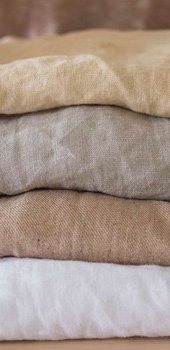
The fabric you choose has the single largest impact on your garment's appearance, hand feel, retail positioning, and production cost. A custom linen clothing manufacturer should be able to source several linen families and advise which one matches your silhouette and price point. These are the options Linenwind commonly develops for custom programs:
| Fabric | GSM Range | Hand Feel | Best For |
|---|---|---|---|
| 100% Linen | 130–180 gsm | Crisp, breathable, natural texture | Classic minimalist and structured silhouettes |
| Linen-Viscose | 140–170 gsm | Soft, fluid drape, fewer wrinkles | Resortwear and romantic silhouettes |
| Linen-Tencel | 130–160 gsm | Silky, refined, eco-luxury touch | Designer brands and premium boutiques |
| Linen-Cotton | 150–190 gsm | Stable, easy care, approachable | Lifestyle brands and everyday staples |
| Linen-Hemp | 140–180 gsm | Rustic, durable, highly sustainable | Sustainable niche brands |
GSM guidance matters at the development stage. Lighter linen at 130–160 gsm gives relaxed, airy drape — ideal for shirts and dresses. Heavier linen around 180–190 gsm provides structure and opacity for jackets, pants, and fitted silhouettes. Blends such as linen-viscose and linen-Tencel have become popular in custom programs because they keep linen's natural aesthetic while draping more fluidly and wrinkling less. They also require adjusted sewing tension and finishing, which is one more reason to work with a factory that produces linen blends routinely rather than as a special case.
Development tip: Ask your manufacturer to quote two to three fabric options for the same style before sampling. Comparing a 100% linen version against a linen-viscose version at the same MOQ gives you a clear picture of cost and hand-feel differences before you commit to bulk.
Sustainability and Compliance in Custom Linen Sourcing
Linen is inherently one of the more sustainable fibers in apparel: flax requires less water and fewer pesticides than cotton, and every part of the plant can be used. For brands that market on sustainability, working with a manufacturer that can document these claims is a practical advantage rather than a marketing extra.
Three compliance areas matter most for custom linen programs. First, fabric certification: OEKO-TEX-certified linen ensures the fabric is free from harmful substances for skin-contact use, which EU buyers commonly require. Second, quality management: ISO 9001 certification signals that the factory runs documented processes for production and corrective action. Third, social compliance: SEDEX membership means the factory is open to ethical audits covering labor and working conditions — increasingly a prerequisite for European retailers.
Verification note: Ask for certificate copies and check the issuing body and validity dates. Certificates are site-specific — a certificate issued to a trading office does not automatically cover the factory floor that sews your garments. At Linenwind, certificates cover our own production facilities in Dongguan, and they are shared with clients during pre-production documentation.
Traceability is the fourth dimension. A manufacturer that keeps batch records from fabric roll to finished carton can provide the supply chain documentation that EU buyers increasingly request, including for upcoming corporate due-diligence expectations. This is one of the practical reasons mid-size specialized factories like Linenwind are chosen over anonymous trading channels.
MOQ, Sampling, and Pricing: What to Expect
Pricing a custom linen order involves multiple variables, but the parameters below reflect typical industry benchmarks and Linenwind's standard terms for linen woven garments.
| Parameter | Industry Average (China) | Linenwind Custom Program |
|---|---|---|
| MOQ per style | 100–300 pcs | 60 pcs |
| Sample development | 14–21 days | 7–14 days |
| Fit revision rounds | 1 included | 2 included |
| Bulk production | 30–45 days | 20–30 days |
| Sample cost (linen shirt) | $50–100 per design | $40–80 per design |
| FOB price (linen shirt) | $8–18 per piece | Depends on fabric, spec, and volume |
| Pre-shrinkage testing | Often optional or extra | Standard, no extra charge |
Factors that affect your unit price:
- Fabric type and GSM — European linen costs more than Chinese linen; specialty blends like linen-Tencel sit at the higher end.
- Construction complexity — bias-cut finishing, lined garments, and detailed seaming require more skilled labor.
- Trims and hardware — custom buttons, zippers, and branded hardware add to per-unit cost.
- Branding and packaging — woven labels, hang tags, and branded packaging each add a small amount per unit.
- Order volume — a first order at 60 pieces carries a higher per-unit cost; repeat orders at 300–500+ pieces benefit from production efficiency.
Recommended approach: Start with one to three styles at 60 pieces each to validate fit, fabric, and market response. Track sell-through and customer feedback, then place repeat orders on your top performers at higher volumes. This keeps upfront risk low while building a proven baseline for scaling.
Quality Control and Certifications for Custom Linen
Quality control for linen garments differs from other categories in several specific areas. These are the checks an experienced custom linen manufacturer should run as standard procedure:
- Pre-wash and shrinkage testing — Linen shrinks roughly 3–7% on first wash. Every fabric lot is tested before cutting, and a calculated allowance is added to pattern dimensions.
- Seam and stress-point reinforcement — Bar tacks and reinforced stitching at stress points prevent seam failure during wear.
- Shade consistency — Linen absorbs dye unevenly across batches; inline visual inspection under consistent lighting ensures shade uniformity within a production run.
- Seam puckering checks — Lightweight linen puckers when thread tension is miscalibrated; operators verify this at the start of each line.
- Final inspection under AQL 2.5 — A statistical sampling plan verifies that the finished batch meets agreed quality levels before packing.
Certifications matter for market access. For skin-contact garments, EU importers commonly require OEKO-TEX-certified fabrics; US retailers may require ISO 9001 quality management; and European buyers increasingly ask for SEDEX or equivalent ethical audit reports. Linenwind holds all three, and copies of certificates are shared with clients as part of pre-production documentation.
Note on limits: Certification coverage has boundaries. OEKO-TEX certification applies to the fabric lots we source and test; if you supply your own fabric, it should be certified separately. AQL 2.5 describes a sampling plan, not a guarantee of zero defects — we recommend agreeing on AQL levels and defect criteria in writing before bulk production starts.
Who Should Work With a Custom Linen Manufacturer?
Custom linen manufacturing fits a specific range of brand profiles. The table below maps common scenarios to the recommended approach.
| Brand Profile | Recommended Model | Why |
|---|---|---|
| Startup with a concept but no design team | ODM | The factory designs and samples from your brief, removing the need for in-house designers. |
| Boutique brand launching a linen capsule | OEM at low MOQ | Test unique designs at 60 pcs per style with full IP ownership. |
| Designer with tech packs and patterns | OEM | Your specs are ready; OEM gives precise execution and IP protection. |
| Retailer testing a new linen category | Private label / OBM | Lowest entry MOQ and fastest turnaround for a trial assortment. |
| Established DTC brand scaling proven styles | OEM with volume pricing | Repeat orders at 300–500+ pcs lower per-unit cost while keeping quality consistent. |
Frequently Asked Questions
Final Thoughts
Selecting a custom linen clothing manufacturer comes down to three factors: the factory's specific linen expertise, its MOQ flexibility relative to your growth stage, and the strength of its quality control framework. A partner that scores well on all three will deliver consistent product quality, minimize returns and fit complaints, and grow with your brand as volumes increase.
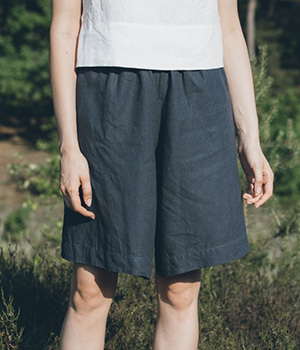
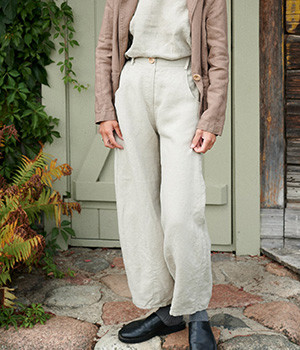
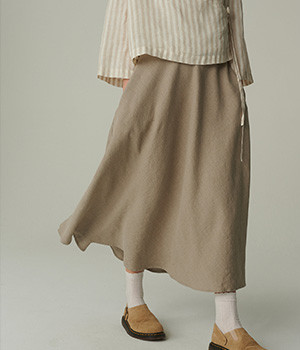
At Linenwind, our entire production process is structured around the demands of linen apparel. Our custom program covers shirts, camisoles, dresses, pants, skirts, and resortwear — developed through OEM, ODM, or private label models, with 60-piece MOQs, 7–14 day sampling, and 20–30 day bulk production. Every order, whether 60 pieces or 6,000, follows the same quality framework.
60 pieces per style. 7–14 day sampling. 20–30 day bulk production. Linen-specialized since day one.
Ready to discuss your custom linen project? Contact Linenwind to start the conversation, browse our linen product collection for design direction, or read more sourcing guides in our blog.